
7 Ways to Reduce Manufacturing Lead Times in 2026

Table of Contents
1. Partner With Domestic Contract Manufacturing for Faster Replenishment
2. Implement Preventive Maintenance to Control Equipment Downtime
3. Optimize Cut and Sew Manufacturing Lead Times Through Material Planning
4. Use Production-Ready Samples to Accelerate Commercial Manufacturing
5. Reduce Manufacturing Bottlenecks With Capacity Planning and Automation
6. Deploy Real-Time Data and Supply Chain Visibility
7. Adopt Just-In-Time Inventory and Demand Forecasting
Frequently Asked Questions
Last Updated: September 30, 2026
Manufacturing lead times are strangling supply chains. A shipment from overseas takes 8 to 12 weeks minimum. By the time your product arrives, market conditions have shifted, demand has changed, or your competitor has already moved. The cost of that delay compounds: inventory sits idle, cash flow stalls, and you miss sales windows. This guide covers 7 ways to reduce manufacturing lead times that actually work in 2026. At Sewing Contractor Solutions, we work with established brands across medical, industrial, and home-furnishing sectors to help reduce lead times.
The strategies below apply whether you're manufacturing sewn products, cut-and-sew components, or fiber-filled goods. Some require operational shifts. Others require choosing different partners. All of them reduce the time between order and delivery.
1. Partner With Domestic Contract Manufacturing for Faster Replenishment
Overseas manufacturing dominates because of cost. But cost isn't the only variable. Lead time matters just as much, and it's where domestic producers win.
Domestic manufacturing can offer faster turnaround times compared to overseas production, which often involves extended shipping, customs clearance, and inland trucking, leading to significantly longer total lead times.
Domestic manufacturing also gives you flexibility. If you need to adjust an order mid-production, change a material, tweak a specification, or add volume, a local partner can accommodate that. Overseas manufacturers have rigid schedules. They can't pivot without shutting down the line.
The math on reshoring depends on your volume and complexity. For some production needs, domestic manufacturing can offer a competitive total cost when factoring in lead time and inventory carrying costs. Speed can provide significant value regardless of run size. You can restock faster, respond to demand shifts, and avoid the cash-flow drag of 20-week lead times.
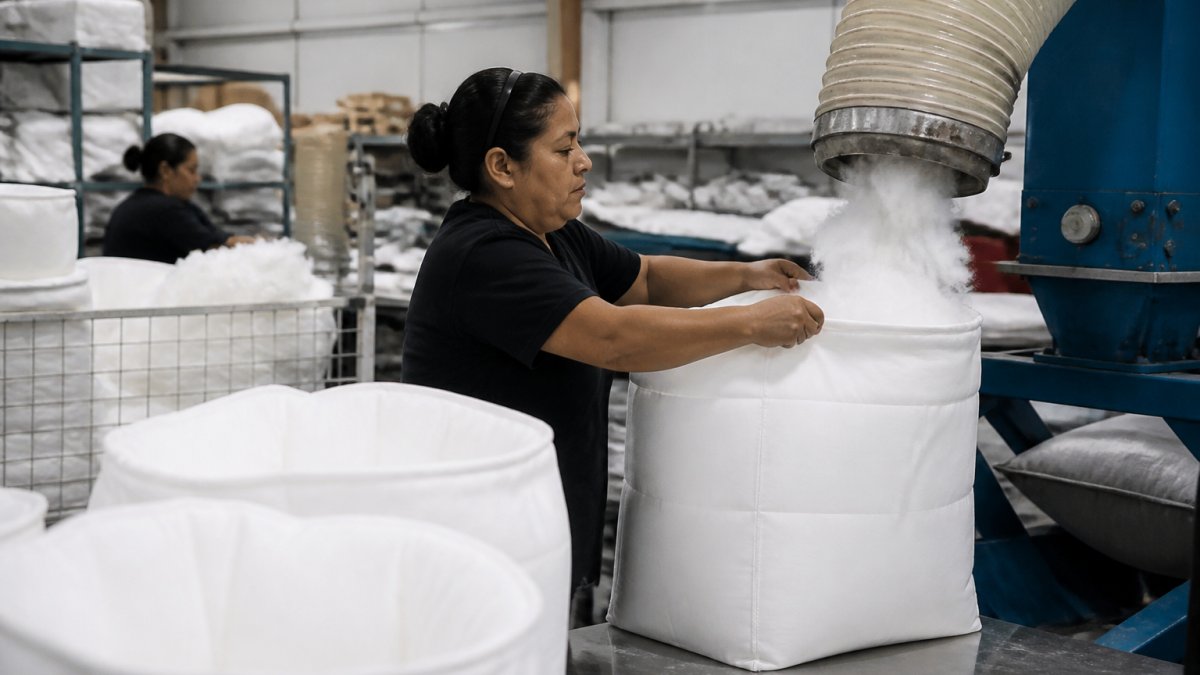
Sewing Contractor Solutions operates from Dallas, Texas, and works with established brands on recurring production. We handle Contract Sewing Manufacturing, Industrial Sewing Manufacturing, Cut-and-Sew Production, and Pillow, Cushion & Blow-Fill Manufacturing. Because we're local, communication is direct. You talk to production leadership, not a sales intermediary. Changes happen fast.
Pro Tip Domestic manufacturing shines for products with variable demand or seasonal spikes. You can reorder in smaller batches without the 20-week penalty, which means better inventory turns and less dead stock.
2. Implement Preventive Maintenance to Control Equipment Downtime
Equipment breaks. When it does, production stops. A single broken sewing machine or cutting station can halt an entire line for days while parts arrive and technicians repair it.
Preventive maintenance eliminates most of that downtime. Schedule maintenance before failure happens. Oil the machines regularly. Replace worn needles and thread guides on a calendar, not on crisis. Inspect cutting blades for wear. Check electrical connections.
This sounds obvious. Most manufacturers skip it because maintenance takes time and costs money upfront. But the cost of downtime is higher. A production line down for three days loses more revenue than a week of preventive maintenance costs.
The payoff is operational excellence and predictable throughput. If your line runs 95% of the time instead of 85%, you've added 10% capacity without buying new equipment. That translates directly to faster lead times.
Document what you maintain and when. Use a simple spreadsheet or a maintenance-tracking app. The discipline matters more than the tool.
Watch Out Skipping preventive maintenance creates a false economy. You save money this month, then lose three weeks of production next month when something catastrophic breaks. The math always favors prevention.
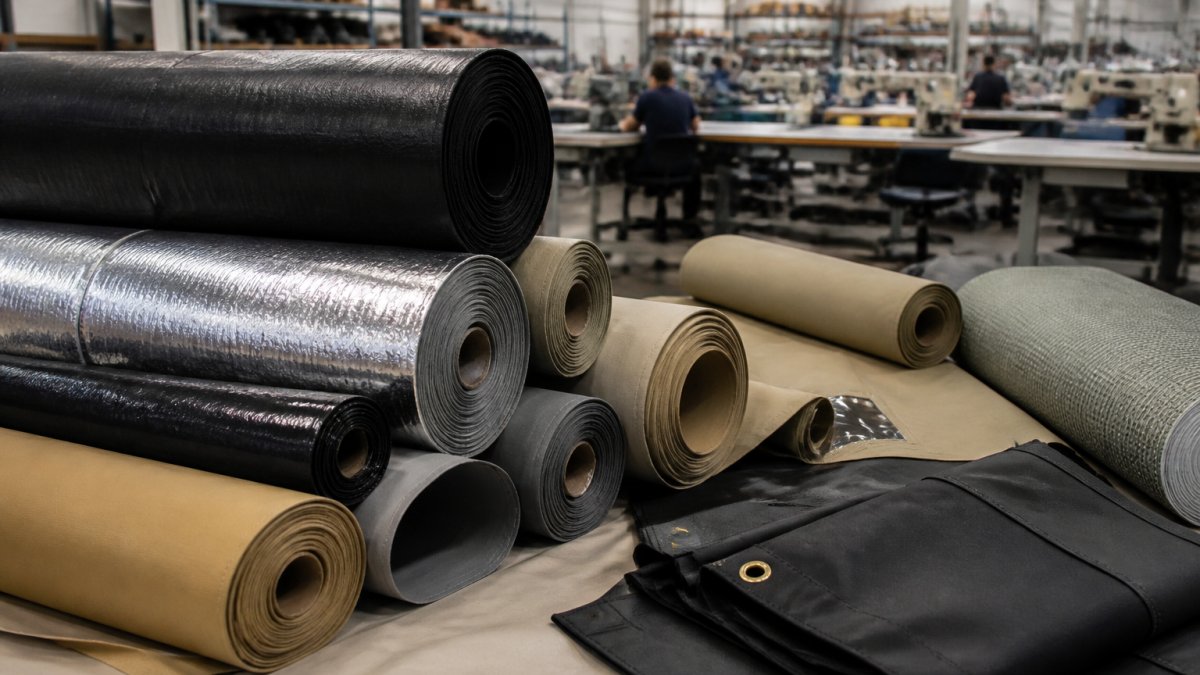
3. Optimize Cut and Sew Manufacturing Lead Times Through Material Planning
Material delays are often invisible. Your production schedule says 4 weeks. But if fabric doesn't arrive until week 2, you've really got 2 weeks of actual sewing time. The lead time clock is ticking the whole time.
Smart material planning starts with forecasting. Know what you'll need 12 weeks out, not 4 weeks out. That gives your supplier time to source fabric without rushing, and it gives you time to source alternatives if something falls through.
Standardize materials where possible. If you can use the same fabric for five products instead of five different ones, your supplier can buy in bulk, your inventory is simpler, and your lead times compress. Variety costs time.
Work with suppliers who have stock. Some fabric suppliers maintain inventory of common materials. Ordering from stock takes days, not weeks. It costs more per unit, but if you're cutting lead times, the math often works.
For cut-and-sew products specifically, material planning includes die cuts, labels, and components. If your product needs a custom label, that's a separate lead time. Order labels simultaneously with fabric, not after fabric arrives.
The best material planning includes buffer stock for high-demand items. If your best-selling product uses a specific fabric, keep two weeks of that fabric on hand. It ties up working capital, but it eliminates the bottleneck when demand spikes.
Key Takeaway Material planning is where most manufacturers lose weeks without realizing it. The sewing itself takes four weeks, but waiting for materials takes six. Fix the materials, and your lead times drop immediately.
4. Use Production-Ready Samples to Accelerate Commercial Manufacturing
A production-ready sample is a finished product that meets your specifications. It shows the manufacturer exactly what you want: the stitch type, the seam placement, the material weight, the assembly order, everything.
Without a sample, a manufacturer has to interpret your specifications from drawings or descriptions. That interpretation takes time. Questions come back. You clarify. They re-read. More questions. This cycle can add two to four weeks before production even starts.
With a production-ready sample, setup is faster. The manufacturer can measure the sample, match the materials, set the machines, and start production. No interpretation. No back-and-forth.
This is why Sewing Contractor Solutions focuses on companies with established products and production-ready samples. We're not doing product development. We're scaling production. A sample tells us everything we need to know to move fast.
If you're switching manufacturers, bring your sample. If you don't have one, make one before you approach a manufacturer. It's the single fastest way to shorten the path from quote to production.
The sample also prevents costly mistakes. A manufacturer who can see and touch your product makes fewer assumptions than one working from a spec sheet. Fewer mistakes mean fewer rework cycles, which means faster throughput.
5. Reduce Manufacturing Bottlenecks With Capacity Planning and Automation
A bottleneck is a step in production that's slower than everything else. If cutting takes one day but sewing takes five days, sewing is the bottleneck. Everything upstream waits for it. Everything downstream waits for it. The whole line moves at the speed of sewing.
Identify your bottleneck. Watch the line. Where does material pile up? That's where the constraint is.
Once you've found it, you have three options: add capacity at that step, automate it, or redesign the product to reduce the work at that step.
Adding capacity means adding machines or workers. Automation means replacing manual work with equipment. Redesign means simplifying the product or the assembly sequence.
For many sewn products, the bottleneck is assembly or hand finishing. Automation here is difficult, sewing machines are flexible, but picking up a finished product and placing it in a box is still mostly manual. But you can reduce the work. Simplify the finishing steps. Combine operations. Use pre-cut components instead of cutting in-house.
Capacity planning means knowing your bottleneck before you need to. If your sewing line can handle 10,000 units per week but your cutting station can only produce 8,000 pieces per week, you know you need to add a cutting station before demand reaches 8,000. Planning ahead prevents the crisis.

6. Deploy Real-Time Data and Supply Chain Visibility
You can't optimize what you can't see. If you don't know where your order is in the production queue, you can't tell if it's on track or delayed.
Real-time data means tracking production status as it happens. How many units are cut? How many are sewn? How many are finished? When does it ship?
This requires basic systems. A spreadsheet works if you update it daily. A production-tracking app is better. Some manufacturers use barcode scanning at each station. The technology matters less than the discipline of capturing data.
Supply chain visibility extends beyond your manufacturer. Where is your fabric? When does it arrive at the factory? Where is the finished product? When does it reach your warehouse?
This visibility lets you spot delays before they become crises. If fabric is three days late, you know it now, not when production should have started. You can communicate with customers, adjust your schedule, or find alternative materials.
Many manufacturers now share dashboards with customers. You log in, see your order status, and know exactly when to expect delivery.
7. Adopt Just-In-Time Inventory and Demand Forecasting
Just-in-time (JIT) inventory means ordering exactly what you need, exactly when you need it. No buffer stock. No safety margin. The product arrives just as you're about to use it.
Frequently Asked Questions
How can domestic contract manufacturing reduce lead times compared to overseas production?
Domestic manufacturers eliminate extended shipping times, reduce customs delays, and enable faster communication with production teams. Reshoring sewn-product manufacturing to the U.S. cuts replenishment cycles by weeks. Direct access to your manufacturer means production flexibility, quicker adjustments to orders, and inventory control without relying on large minimum orders from overseas suppliers. Just-in-time supply becomes feasible when your contract manufacturer is domestic.
What are production-ready sample requirements for accelerating manufacturing?
A production-ready sample shows your contract manufacturer exactly what you need: material type, stitch specifications, finish details, and quality standards. It eliminates back-and-forth revisions and reduces setup time. Established designs with approved samples move directly into commercial production without prototype iterations. This accelerates cut and sew manufacturing lead times by removing ambiguity and enabling your manufacturer to set up equipment and processes immediately.
How does reducing manufacturing bottlenecks improve overall lead time?
Bottlenecks, equipment downtime, material delays, capacity constraints, add days to your timeline. Preventive maintenance keeps machines running, capacity planning prevents overload, and automation handles repetitive tasks faster. Real-time data visibility shows where delays occur so you can address them immediately. A manufacturer with strong operational excellence practices and efficient material handling eliminates these delays, cutting your cycle time significantly.
What role does supply chain visibility play in manufacturing lead times?
Supply chain visibility tracks materials from sourcing through production to shipment. Real-time data on inventory levels, production schedules, and logistics status prevents surprises. When you can see where orders sit in the queue and when materials arrive, you forecast delivery accurately and adjust demand forecasting. This transparency enables faster decision-making and reduces administrative rework that delays shipments.
Discuss Your Production Project
Comments