
Textile Manufacturing for Medical Devices: A Buyer's Guide

Table of Contents
Medical Textile Manufacturing: What Buyers Actually Need to Know
Where Textiles Sit in the Device Landscape
The Specifications That Drive Every Decision
Medical Textile Supplier Qualification: A Practical Vetting Framework
Documents to Request Before a Site Visit
Questions That Reveal Real Capability
Medical Textile Quality Control on the Production Floor
Tying the Control Plan to Intended Use and Risk
Incoming, In-Process and Final Inspection
Material Qualification and Performance Testing
Process Validation and Change Control
Medical Textile Traceability From Fiber to Finished Device
Medical Device Contract Manufacturing: Scope, Workflow and Scale-Up
The End-to-End Production Workflow
Make-Versus-Buy and the Cost Drivers Behind It
Scale-Up and Recurring Supply
Domestic Production and Supply-Chain Resilience
Conclusion
Frequently Asked Questions
Last Updated: October 20, 2026
Medical Textile Manufacturing: What Buyers Actually Need to Know
Textile manufacturing for medical devices is the production of fabric-based components and finished products that meet defined performance, cleanliness and documentation requirements for healthcare use. It differs from ordinary sewn-goods production because the buyer must prove what went into the product and how it was controlled. At Sewing Contractor Solutions, we see sourcing teams consistently underestimate one thing: the paperwork is as much a deliverable as the stitching.
Below, we break down what to verify before you commit a production line.
Where Textiles Sit in the Device Landscape
Medical textiles span far more than fabric: surgical gowns, drapes, protective apparel and face masks, plus wound care dressings, hygiene products, implantable structures and barrier devices for infection control. Some items are regulated as medical devices; others are consumables sold to healthcare facilities.
That distinction matters for sourcing. A gown sold as general protective apparel and a gown sold as a regulated device carry different obligations, and the buyer inherits them either way.
The Specifications That Drive Every Decision
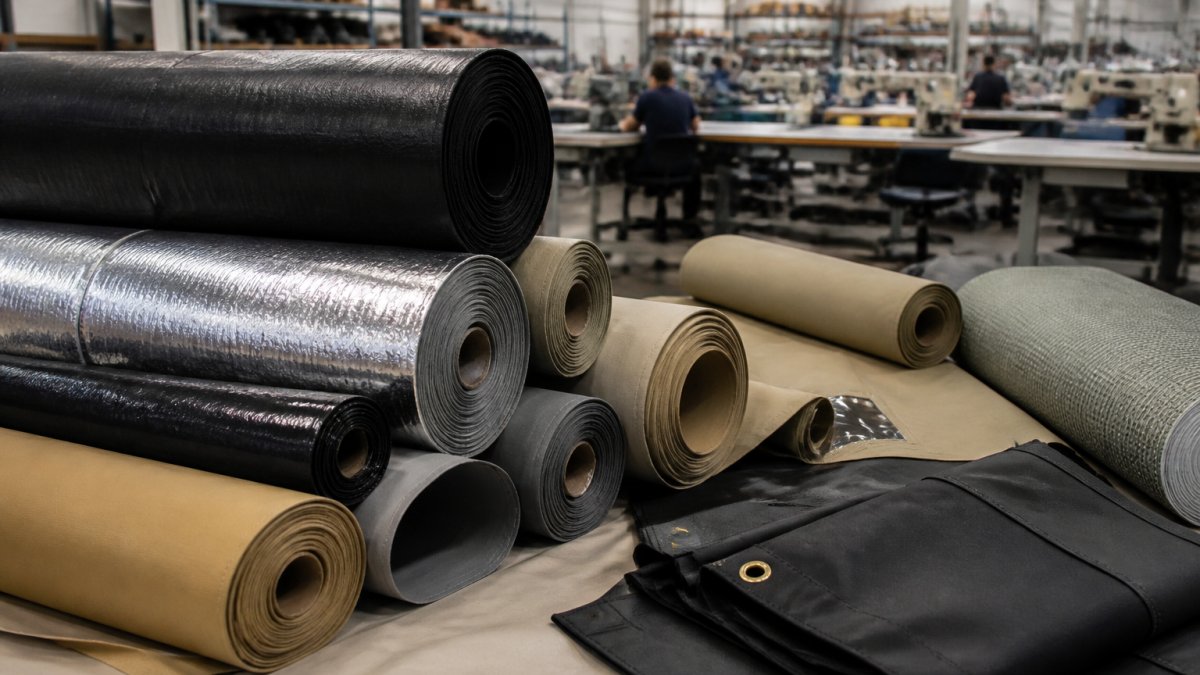
Fiber selection and fabric construction decide most of what follows. Woven fabrics offer dimensional stability; knitted fabrics stretch and conform; nonwovens suit single-use barrier products. Each choice cascades into mechanical strength, breathability, fluid resistance and moisture management.
Medical textile specification is the documented set of material, construction and performance requirements a supplier must meet and prove. Without it, quality control has no baseline and no dispute is resolvable.
Watch Out The most common mistake we see is a purchase order that lists a fabric weight and a color but no performance criteria. When the first shipment arrives and the barrier behavior is wrong, there is no agreed standard to measure against, and the buyer absorbs the cost.
Medical Textile Supplier Qualification: A Practical Vetting Framework
Medical textile supplier qualification verifies that a manufacturer can meet your specifications repeatedly, not once. Capability on a sample is easy to find; consistency across ten production runs is what you are actually buying.
We recommend scoring candidates on four weighted criteria before any site visit:
Criterion | What to Verify | Weight |
Process control | Written procedures, in-process checks, deviation handling | High |
Material control | Traceability, incoming inspection, approved-supplier list | High |
Documentation | Device history records, batch records, change notification | High |
Capacity fit | Run size, scheduling flexibility, surge headroom | Medium |
Documents to Request Before a Site Visit
Ask for the quality manual, production control plan, a sample batch record and the change-notification procedure. A supplier that cannot produce these quickly is telling you something. Also request the list of subcontracted operations, since cutting, assembly and packaging may not all happen under one roof.
Questions That Reveal Real Capability
Ask what happens when a roll of fabric fails incoming inspection, who signs off on a deviation and who tells the customer, and how a specification change reaches the floor. Vague answers predict vague production.
Pro Tip Ask for the last three customer complaints and the corrective actions taken. Suppliers prepared for a serious review will have them organized. The content of the answers matters less than whether the process behind them exists.
Medical Textile Quality Control on the Production Floor
Medical textile quality control is the inspection, testing and validation regime that confirms materials and finished goods meet specification at three stages: incoming, in-process and final. Each stage catches a different class of defect, and skipping one pushes the failure downstream where it costs more.

Tying the Control Plan to Intended Use and Risk
The starting point is the intended use and risk file, not the sewing floor. A barrier gown, a wound-contact dressing and a wearable monitoring strap carry different failure consequences, and the control plan should reflect that.
Buyer and manufacturer should agree early on which characteristics are critical to quality. Seam integrity on a sterile barrier gown is critical; shade match on a non-sterile support wrap may be cosmetic. Naming those characteristics lets inspection focus where a failure would actually matter rather than spreading the same intensity across every attribute.
Incoming, In-Process and Final Inspection
Incoming inspection checks fiber content, fabric weight, width, shade and visible defects against the approved specification, and confirms the material lot matches what was qualified. In-process inspection watches stitch type, seam integrity, dimensional accuracy and assembly sequence while the run is live.
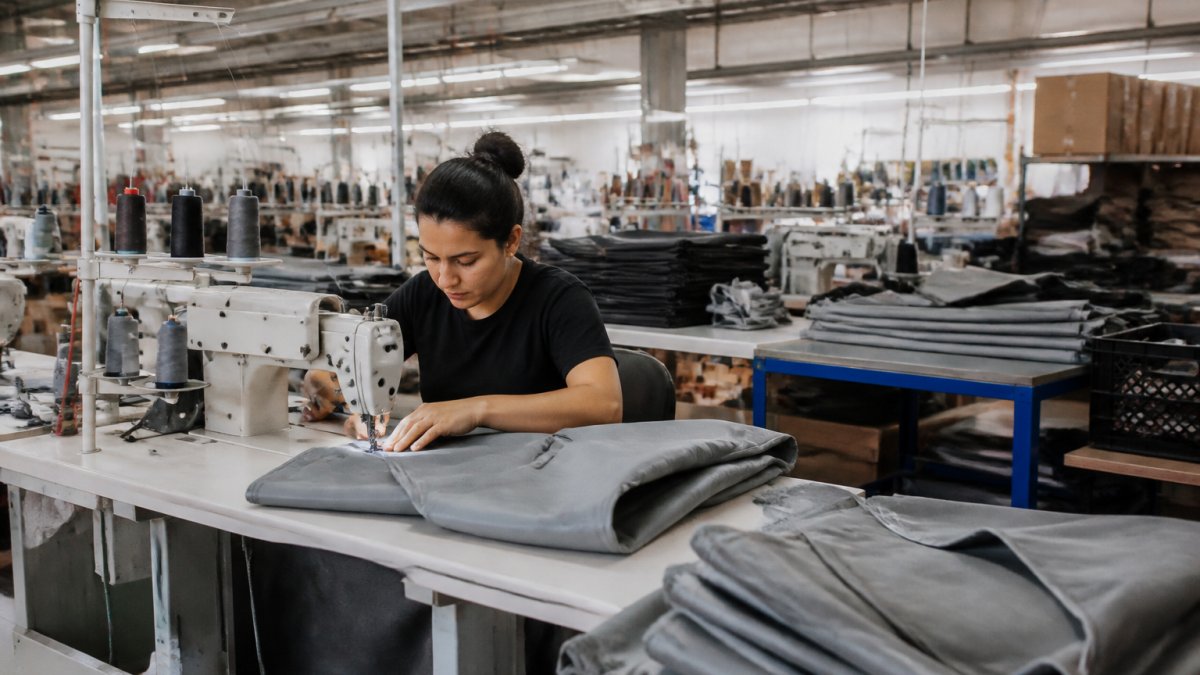
For sewn components, this is where stitch discipline shows. Single-needle, double-needle, serger, box-X and bar-tack operations each fail differently, and the inspection plan should name the failure mode for each: a double-needle seam by skipped stitches along one needle line, a bar-tack by insufficient penetration at the tack ends.
Material Qualification and Performance Testing
Material qualification establishes that a fabric or component performs as claimed before routine production. Typical checks include tensile and tear strength, seam strength, fluid resistance, breathability and, where relevant, biocompatibility and sterilization compatibility (F2407/F2407M Standard Specification for Surgical Gowns Intended for Use in Healthcare...). Testing should follow a documented method so results are comparable across lots and suppliers.
Two caveats matter. First, performance after processing differs from performance before it: a fabric that passes fluid resistance out of the roll may fail after ethylene oxide sterilization or gamma irradiation, so qualification should test the processed state the device ships in.
Watch Out A common failure pattern is qualifying a fabric only in its incoming state, then discovering after sterilization that seam strength or barrier performance has shifted. Build post-processing testing into the qualification plan before the first production run, not after the first complaint.
Process Validation and Change Control
Inspection confirms output; validation confirms the process can produce conforming output repeatedly. For sewn medical textiles, that means establishing that a given combination of material, stitch type, machine setting and operator training yields consistent seam strength and dimensional accuracy, then locking those parameters so they do not drift.
Change control is the other half. A fiber blend change, a thread lot substitution or a machine retool can each alter performance without anyone intending it. The control plan should require notification before a change reaches production, with a defined re-qualification step when the change touches a critical characteristic.
Medical Textile Traceability From Fiber to Finished Device
Medical textile traceability is the ability to follow a finished product back through every production step to the specific material lots and operators involved. It is what makes a recall surgical rather than total.
A workable system links four things: the incoming material lot, the production batch record, the inspection results and the shipping record. When a fabric lot is later flagged, you can identify exactly which finished units contain it.
Ask prospective suppliers to walk you through one real batch record from finished unit back to fiber lot. If the walk-through stalls at any link, the system is theoretical.
Medical Device Contract Manufacturing: Scope, Workflow and Scale-Up
Medical device contract manufacturing is the outsourcing of production, assembly and associated process control to an external manufacturer operating under the buyer's specifications and quality expectations. Write the scope down before the first run, including who owns tooling, who holds material inventory and who handles rework. Most sourcing problems in this category trace back to a scope that was assumed rather than documented.
The End-to-End Production Workflow
A typical engagement runs through specification review, design transfer, material sourcing and qualification, sample approval, pilot run, process validation, production, inspection, packaging and fulfillment.
Design transfer is where most timelines slip. The buyer's design intent, tolerances and critical characteristics must translate into a manufacturing method the floor can execute repeatably.
The pilot run is the gate buyers skip most often and the cheapest place to find a problem.
At Sewing Contractor Solutions, we evaluate an existing product, production-ready sample or established design and map it onto our cut-and-sew, sewn component and assembly capabilities.
Make-Versus-Buy and the Cost Drivers Behind It
Cost in textile manufacturing for medical devices is driven by material, labor content, setup and learning curve, inspection burden and volume. Complexity raises all five: a design with more panels, more stitch types and tighter tolerances costs more regardless of who makes it.
Make-versus-buy usually turns on capacity and control, not unit price alone. If internal capacity is consumed by core products, outsourcing overflow protects the main line.
Production requirements depend on product complexity, textile requirements, setup and learning curve, recurring demand and overall economics of the project.
Scale-Up and Recurring Supply
Scale-up is not simply running more units. It is confirming the process validated at pilot volume still holds at production volume, that material supply keeps pace and that inspection capacity grows with output.
Recurring supply relationships reward planning. Sharing a rolling forecast, even an imperfect one, lets the manufacturer sequence material orders and labor against expected demand rather than reacting after the fact. Buyers who treat each order as a one-off pay for it in lead time and setup cost on every run.
Key Takeaway Compare total landed cost, not quoted unit price. Freight, inventory carrying cost, rework, inspection burden and delay risk belong in the comparison, and they often change the answer.
Domestic Production and Supply-Chain Resilience
Domestic production shortens the loop between a problem and a fix.
The practical benefits are communication, production flexibility, faster replenishment and tighter inventory control. Shorter runs become economical because freight and transit time stop dominating the math, which reduces dependence on large overseas minimum orders and supports just-in-time supply.
We would not claim domestic manufacturing is always cheaper. It is not. The case rests on responsiveness, replenishment speed and the cost of delay, and those vary by program.
Conclusion
The hard part of sourcing medical textile production is not finding a supplier that can sew. It is finding one that can document, trace and repeat. Build the specification first, score suppliers against it, and verify traceability with a real batch record before committing volume.
If you have an established product or production-ready sample and need a domestic partner for recurring output, Sewing Contractor Solutions can quote the work. Our capabilities include cut-and-sew production, sewn component manufacturing, assembly, packaging and fulfillment, with direct communication to ownership and production leadership.
Frequently Asked Questions
What is medical textile manufacturing?
Medical textile manufacturing is the commercial production of fabric-based components and products used in healthcare and device applications. It covers surgical gowns and drapes, masks, protective apparel, wound care dressings, implantable structures and wearable sensors. The work combines fiber selection, fabric construction (woven, knitted or nonwoven) and cut-and-sew fabrication under controlled quality systems. For buyers, the key distinction is that medical textile manufacturing is a regulated production activity, not general apparel sewing. Suppliers must document material qualification, process control and traceability for every lot they ship.
How do you choose a medical textile manufacturer?
Start with medical textile supplier qualification: request the quality manual, material certifications, audit history and sample traceability records. Confirm the supplier can handle your specific fabric, whether that is a lightweight nonwoven or a heavy coated material, and that their sewing capability matches the joint and seam requirements. Visit the floor and watch in-process inspection. Ask how they handle nonconforming material and how they scale from a production-ready sample to recurring runs. A supplier that cannot show documented quality control and traceability should not be shortlisted for device work.
What quality systems should a medical device textile manufacturer have?
At minimum, the supplier should operate a documented quality management system aligned with FDA expectations for the device class involved. That includes incoming material inspection, in-process checks, final inspection, nonconformance handling, corrective action and calibration of measuring equipment. Ask for evidence of medical textile quality control records, not just a certificate on the wall. The system should also cover material qualification, performance testing and change control. If the supplier cannot explain how a fabric change is approved before it reaches your device, the system has a gap.
How can a manufacturer demonstrate traceability for medical textiles?
Medical textile traceability means the supplier can link each finished lot back to the raw material lots, production date, operators, equipment and inspection records. Ask for a sample traceability report and follow one lot through it. The record should identify fiber or fabric supplier, receiving inspection, cutting and sewing records, and final release. Barcoded lot tracking and retained samples strengthen the case. If a recall or field issue occurs, this record is what lets the manufacturer isolate affected product quickly. Traceability is also a core part of medical device contract manufacturing audits.
Discuss Your Production Project
Comments