
Cut and Sew Manufacturing for Industrial Products

Table of Contents
What Cut and Sew Manufacturing Means for Industrial Production
The Cut and Sew Process: From Raw Materials to Finished Products
Pattern Preparation and Design Specifications
Fabric Cutting and Material Handling
Sewing, Assembly and Quality Control
Industrial Cut and Sew Products: Real Examples and Applications
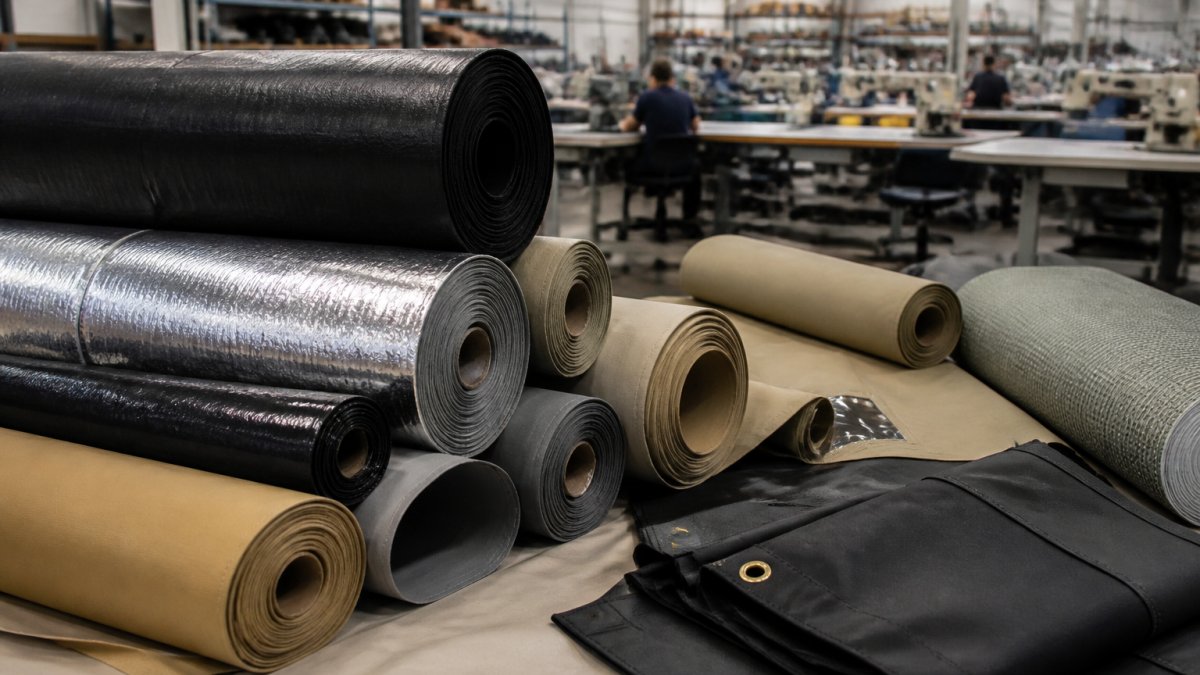
Materials That Perform: Technical Textiles and Specialty Fabrics
Performance requirements come first
Common industrial material families and what they demand
Thread, needle, and stitch selection
Material sourcing and substitution control
Matching material to manufacturing method
Cut and Sew versus Contract Sewing and CMT: What Sets Them Apart
Evaluating a Contract Sewing Manufacturer: A Practical Checklist
Engineering and specification capability
Material and process experience
Quality systems and documentation
Capacity, scheduling, and change control
Communication and program management
Track record
Why Domestic Manufacturing Matters for Industrial Sewn Products
Frequently Asked Questions
Last Updated: October 12, 2026
What Cut and Sew Manufacturing Means for Industrial Production
Cut and sew manufacturing is the process of cutting fabric from rolls or sheets, then sewing those pieces into finished products.
Industrial cut and sew manufacturing demands more than basic sewing skills. The difference between a capable Industrial Sewing Manufacturing partner and one that struggles comes down to material knowledge, equipment capability, and quality control discipline.

The Cut and Sew Process: From Raw Materials to Finished Products
Industrial cut and sew manufacturing follows a structured workflow. Understanding each stage helps you evaluate whether a manufacturer can handle your product requirements.
Pattern Preparation and Design Specifications
Before any fabric is cut, the design must be translated into cutting patterns defining every dimension, seam allowance, and notch cutters and sewers will follow.
Your design specifications should include:
Finished dimensions and tolerances
Seam placement and allowance details
Material type and weight requirements
A manufacturer experienced in industrial products will ask detailed questions: whether tolerances are tight (±0.25 inches) or loose (±0.5 inches), whether certain seams see high stress, and what environmental conditions the product must withstand. When you bring a production-ready sample or established design, pattern makers digitize it or create physical templates, accuracy here prevents costly mistakes downstream.
Fabric Cutting and Material Handling
Cutting is where material waste is controlled and cutting accuracy is established. High-volume runs often use computer-controlled cutting systems; lower-volume or specialty material runs may use manual cutting with templates or band saws.
Material handling matters more than many buyers realize. Heavy fabrics like canvas or Cordura require different handling than lightweight textiles; stretch materials must be relaxed before cutting to prevent distortion; aramid materials like Kevlar demand careful handling to avoid fraying.
Sewing, Assembly and Quality Control
Sewing brings cut pieces together, and industrial products demand specific stitch types depending on the application and materials involved.
Common stitch techniques for industrial products include:
Single-needle stitching for general seams and lightweight materials
Double-needle stitching for reinforced seams and stretch fabrics
Serger stitching for finished edges and seam binding
Material type determines stitch selection: heavy PVC requires different thread and needle sizes than Cordura, stretch fabrics need flexible thread to prevent seam breakage, and aramid materials demand specialized needles. Experienced manufacturers plan the sewing order, building sub-assemblies first and combining them into larger sections.
Industrial Cut and Sew Products: Real Examples and Applications
Cut and sew manufacturing produces far more than apparel. Examples of industrial products that rely on this process:
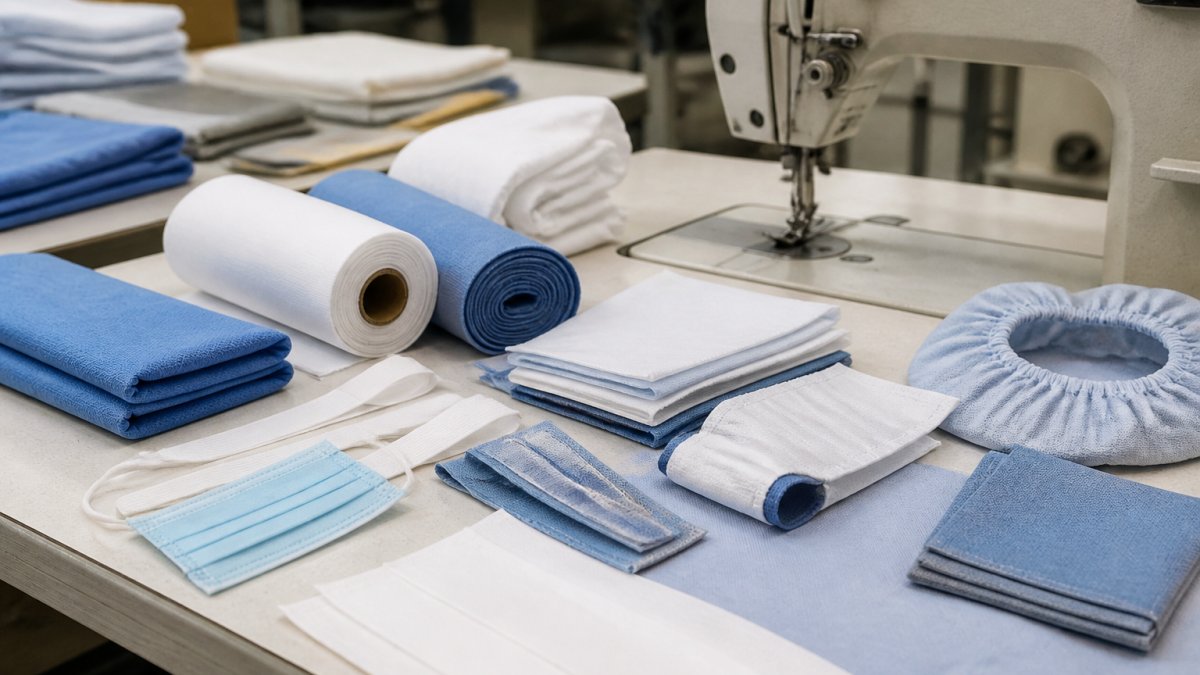
Medical device components: Protective covers, sterile packaging components, and specialized covers meeting FDA requirements or ISO standards.
Industrial protective equipment: Equipment enclosures, machinery covers, and specialized industrial bags built for rough environments.
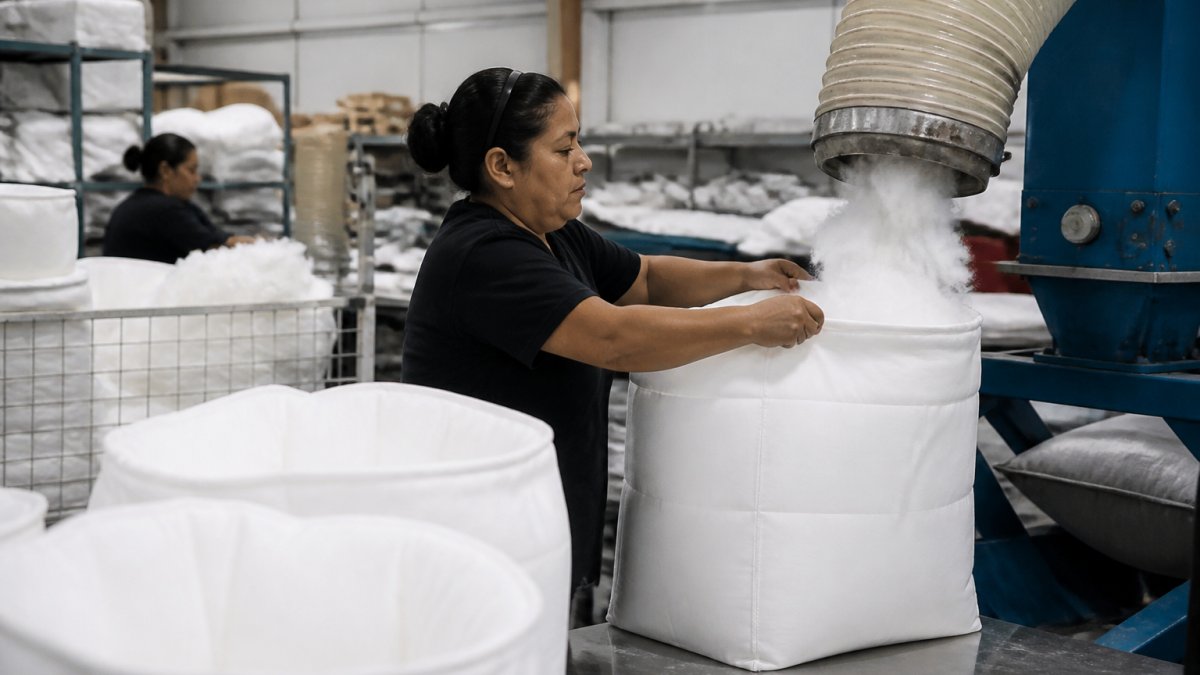
Home furnishings and commercial textiles: Pillows, cushions, and fiber-filled products produced through blow-fill processes, combining cutting, sewing, and filling in one workflow, a capability that Pillow, Cushion & Blow-Fill Manufacturing specialists bring to recurring production programs.
Automotive components: Interior trim covers, protective components, and specialized textiles that must fit precisely and withstand vibration and temperature changes.
Bags and industrial containers: Custom bags for protective storage and equipment transport, often requiring reinforced seams and specialized closures.
Each application has different material requirements, durability standards, and performance expectations.
Materials That Perform: Technical Textiles and Specialty Fabrics
Material selection is the single biggest driver of how an industrial sewn product performs, how it is constructed, and how it is quoted. Industrial buyers need to understand what each material family demands from manufacturing.
Performance requirements come first
Before choosing a fabric, define what the product must survive:
Abrasion and wear. Products rubbing against equipment, pallets, or the ground need coated fabrics, heavy woven synthetics, or reinforced panels at wear points.
Tensile and tear strength. Load-bearing products, slings, lifting components, equipment enclosures with attachment points, require fabrics and seam constructions rated for the load, with appropriate safety factors.
Chemical and fluid exposure. Products used around oils, solvents, or washdown environments need coated or laminated fabrics that resist penetration and degradation.
Common industrial material families and what they demand
Coated and laminated fabrics (PVC, polyurethane, vinyl). Common in covers, enclosures, and fluid-resistant products.
Heavy woven synthetics (nylon and polyester, including Cordura-style fabrics). The workhorses of bags, packs, and equipment covers.
Aramid and high-performance fibers (Kevlar, Nomex, and similar). Heat resistance and high strength-to-weight ratios for protective applications.
Webbing and narrow fabrics. Used for handles, straps, attachment points, and reinforcement, typically bar-tacked or box-X stitched at load points.
Mesh and technical knits. Used for ventilation, filtration, and lightweight containment.
Thread, needle, and stitch selection
Material choice cascades into consumables. A coated fabric needs thread that will not wick moisture through the stitch line; an aramid fabric needs a needle that resists heat buildup and dulling; a stretch material needs thread with enough elongation to move with the fabric without breaking. Stitch type follows the same logic, a lockstitch, chain stitch, and cover stitch each behave differently under load and abrasion.
Material sourcing and substitution control
Technical textiles are produced in specific widths, coatings, and finishes that affect downstream processing. When a specified material is unavailable, substitution is not a simple swap, coating weight, fabric weight, weave, and finish all affect cutting behavior, seam strength, and finished-product performance. A disciplined manufacturer routes any proposed substitution through an approval process: identify the closest match, document the differences, produce a first-article sample, and get written approval before running production.
Watch Out Material substitutions that look equivalent on paper can change seam strength, abrasion life, and coating adhesion. Always require first-article approval on any substituted material before full production.
Matching material to manufacturing method
Not every material can be cut and sewn the same way. Heavy coated fabrics may require die cutting or computer-controlled cutting for consistency; aramid fabrics may require slower sewing speeds and more frequent needle changes; multi-layer assemblies may need a specific sewing order to avoid re-handling delicate materials. Ask a manufacturer to walk through how your specific material moves through cutting, sewing, and finishing, the answer tells you whether they have actually run it before.
Cut and Sew versus Contract Sewing and CMT: What Sets Them Apart
These terms are often confused, but they describe different manufacturing models.
Contract sewing is general-purpose sewing work. A contract sewing manufacturer accepts various projects on general-purpose equipment, apparel one week, industrial covers the next.
Cut-and-sew manufacturing is a complete process: the manufacturer handles cutting, sewing, assembly, and finishing, owning the entire workflow from raw material to finished product. This integration creates accountability and consistency. Cut-and-Sew Production that spans the full workflow gives you one point of accountability for quality and delivery.
CMT (Cut-Make-Trim) is a service model where you supply pre-cut fabric pieces and the manufacturer sews and finishes them.
The distinction matters for industrial products. Cut and sew manufacturing gives you one point of accountability, with quality controlled from material receipt through final inspection.
Evaluating a Contract Sewing Manufacturer: A Practical Checklist
Most supplier checklists online are written for apparel buyers. Industrial sewn products are sourced against different questions because the failure modes differ: a garment that frays is a return, but a protective cover that tears at a load point is a field failure, a warranty claim, or a safety event. Use the criteria below to separate manufacturers who understand industrial work from those who simply own industrial machines.
Engineering and specification capability
Can they read and work from a specification package, not just a sample? Ask what a typical spec package includes: pattern files, bill of materials, seam schedule, tolerance callouts, and inspection criteria.
Do they ask about load paths? On a bag, cover, or enclosure, stress concentrates at attachment points, corners, and handle roots. A manufacturer who understands this will propose box-X or bar-tack reinforcement at those points without being told.
Can they hold tolerances appropriate to the product? A ±0.25 inch tolerance is reasonable for many soft goods; ±0.125 inch on a mating panel or frame-aligned component is a different conversation. Confirm they can measure to the tolerance you specify, not just cut to it.
Material and process experience
Have they run your material family before? Coated fabrics, webbing, mesh, laminates, and aramid textiles each have distinct cutting, needle, thread, and tension requirements. Ask for examples of similar substrates, not just similar products.
Can they handle multi-material assemblies? Many industrial products combine a structural fabric, liner, closure system, and hardware. The manufacturer must plan the assembly sequence so hardware and closures are installed at the right stage.
Do they offer material sourcing? A manufacturer with established supplier relationships can often source technical textiles, webbing, thread, and hardware more reliably than a buyer sourcing independently. Confirm whether sourcing is in scope and how substitutions are approved.
Quality systems and documentation
What does their in-process inspection look like? A credible answer describes checks at cutting, sub-assembly, and final assembly, not just a final visual pass.
Do they perform destructive or functional testing? Seam strength pull tests, closure cycle tests, and dimensional verification are common in industrial programs. Ask which tests they run in-house and which they send out.
Can they produce a documentation package? Industrial buyers often need lot traceability, material certifications, and inspection records tied to a production run. Ask what a standard package includes and how long records are retained.
Capacity, scheduling, and change control
What is their realistic monthly throughput for a product like yours? Capacity claims are easy; ask how they schedule around existing recurring programs.
How do they handle engineering change orders? A spec change in production needs a controlled path: revised pattern, revised work instructions, first-article approval, then full run.
What is their lead time for a repeat order versus a first production run? The first run includes setup, pattern verification, and operator learning; repeat runs should be faster and more predictable. A manufacturer who can articulate that difference understands production.
Communication and program management
Who is your day-to-day contact, and do they have authority to make production decisions? A single responsive point of contact who can walk the floor beats a shared inbox.
How are production status and issues communicated? Ask for the cadence: weekly updates, milestone notifications, or exception-based reporting.
Will you have access to production leadership if a problem escalates? For recurring industrial programs, direct access shortens resolution time significantly.
Track record
Can they provide references from established companies running recurring production, ideally in a similar product category?
How long have they been in business, and what share of their work is repeat business? A high repeat share signals that customers stay.
Have they supported reshoring transitions? Manufacturers who have moved a product line from an overseas supplier back to domestic production understand the documentation, tooling, and qualification steps involved.
Key Takeaway A manufacturer who answers these questions with specifics, seam types, test methods, change-control steps, documentation contents, is demonstrating the discipline industrial programs require. A manufacturer who answers with general assurances is not.
Why Domestic Manufacturing Matters for Industrial Sewn Products
Production flexibility matters for industrial products.
Inventory control improves with domestic manufacturing.
Reduced dependence on large overseas minimum orders is valuable for companies that don't need massive production runs.
Just-in-time supply becomes feasible.
Domestic manufacturing also supports reshoring initiatives.
The trade-off is that domestic labor costs are higher.
Industrial cut and sew manufacturing is a specialized process that demands material expertise, precise equipment, and rigorous quality control.
Frequently Asked Questions
How does cut-and-sew manufacturing work for industrial products?
Cut and sew manufacturing starts with raw textiles and transforms them into finished industrial products through pattern preparation, precision cutting, sewing, assembly and quality inspection. Design specifications guide the cutting patterns, fabric is cut to exact dimensions, components are sewn using appropriate stitch types (single-needle, double-needle, serger or bar-tack depending on durability requirements), then assembled and inspected to meet performance standards. The process accommodates both light-duty textiles and heavy-duty materials like Cordura, aramid blends and PVC.
What types of industrial products are made using cut-and-sew manufacturing?
Industrial cut and sew products include protective equipment covers, equipment enclosures, industrial bags, cushions and pillows, medical device components, automotive interior panels, home furnishing products and specialized textile assemblies. These products often require technical textiles, reinforced seams, specific stitch patterns and durability testing. Unlike apparel manufacturing, industrial cut and sew focuses on performance, compliance and long-term reliability rather than fashion or seasonal trends.
What should a company evaluate when choosing an industrial sewing manufacturer?
Assess the manufacturer's experience with your product type and material requirements, their sewing capabilities (single-needle, double-needle, serger, box-X, bar-tack), quality control processes, communication responsiveness, ability to handle your order volume, lead time reliability and willingness to work with production-ready samples or designs. Request references from companies in your industry, confirm they understand your compliance or performance requirements, and verify they can scale production as your demand grows. Domestic manufacturers offer faster communication, production flexibility and shorter replenishment cycles compared to overseas suppliers.
What materials are used in industrial cut-and-sew products?
Industrial cut and sew manufacturing uses technical textiles and specialty fabrics including Cordura, aramid materials such as Kevlar and Nomex, stretch fabrics, webbing, canvas, PVC, and blended technical textiles. Material selection depends on the product's performance requirements: durability, tear resistance, chemical resistance, flame retardancy or flexibility. A contract manufacturer should source materials that meet your specifications or work with your supplier to ensure consistency and compliance with industry standards.
Discuss Your Production Project
Comments