
Are Domestic Contract Manufacturing Benefits Real for Industrial Parts?

Last Updated: October 27, 2026
Quick Summary
Domestic contract manufacturing delivers seven benefits for industrial parts: shorter lead times and faster replenishment, lower total cost of ownership, direct communication, production flexibility, consistent quality control, reduced working capital tied up in inventory, and access to specialized sewing expertise and equipment. Compare total landed cost, not unit price alone, since domestic is not always cheaper.
Build a like-for-like TCO comparison covering piece price, freight, duties, carrying cost, quality escapes, and coordination hours.
Ask to see in-process and final inspection records from a comparable recurring run before you scale.
Confirm lot traceability links finished goods to material lots, operator, machine, and inspection records.
Verify the corrective-action process for documenting nonconformances, root cause, containment, and verification.
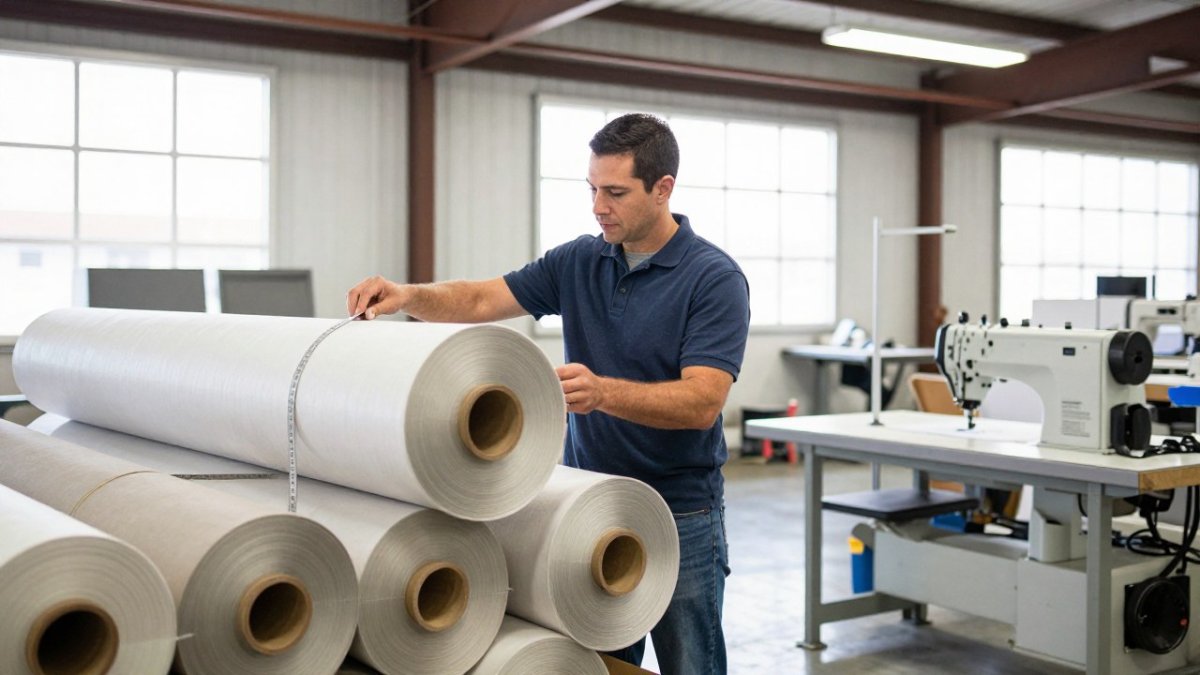
Qualify a partner on stitch types, material handling, inspection frequency, and ramp-up path for larger orders.
Table of Contents
Benefit 1: Shorter Manufacturing Lead Times and Faster Replenishment
Benefit 2: Lower Total Cost of Ownership, Not Just Lower Unit Cost
Benefit 3: Domestic Manufacturing Advantages in Communication and Problem-Solving
Benefit 4: Production Flexibility and Ramping Without Excess Capacity
Benefit 5: Quality Control and Product Consistency Across Recurring Runs
Contract Manufacturer vs. OEM: Which Role Fits Your Sourcing Model?
Benefit 6: Supply Chain and Inventory Management With Less Working Capital Tied Up
Benefit 7: Access to Specialized Expertise and Manufacturing Equipment
Why Industrial Buyers Are Reconsidering Offshore Production
Domestic contract manufacturing is the practice of outsourcing production to a U.S.-based partner that sews, cuts, assembles, and packages industrial sewn goods under your specification. At Sewing Contractor Solutions, we build heavy-duty sewn components and cut-and-sew products for established industrial buyers. Below, we walk through seven benefits of domestic contract manufacturing for industrial parts, and where each one actually holds up. But first, here is what most guides get wrong: they compare unit price only. The real comparison is total landed cost, and that changes the ranking.
Benefit 1: Shorter Manufacturing Lead Times and Faster Replenishment
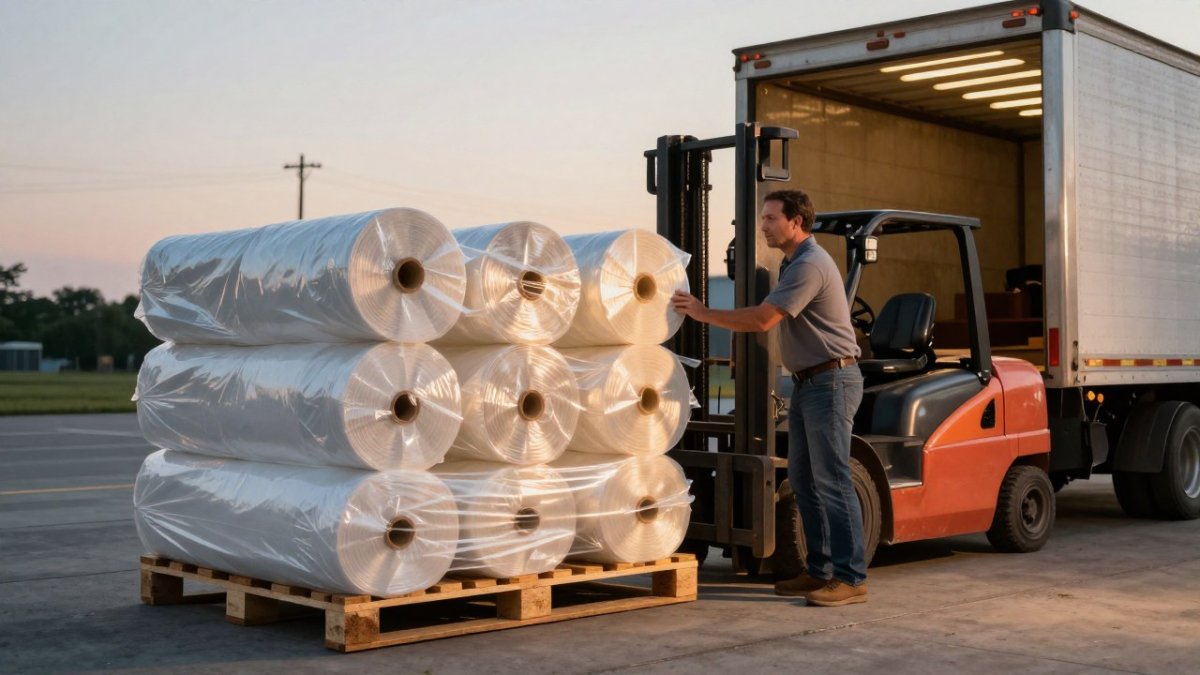
Production lead time can be an important consideration when comparing suppliers. Faster replenishment can help buyers respond to demand and manage inventory. For a deeper set of tactics, see 7 ways to reduce manufacturing lead times.
What a Freight Container Hides About Your Real Lead Time
For a fuller look at the risks, read our guide on mitigating overseas logistics risks.
Replenishment Cycles That Track Actual Demand
Domestic manufacturing can support faster replenishment and inventory control.
Benefit 2: Lower Total Cost of Ownership, Not Just Lower Unit Cost
Total cost of ownership (TCO) can include freight, duties and tariffs, inventory carrying cost, quality escapes, rework, obsolescence, and supplier coordination. Domestic manufacturing is not always cheaper than overseas production. Compare like for like when evaluating suppliers.
How to Build a Like-for-Like TCO Comparison
Piece price, the quoted unit cost, at the quoted volume and specification.
Tooling and setup amortization, pattern, fixture, and first-article costs spread across the expected order quantity.
Freight and drayage, ocean or air freight, port fees, drayage, and inland trucking to your dock.
Duties and tariffs, applied at the harmonized tariff schedule classification for the finished good and its inputs.
Inventory carrying cost, the cost of capital, storage, insurance, and obsolescence on safety stock held to cover long and variable lead times.
Quality escapes and rework, scrap, sorting, return freight, and line-down costs when a lot fails incoming inspection.
Coordination hours, engineering, sourcing, and quality time spent on time-zone calls, travel, and issue resolution.
A Transparent Example: Heavy-Duty Webbing Assembly
Consider a reinforced webbing assembly with box-X stitching and bar-tacks at load points, ordered in recurring lots. An offshore quote may show a lower piece price, but the buyer also carries several weeks of ocean transit plus port dwell, holds safety stock to cover that variance, pays duty on the landed value, and absorbs the cost of a failed lot discovered at incoming inspection. A domestic partner quotes a higher piece price but removes most freight variance, shortens the replenishment cycle, and lets the buyer inspect first articles in person before the run scales. When the carrying cost and quality-escape lines are added back, the gap between the two quotes often compresses, and sometimes reverses. The only way to know is to run the numbers on your own part.
The Line Items Buyers Leave Out of the Offshore Quote
Freight and drayage, which move with fuel and capacity
Duties and tariffs, which can change with policy
Inventory carrying cost on weeks or months of safety stock
Rework, scrap, and line-down cost from quality escapes
Travel, sampling, and time-zone management hours
Obsolescence on finished goods that miss the demand window
Our article on the benefits of reshoring sewn products lays out the fuller case.
Benefit 3: Domestic Manufacturing Advantages in Communication and Problem-Solving
Communication is a production input, not a soft extra. Direct communication with ownership and production leadership is available at Sewing Contractor Solutions.
Benefit 4: Production Flexibility and Ramping Without Excess Capacity
Production flexibility can support changes in run size and recurring production needs.
Benefit 5: Quality Control and Product Consistency Across Recurring Runs
Industrial buyers may evaluate quality requirements and consistency across recurring runs.
What an Industrial Inspection Plan Should Contain
A credible domestic partner can show you an inspection plan before the first production run. For sewn and cut-and-sew industrial components, that plan typically covers:
Incoming material verification, lot identification, width and weight checks, and color or finish approval against the specification.
In-process checks, stitch type and density (for example, stitches per inch on single-needle and double-needle seams), seam allowance, and reinforcement placement at box-X and bar-tack locations.
First-article inspection, a full dimensional and construction check on the first unit of a run, signed off before the run continues.
In-process and final inspection, defined sample sizes and acceptance criteria, with results recorded by lot.
Packaging and labeling verification, count, label content, and pack configuration against your receiving requirements.
Lot Traceability and Documentation
Traceability is what lets you contain a problem instead of recalling a warehouse. Ask how the partner links finished goods to material lots, operator, machine, and inspection records. A workable system ties each production lot to the material lot numbers consumed, the inspection results recorded during the run, and the date and shift of production. When a defect surfaces in the field, that record tells you which lots are affected and which are clean, a capability that is difficult to exercise across an ocean and a customs boundary.
Corrective Action and Containment
Consistency across run one and run fifty depends on what happens when something goes wrong. Ask for the corrective-action process: how a nonconformance is documented, how root cause is identified, how containment is executed, and how the fix is verified on the next run. A domestic partner can often contain a suspect lot the same day it is identified, before it ships. That speed is the practical difference between a contained issue and a customer-facing one.
Quality-System Requirements to Confirm
Watch Out A sample that passes first-article inspection proves the process can make one good unit. It does not prove the process holds across a production run. Ask to see in-process and final inspection records from a comparable recurring run before you scale.

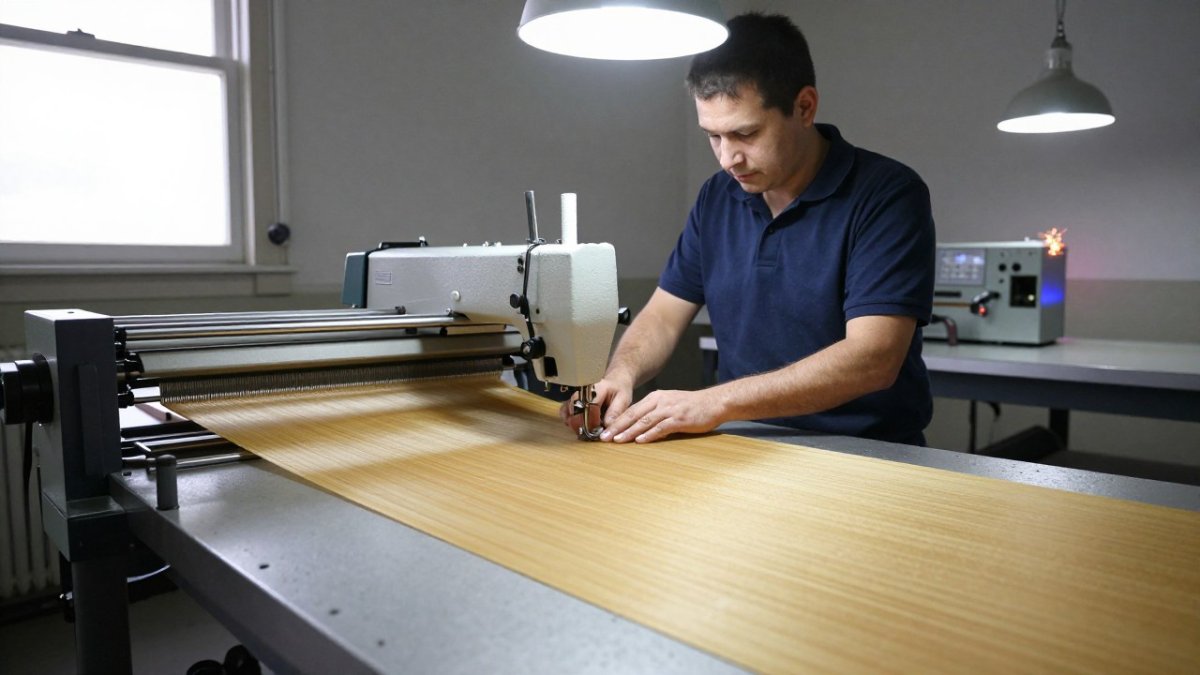
Sewing Contractor Solutions offers box-X and bar-tack sewing.
Contract Manufacturer vs. OEM: Which Role Fits Your Sourcing Model?
A contract manufacturer produces to a buyer's design and specification. Sewing Contractor Solutions works with established companies seeking to move an existing sample or design into commercial production. You can review our contract sewing and cut-and-sew services to see how that engagement works.
Model | Who Owns the Design | Best For | Your Control Level |
Contract manufacturer | You | Scaling your existing product | High |
OEM | The OEM | Buying a finished branded product | Low to moderate |
In-house production | You | Core, high-volume lines | Full, but capital-heavy |
Benefit 6: Supply Chain and Inventory Management With Less Working Capital Tied Up
Domestic manufacturing can support inventory control, faster replenishment, reduced dependence on large overseas minimum orders, and just-in-time supply. Buyers rethinking supplier concentration should weigh the trade-offs first; our piece on the risks of relying on single source suppliers covers what to watch for before you consolidate.
Benefit 7: Access to Specialized Expertise and Manufacturing Equipment
Sewing Contractor Solutions offers single-needle, double-needle, serger, box-X, and bar-tack sewing across materials including PVC, Cordura, and aramid materials such as Kevlar and Nomex.
What to Verify Before You Qualify a Domestic Partner
Supplier qualification can help buyers assess whether a partner can handle their material and production requirements.
Can they evaluate your existing sample for commercial production?
Do they run the stitch types your product needs?
Who inspects quality, and how often?
What is the ramp-up path for a larger order?
Can they source materials or work with yours?
Sewing Contractor Solutions brings U.S.-based contract sewing, cut-and-sew production, heavy-duty sewn components, and blow-fill capability under one roof, with direct communication to ownership and production leadership and flexible runs built around recurring demand. Request a manufacturing quote from Sewing Contractor Solutions.
Frequently Asked Questions
What is the difference between a contract manufacturer and an OEM?
A contract manufacturer produces to a buyer's design or specification. Sewing Contractor Solutions works with established companies seeking to move an existing sample or design into commercial production.
How do domestic manufacturing advantages show up in day-to-day supplier communication?
Direct communication with ownership and production leadership is available at Sewing Contractor Solutions. The company offers box-X and bar-tack sewing.
Can domestic contract manufacturing help industrial companies manage inventory?
Domestic manufacturing can support inventory control, faster replenishment, reduced dependence on large overseas minimum orders, and just-in-time supply.
What should buyers evaluate when choosing a contract manufacturer for industrial parts?
Start with capability match: stitch types, material range, cutting and assembly, and whether the partner handles heavy-duty substrates as well as light textiles. Check whether they can evaluate your existing production-ready sample for commercial production. Ask how they handle material sourcing, labeling, packaging and fulfillment.
Comments