
Top 5 Risks of Relying on Single Source Suppliers

Table of Contents
Why Single Source Suppliers Create Business Risk
Risk 1: Supply Chain Disruption and Operational Downtime
Risk 2: Vendor Lock-In and Loss of Pricing Use
Risk 3: Quality Control Gaps and Compliance Exposure
Risk 4: Financial Instability and Supplier Dependency
Risk 5: Logistical Delays and Lead Time Variability
Supply Chain Diversification Strategies That Work
Benefits of Domestic Contract Manufacturing for Risk Mitigation
Frequently Asked Questions
Last Updated: October 4, 2026
Why Single Source Suppliers Create Business Risk
Relying on a single source supplier feels efficient. One relationship. One point of contact. One predictable workflow. But that simplicity masks serious exposure.
Depending entirely on one supplier bets your production schedule, quality, and cost structure on a single business staying healthy. That's vulnerability, not partnership.
When a sole supplier fails, due to a factory fire, financial collapse, or regulatory shift, companies can be left with no backup and no way to fulfill orders.
Risk 1: Supply Chain Disruption and Operational Downtime
When your only supplier faces a production shutdown, equipment failure, natural disaster, labor issues, or regulatory problems, you have no fallback. Your production line stops. Orders slip. Customers wait.
A week-long disruption costs thousands in lost production; a month-long shutdown costs hundreds of thousands and damages years-old customer relationships.
During peak demand, if your supplier can't keep up, you can't redirect volume elsewhere. You lose market share to competitors with backup capacity.
Visibility into your supplier's capacity, equipment age, and maintenance schedules helps, but visibility alone doesn't solve the problem. You need an actual alternative ready to step in.
Watch Out A single supplier shutdown during your busiest season can cost 15-20% of annual revenue. The recovery time, rebuilding relationships, re-qualifying processes, ramping new production, often takes 3-6 months.
Risk 2: Vendor Lock-In and Loss of Pricing Use
When locked into one supplier, they control your cost structure. They can raise prices, impose longer lead times, or tighten payment terms, knowing you can't easily switch.
Vendor lock-in starts small, a 5% price increase, a longer lead time, then compounds. Your costs creep upward while margins compress, and you have no leverage to push back.
Lock-in deepens when your supplier invests in custom equipment or processes for you. Switching means they lose revenue and you lose specialized capability. A supplier with proprietary tooling or custom fixtures becomes nearly impossible to replace without significant retooling costs and delays.
Assessing Your Current Vendor Lock-In Risk
A simple audit reveals your lock-in exposure: switching costs (tooling, samples, validation, ramp time), custom capability (proprietary equipment or fixtures), lead time dependency, specification coupling (design tied to their specific process), and volume concentration (what percentage of their business you represent).
Suppliers with high lock-in factors may raise prices, knowing switching costs can exceed the savings.
Strategic Sourcing Before You Need It
Build alternatives before you're forced to switch. Maintain a "second source" relationship with occasional test orders or annual sample runs. This costs less than you think and pays for itself the first time your primary supplier fails.
When evaluating a secondary supplier, look for compatibility: Can they work with existing designs without new tooling? Match your quality standards? Handle your volume? A supplier requiring complete redesign isn't a true backup.
Document supplier agreements clearly: quality standards, lead times, pricing terms, communication protocols. Clear agreements establish a baseline for comparison and give you grounds to negotiate price increases.
Geographic and capability diversification reduces lock-in. If your primary supplier is domestic and your secondary is a different region or process type, you're less vulnerable to facility shutdown or process limitation.
Risk 3: Quality Control Gaps and Compliance Exposure
Quality issues from a single supplier are your quality issues. If they cut corners or miss compliance requirements, your business faces the liability. Many companies discover problems only when customers report them, by then, returns are expensive and reputation damage is real.
In regulated industries, medical devices, automotive, industrial products, compliance failures mean you can't sell the product. Single-source relationships make quality verification harder because you're dependent on their testing and documentation. With multiple suppliers, you can shift volume away from a source with quality issues while you investigate.
Risk 4: Financial Instability and Supplier Dependency
If your sole supplier faces cash flow problems, they might cut corners, raise prices aggressively, or declare bankruptcy. You won't always see financial trouble coming until it's too late.
Financial dependency affects their willingness to invest in equipment and process improvements. Supplier diversity means no single relationship holds your production hostage and gives you visibility into industry-wide trends. If multiple suppliers raise prices, you know it's a market shift, not opportunism.
Risk 5: Logistical Delays and Lead Time Variability
If your supplier is overseas, you're dependent on shipping schedules, port availability, customs clearance, and carrier capacity. A port strike, container shortage, or customs delay can add weeks to delivery. You can't fulfill orders while waiting for materials stuck in transit.
Mapping Regional and Geopolitical Risk
Lead time variability is often a geopolitical problem. Consider: port concentration (single-port suppliers face seasonal disruptions), trade policy exposure (tariffs and export controls create sudden shifts), regional instability (labor actions, conflicts, regulatory changes halt shipments), and currency/payment risk (volatility compounds delays).
Lead Time Variability and Inventory Cost
Lead time variability forces excess safety stock. Lead time variability can force companies to carry excess safety stock. Diversifying to a domestic supplier with predictable lead times can reduce that buffer, freeing up significant working capital.
Domestic Manufacturing and Logistics Predictability
Domestic suppliers offer more control over logistics. You can coordinate shipments more flexibly. You can adjust delivery schedules with shorter notice. You can manage inventory more efficiently because lead times are shorter and more predictable.
Domestic suppliers offer more predictable delivery with minimal variability. This predictability lets you reduce safety stock and improve cash flow.
Just-in-time supply chains depend on reliable lead times. If your supplier can't deliver consistently, you either overstock inventory to buffer against delays, or you risk stockouts. Either way, your costs go up. A domestic supplier with consistent lead times lets you operate with tighter inventory management and respond faster to demand changes.
Consider also the communication advantage. When a shipment is delayed, you want to know immediately. With an overseas supplier, you're managing time zones, language barriers, and slower communication cycles. A domestic supplier can alert you to delays the same day and work with you on solutions. This responsiveness reduces the impact of unexpected delays.
Key Takeaway Lead time variability from a single overseas supplier forces you to carry 20-30% extra inventory as safety stock. Diversifying to a domestic secondary source or shifting primary production domestically lets you reduce that buffer and free up working capital for other business needs.
Supply Chain Diversification Strategies That Work
Building supplier diversity doesn't mean abandoning your current relationship. It means adding qualified alternatives so you're not dependent on one source.
Start by mapping your current supplier's role. What products do they make? What materials do they source? What lead times do they maintain? What is their capacity? Understanding your dependency helps you identify what alternative you actually need.
Next, identify which products or components are critical to your business. These are the ones where supply disruption would hurt most. Prioritize diversifying these first. You don't need alternatives for every single product, focus on the ones that matter most.
When evaluating alternative suppliers, look for compatibility with your current processes. Can they work with your existing designs? Can they meet your quality standards? Can they handle your volume requirements? A supplier that's cheaper but can't meet your specs isn't a backup, they're a distraction.
Test the relationship before you depend on it. Run a small order. Evaluate their quality, communication, and reliability. Build familiarity with their team. This takes time, but it's far cheaper than discovering problems when you actually need them.
Maintain regular contact with secondary suppliers even when you're not sending them orders. Share forecasts. Discuss capability changes. Keep the relationship warm. A supplier you haven't contacted in two years may not prioritize your emergency order.

Consider geographic diversification. If your primary supplier is in one region, add a backup in a different area. This protects you against regional disruptions, weather, regulatory changes, or economic shifts that affect one geography.
Document your supplier agreements clearly. Specify quality standards, lead times, pricing terms, and communication protocols. Clear agreements reduce misunderstandings and make it easier to enforce expectations.
Finally, build regular supplier reviews into your procurement process. Meet with each supplier quarterly. Discuss performance, capacity, and any changes to their business. These conversations surface problems early and strengthen relationships.
Benefits of Domestic Contract Manufacturing for Risk Mitigation
Domestic manufacturing addresses several single-source supplier risks at once.
Shorter lead times mean you can respond faster to demand changes. Instead of waiting 8-12 weeks for overseas production, you might get products in 2-4 weeks domestically. This flexibility reduces inventory needs and improves cash flow.
Faster communication matters more than many procurement teams realize. When you have a question about production or need to adjust an order, you can reach your manufacturer the same day. With overseas suppliers, you're managing time zones, language barriers, and slower response cycles.
Domestic suppliers offer production flexibility that large overseas manufacturers often can't match. They can adjust run sizes, change specifications, or accommodate rush orders more easily. This matters when you need to scale quickly or respond to unexpected demand.
Quality control is easier with a domestic supplier. You can visit the facility. You can observe production firsthand. You can build direct relationships with their quality team. This visibility reduces quality surprises.
Reshoring production also reduces dependence on large minimum orders. Overseas manufacturers often require high MOQs to make the economics work. Domestic manufacturers can often work with smaller, more flexible volumes.
According to National Association of Manufacturers research on domestic production, companies that maintain domestic manufacturing capacity report 15-25% faster time-to-market and higher production flexibility compared to overseas-only sourcing.
Supply chain visibility improves with domestic manufacturing. You know where your materials are coming from. You understand the production timeline. You can coordinate logistics more effectively. This visibility is harder to achieve with overseas suppliers across multiple time zones and regulatory environments.
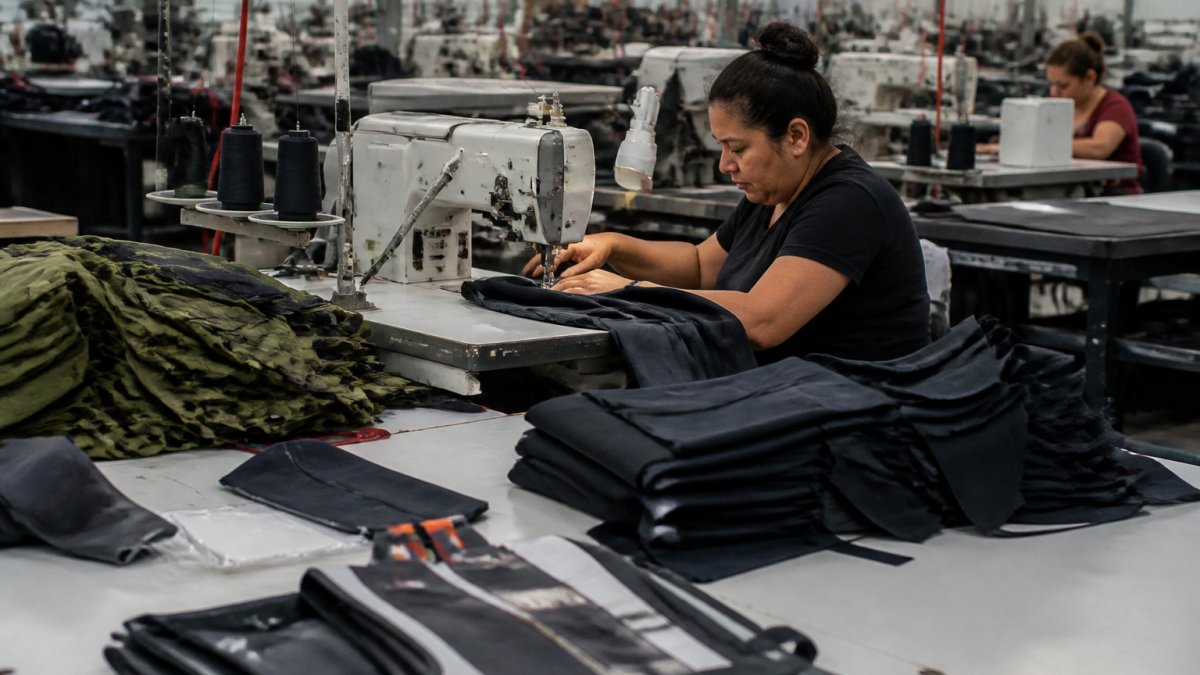
When you work with a domestic contract manufacturer specializing in Contract Sewing Manufacturing, Industrial Sewing Manufacturing, Cut-and-Sew Production, and Sewn Component Manufacturing, you're also reducing geopolitical risk. Trade policy changes, tariffs, and supply chain disruptions in other countries don't affect your production.
Sewing Contractor Solutions works with established companies that have production-ready samples and are ready to scale into commercial manufacturing.
Building a diversified supplier base takes planning, but the protection is worth the effort. You reduce operational risk, improve your negotiating position, and build the flexibility to respond to market changes.
Relying on single source suppliers trades short-term convenience for long-term vulnerability. The risks compound over time, disruptions become more costly, pricing leverage disappears, and your business becomes increasingly dependent on one relationship staying healthy.
Building supplier diversity and considering domestic manufacturing capacity gives you the flexibility to respond when problems occur.
Frequently Asked Questions
What are the main risks of relying on a single source supplier?
Single source suppliers expose your business to supply chain disruption, quality control gaps, pricing leverage loss, financial instability, and logistical delays. If that one supplier experiences production problems, financial trouble, or geopolitical issues, your entire operation stalls. You also lose negotiating power on price and terms. Diversifying your supplier base across multiple vendors, especially mixing domestic and international sources, reduces dependency and builds operational resilience.
How can supply chain diversification strategies reduce manufacturing risk?
Diversification spreads production across multiple suppliers, so a disruption at one vendor doesn't halt your entire output. You gain pricing leverage by comparing quotes across vendors, improve quality through competitive pressure, and build flexibility to shift volume based on lead times and capacity. Domestic suppliers often deliver faster replenishment and better communication, while maintaining international relationships gives you cost options. The goal is vendor management that keeps your supply chain visible and responsive.
What are the benefits of domestic contract manufacturing for supply chain resilience?
Domestic manufacturers offer faster lead times, reduced logistics complexity, direct communication with production leadership, and inventory control through quicker replenishment cycles. You avoid large overseas minimum orders and can scale production flexibly based on actual demand. Domestic sourcing also reduces exposure to tariffs, currency fluctuations, and geopolitical disruption. For established products ready to scale, domestic contract manufacturing provides the business continuity and production flexibility that sole-source overseas relationships cannot match.
How do you assess and quantify single-source supplier risk?
Start with dependency mapping: identify which products rely on one supplier and what percentage of your revenue each represents. Evaluate financial solvency by reviewing supplier stability reports and payment history. Assess lead time variability and production bottleneck history. Document contractual obligations and exit clauses. Then model scenarios: what happens if that supplier fails, raises prices 20%, or experiences a 30-day shutdown? Quantifying these risks helps prioritize which relationships to diversify first and informs your contingency planning.
Discuss Your Production Project

Comments