
How Do You Prepare for an Apparel Production Run?

Last Updated: October 24, 2026
Quick Summary
To prepare for apparel production, lock five things before cutting starts: an approved pre-production sample built with production materials, a signed and version-controlled tech pack, confirmed fabric and trim availability, a production calendar with named owners, and written go/no-go criteria for the pilot run. Each gate needs one accountable owner with authority to stop the run.
The pre-production sample must use actual production fabric, trims, and machine setup, not substitutes.
Number and date every tech pack revision; a change after sample approval restarts approval.
Confirm the mill has the required dye lot quantity, not just material in stock.
Build an overproduction allowance into material orders to cover cutting waste and re-cuts.
Define pilot KPIs and thresholds in writing before the pilot starts, and log every defect.
Table of Contents
What Must Be Finalized Before an Apparel Production Run Begins
Building Your Apparel Pre-Production Checklist
Who Owns Each Gate
Risk Planning and Contingency
Apparel Production Tech Pack Requirements That Prevent Rework
The Pre-Production Sample Approval Process, Step by Step
Fabric and Trim Sourcing: Availability, Inspection, and Approval
Garment Production Planning and Scheduling Across the Factory Floor
Pilot Run Evaluation, KPIs, and Go/No-Go Criteria
What to Inspect in a Pilot Run
Documenting Issues
KPIs and Acceptance Thresholds
Go/No-Go Enforcement
Request a Manufacturing Quote for Your Next Production Run
Frequently Asked Questions
What Must Be Finalized Before an Apparel Production Run Begins
Most production disasters are decided before the first stitch. Preparing for apparel production runs means locking five things before cutting starts: an approved pre-production sample, a signed tech pack, confirmed fabric and trim availability, a production calendar with named owners, and written go/no-go criteria for the pilot run.
Apparel production is the commercial stage where an approved design becomes repeatable output at volume, execution against a fixed specification, not development.
Building Your Apparel Pre-Production Checklist
A working apparel pre-production checklist is not a to-do list. It is a set of gates, each with an accountable owner, a written pass condition, and a defined consequence if the gate fails. Unowned tasks slip; ungated tasks get waived under deadline pressure. Run this list at kickoff, not the week before delivery, and give each line a pass condition the owner can verify.
Gate | Accountable Owner | Pass Condition (Written) | If the Gate Fails |
Pre-production sample | Product manager | Buyer-signed, dated, photographed sample built with production materials | Cutting does not start; sample reworked and re-approved |
Tech pack lock | Technical designer | Version number, date, and change log attached; no open comments | Run held; changes re-enter approval |
Fabric and trim approval | Sourcing manager | Signed physical swatch on file; dye lot confirmed against order quantity | Bulk fabric not released to cutting |
BOM accuracy | Materials planner | Every line matched to stock on hand or confirmed PO with delivery date | Shortfall escalated to buyer within 48 hours |
Production calendar | Production planner | Start and end dates per stage, shared with all department leads | Schedule re-baselined before any machine time is committed |
Cutting ticket and marker | Cutting room supervisor | Marker approved against tech pack grade rules; ticket issued | Cutting paused; marker corrected |
Pilot run criteria | Quality manager | KPIs and thresholds agreed in writing before pilot starts | Pilot not scheduled |
Inspection plan | Quality manager | AQL level, sample size, and defect thresholds documented | Finished goods cannot be released |
Who Owns Each Gate
Ownership is where most checklists quietly die. Assign one accountable person per gate, and give that person explicit authority to stop the run. A gate with two owners has none. A common mistake is letting the factory own sample approval. The buyer must sign. The factory's job is to prove the sample matches the spec, not to decide that it does.
Risk Planning and Contingency
Every gate has a failure mode, and the checklist is only useful if you have decided in advance what you will do when one fails. Build a short risk register alongside the checklist and review it at kickoff.
Late materials. If fabric or trim misses its confirmed date, decide at kickoff whether the run slips, a partial cut proceeds on confirmed materials, or an approved alternate supplier is activated. Name the person who makes that call.
Failed inspection. If incoming fabric fails inspection, decide whether to reject the roll, accept with a deviation and a price adjustment, or re-source. Write the tolerance before the rolls arrive so the decision is not made under pressure.
Capacity constraints. If the machines your run depends on, double-needle, bar-tack, box-X, are committed to another order, the contingency is a re-sequenced calendar, not an optimistic start date. Confirm availability in writing at the scheduling gate.
Watch Out A checklist that is reviewed only at kickoff and never again is a document, not a control. Re-run the gate status weekly against the production calendar, and record who signed each gate and when.
For practical answers on how contract sewing engagements and handoffs actually work, our Contract Sewing FAQ covers the questions buyers ask most.
Apparel Production Tech Pack Requirements That Prevent Rework
A tech pack prevents rework only when it answers every question the factory floor will ask. If a sewer has to guess, you get a defect. If a cutter has to guess, you get wasted fabric.
Your apparel production tech pack requirements should include:
Product specifications: measurements with tolerances, graded across all sizes
Construction details: seam types, stitch classes, stitch density, seam allowance
Pattern development and grading: base size, grade rules, marker notes
Version control is the part most teams skip. Number every revision and date it; when a tech pack changes after sample approval, the change restarts approval.
The Pre-Production Sample Approval Process, Step by Step
The pre-production sample approval process is a four-stage gate: initial sample, fit sample, pre-production sample, and final sign-off. Each stage catches a different class of error; skipping one pushes that error into the production run.

Initial sample. Confirms the design can be built as drawn. Expect changes here.
Fit sample. Confirms sizing and drape on a real body or form. Fit revisions happen at this stage.
Pre-production sample. Built with the actual production fabric, trims, and machine setup. This is the sample that matters.
Final sign-off. Buyer signs a dated, photographed reference sample. One copy stays with the factory, one with the buyer.
The rule we would underline: the pre-production sample must use production materials. Judge samples against written criteria rather than gut feel; our guide on how to evaluate contract sewing quality lays out what to check at each stage.
Fabric and Trim Sourcing: Availability, Inspection, and Approval
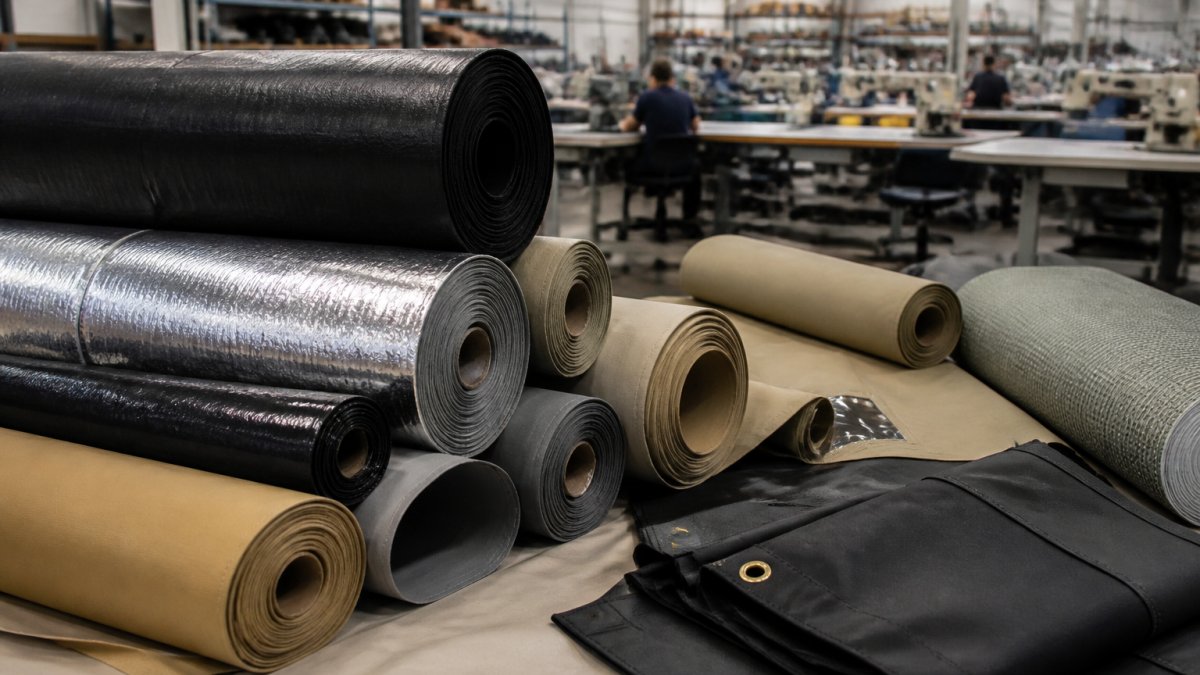
Fabric and trim sourcing fails in one of two ways: the material is not there when cutting starts, or it is there but wrong. Both are preventable with three checks.
Inspection. Request fabric inspection reports before shipment.
Approval. Approve a physical swatch, not a screen image. Sign and date it, and keep it as the reference for every future run.
Trim sourcing gets less attention and causes more delays. Labels, zippers, thread, elastic, and hardware all have their own lead times.
Build an overproduction allowance into your material order. Cutting waste, defects, and re-cuts consume fabric.
Garment Production Planning and Scheduling Across the Factory Floor
Garment production planning turns an approved order into a sequence of machine time.
Start with the production calendar. Work backward from the delivery timeline through finishing, packing, sewing, cutting, and material preparation.
Then map machine allocation. A run that needs double-needle and bar-tack capacity competes with every other order on those machines.
Operator skills matter as much as machine time.
Lead times are the number your schedule rests on. Our breakdown of cut and sew manufacturing lead times explains what drives them and where buffer belongs.
Watch out: scheduling the pilot run and the bulk run in the same week.
Pilot Run Evaluation, KPIs, and Go/No-Go Criteria
A pilot run is a small production run built exactly like the bulk order, measured against written criteria before you release full volume. It is the last cheap place to find a problem, a decision gate with documented evidence, defined thresholds, and an enforcement mechanism, not just a step.
What to Inspect in a Pilot Run
Inspect the pilot the way you will inspect bulk, not more loosely. Pull units from the start, middle, and end of the run, because defects often cluster at setup and at shift changes. Check:
Measurement conformance against the graded spec, size by size, not just the base size.
Construction integrity at the operations most likely to fail: seam types, stitch density, bar-tacks, box-X stitches, and any attachment or folder setup.
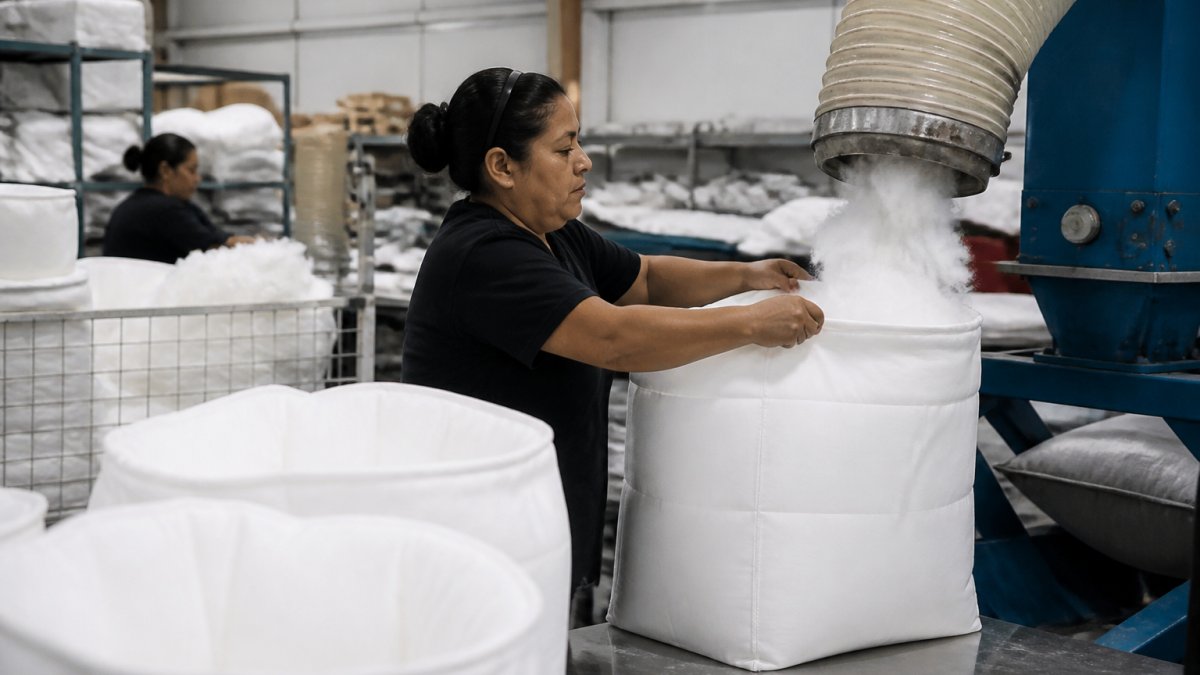
Material behavior, how the actual production fabric ran through the serger, held a bar-tack, or behaved under a blow-fill step for fiber-filled products.
Documenting Issues
A pilot review without a written defect log is a conversation, not a record. Log every issue with the operation, size, machine, operator, and a photo, then group by root cause, material, method, machine, or operator skill, because the fix differs for each. Measurement drift traced to a grade rule is a tech pack fix; the same drift traced to a folder setup is a machine fix.
KPIs and Acceptance Thresholds
Define the thresholds before the pilot starts, and write them down. The table below is a starting framework; set the actual numbers against your product's complexity and your buyer's tolerance.
KPI | What It Measures | No-Go Signal |
Defect rate | Units failing inspection | Trend rising across the run |
First-pass yield | Units passing without rework | Rework needed on most units |
Measurement conformance | Units inside spec tolerance | Repeated out-of-tolerance sizes |
Cycle time per unit | Minutes per operation | Times drifting upward |
Material consumption | Fabric used vs. allowance | Usage exceeding the allowance |
On-time completion | Pilot finished against its scheduled end date | Slippage that would compress bulk |
Allowable overage belongs in the same conversation. A pilot that runs over its material allowance is telling you the bulk order will too. If the pilot consumes more than the allowance, adjust the material order before bulk release, not after.
Go/No-Go Enforcement
Run the pilot, inspect against the plan, and hold a review meeting with the buyer, quality lead, and production planner. Three outcomes are allowed: go, go with conditions, or no-go.
Go with conditions is the most common result and the most dangerous. Write the conditions down with a date and an owner. Verbal conditions evaporate. A condition without a named owner and a verification date is a no-go in disguise.
Key Takeaway The pilot is not a formality before bulk. It is the point where you either confirm the spec, the materials, and the machine setup are production-ready, or you spend a small amount of capacity to avoid spending a large amount on a failed run.
If the pilot puts your timeline at risk, our guide on ways to reduce manufacturing lead times covers where the real slack sits.
Request a Manufacturing Quote for Your Next Production Run
The gap between a good production run and a bad one is almost never the sewing. It is the readiness work that happened before the machines started.
At Sewing Contractor Solutions, we build sewn products for established companies moving into commercial production. If you are reshoring production or adding domestic capacity, review our cut and sew and contract sewing services to confirm the fit.
Get started with Sewing Contractor Solutions and move your next production run from checklist to cutting floor.
Frequently Asked Questions
What should be finalized before an apparel production run begins?
Four things need to be locked: an approved production-ready sample, a signed tech pack with every specification and bill of materials, confirmed fabric and trim availability with inspection completed, and a production calendar with dates agreed by both sides. Anything still open at kickoff becomes a change order later, and change orders during a production run are the most common cause of missed delivery dates. Treat the pre-production meeting as the gate where all four are confirmed in writing.
What are the core apparel production tech pack requirements?
A working tech pack includes flat sketches or photos, points of measure with tolerances, construction details such as seam type and stitch density, the bill of materials with supplier and part numbers, colorways with lab dips or approved swatches, label and packaging placement, and grading rules for every size. It also needs a revision history so the factory knows which version governs. Missing tolerances and unclear construction calls are the two gaps that most often trigger rework after cutting has started.
How does the pre-production sample approval process work?
The factory builds a sample to the tech pack using production materials and production methods, then submits it with a measurement report against the points of measure. Your team reviews fit, construction, color, and labeling, and either approves it or returns written corrections. Corrections get logged, a revised sample is built, and the cycle repeats until sign-off. Only after written approval should bulk fabric be cut. Keep the signed approval sample on the floor as the reference standard for the run.
How do production planning and scheduling reduce lead time on garment runs?
Scheduling maps each operation, cutting, sewing lines, attachments, finishing, and packing, to a date and a machine group, so capacity conflicts surface before they become delays. A production calendar shared with the buyer shows when materials must arrive to hit the cut date. When fabric inspection and trim approval finish early, cutting starts on time and the sewing floor stays loaded. Domestic production shortens the loop further because material issues and sample questions get resolved in days rather than weeks of transit and time zones.
Discuss Your Production Project
Add sewingcontractorsolutions.com as a preferred source on Google →
Comments