
Cut and Sew Manufacturing Lead Times Explained

Table of Contents
What Sets the Pace for Cut and Sew Manufacturing Lead Times
The Production Timeline: From Tech Pack to Delivery
Domestic Textile Manufacturing Lead Times vs. Overseas Shipping
CMT vs Full Package Manufacturing: How Each Model Affects Your Schedule
The Real Cost of Fabric Sourcing and Material Delays
How to Reduce Manufacturing Lead Times Without Sacrificing Quality
Conclusion: Plan for the Timeline Your Product Deserves
Frequently Asked Questions
Last Updated: September 9, 2026
Cut and sew manufacturing lead times are the single biggest variable in seasonal planning, and most brands underestimate them by weeks. Understanding the full production cycle from tech pack to delivery is the difference between hitting your launch date and watching inventory sit in a container.
Cut and sew manufacturing is the process of cutting fabric panels and sewing them into finished products, and its lead time is the total calendar days from order confirmation to goods arriving at your door. The fastest way to shorten your timeline is to map it as a chain of dependent steps.
What Sets the Pace for Cut and Sew Manufacturing Lead Times
Four factors control nearly all of the variance between suppliers: fabric availability, factory capacity, sampling complexity, and the manufacturing model you choose. Fabric sourcing is the most common bottleneck because greige goods and finished textiles often carry their own lead times before a single panel is cut.
Your production schedule is only as reliable as your critical path. If the raw material is in stock and the factory has open machine hours, a straightforward run can move quickly. If the fabric must be woven, dyed, or finished to order, you have added weeks before production even begins.
The Production Timeline: From Tech Pack to Delivery
A realistic cut and sew manufacturing timeline spans several distinct phases, each carrying its own risk of slippage. Sampling alone typically consumes two to three weeks when fit revisions are required (the NIH).

The standard stages break down as follows, but the calendar time is less important than the dependencies between them:
Tech pack finalization and pattern development: 5-10 business days, depending on how complete your specifications are. This stage ends only when the pattern is graded and the marker is approved. A missing stitch specification cascades into every later stage, and most domestic contractors will not book a production slot until this stage is closed.
Sampling and fit revisions: 10-15 business days for the first sample, plus 3-5 additional days per revision round. A typical cycle is: fit sample, revised sample, then a pre-production sample (PP sample) that validates the final construction method on the actual bulk fabric. Request the PP sample on the exact fabric lot that will be cut, not on a remnant from development yardage.
Raw material procurement and fabric sourcing: 2-6 weeks, the most volatile step in the chain. This stage runs in parallel with sampling only if you have already secured development yardage. If the bulk fabric must be woven, dyed, or finished to order, the clock starts at the mill. A domestic mill with greige goods in stock can deliver finished fabric in 2-3 weeks; a specialty weave with a minimum order quantity can stretch to 8 weeks or more (trade.gov).
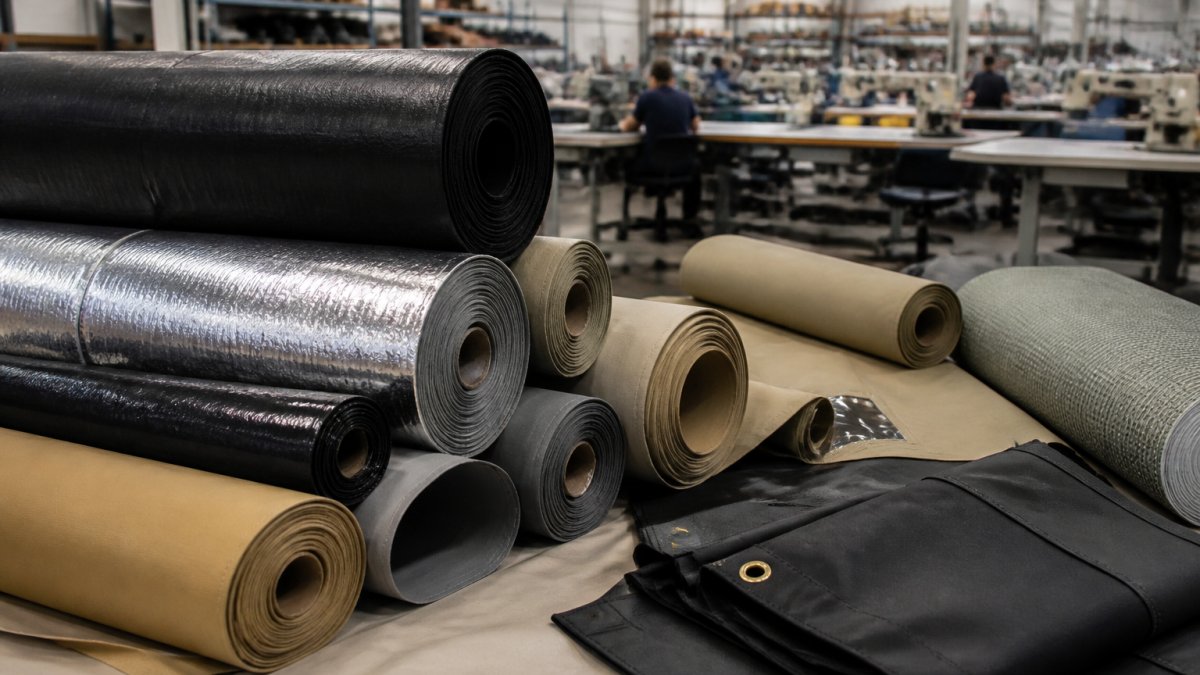
Bulk production and garment construction: 2-4 weeks for standard runs, longer for heavy-duty or specialty materials. A well-run factory begins cutting panels as soon as the first fabric rolls arrive, while trims and labels are still in transit. The bottleneck is almost never the sewing machine, it is the flow of cut panels into the sewing lines.
Quality control, finishing, and packaging: 3-5 business days before the goods ship. Inline inspections during bulk production, not just a final random inspection, catch defects while the line is still running. A contractor who performs AQL inspections at the 30% and 70% completion points can rework defects in real time.
Shipping duration: 2-5 days for domestic freight versus 4-8 weeks for ocean freight. Ocean freight from Asia adds customs clearance (2-5 days), port congestion buffers, and the need to book container space weeks in advance.
Watch Out A production timeline is only as good as its critical path. Map every stage as a dependency, not a sequential list. If fabric sourcing runs 6 weeks and bulk production runs 3 weeks, the total is 9 weeks, not 6 weeks plus 3 weeks plus shipping, because the fabric must land before cutting can begin. The only stages that compress are the ones that run in parallel.
Ask your contractor for a Gantt chart of your order; most professional domestic manufacturers will provide one at no charge. If a supplier cannot show you a stage-by-stage schedule with dependencies, you are flying blind.
Domestic Textile Manufacturing Lead Times vs. Overseas Shipping
The most direct way to compress your manufacturing cycle is to shorten the distance between the sewing floor and your warehouse. Domestic textile manufacturing lead times eliminate the two largest sources of uncertainty in offshore production: ocean transit and port congestion.
Overseas production offers lower unit costs, but the trade-off is a longer critical path with more handoffs. The cost of a quality defect discovered after a 30-day ocean voyage is exponentially higher than one caught 200 miles from your distribution center.
Domestic production is not automatically faster in every scenario. If your fabric must be imported anyway, you still carry that sourcing lead time. The advantage of a U.S. contract manufacturer is that the production schedule is more predictable and communication with ownership is direct.
CMT vs Full Package Manufacturing: How Each Model Affects Your Schedule
Choosing between CMT vs full package manufacturing is a decision about who controls your supply chain. CMT, or cut, make, trim, means the factory only handles cutting, sewing, and finishing. Full package manufacturing puts the supplier in charge of fabric sourcing and raw material procurement, which can simplify your vendor list but adds a layer of markup.
For speed, the CMT model is often faster if you already have fabric secured, because the factory can slot your order into production immediately. The right choice depends on whether your bottleneck is factory capacity or material availability.
The Real Cost of Fabric Sourcing and Material Delays
Fabric sourcing is where production timelines go to die. A fabric in stock at a domestic mill can be at the cutting table in days, while a specialty material requiring a minimum order quantity at a weaving mill can add six to eight weeks. The MOQ itself is a hidden constraint: if your run size is below the mill's minimum, you may be waiting for the mill to aggregate orders.
Lock your materials before you finalize your production slot. Secure the raw material first, then book factory capacity around the delivery date. This sequencing alone can reduce manufacturing lead times by several weeks.
Watch Out The most expensive delay is a fabric substitution discovered after sampling. If your chosen material is unavailable, a last-minute swap can invalidate your fit revisions and force a new round of sampling. Verify material availability in writing before you commit to a production date.
How to Reduce Manufacturing Lead Times Without Sacrificing Quality
Cutting weeks out of your timeline requires discipline in the early stages, not pressure on the factory floor. The single highest-use action is completing your tech pack before you approach a manufacturer. Incomplete specifications and missing trim details translate into sampling delays and fit revisions.
A second lever is consolidating your supplier base. Working with a single contract manufacturer for ongoing production runs builds institutional knowledge of your products, which shortens the learning curve on every reorder. The U.S. Bureau of Labor Statistics data on textile production shows domestic capacity remains available for commercial and industrial sewing, and consistent volume with one partner tends to secure better scheduling priority than splitting your runs across multiple shops.
But the most underused lever is the communication protocol itself. Most sourcing guides mention "communication" as a vague virtue; they never solve the actual problem, which is feedback lag, the time between when a factory asks a question and when the brand answers it. A factory that needs a trim color confirmation will stop the line, because proceeding without an answer risks producing defective goods. Every day of feedback lag adds a day to the lead time.
The fix is a written communication protocol, agreed to before the PO is issued. Here is a template that procurement teams use to cut feedback lag to under 24 hours:
Single points of contact: Name one person on each side who has authority to make decisions. The factory's contact should be the production manager, not the sales representative. The brand's contact should be the sourcing manager, not an intern.
Response-time expectations: Agree in writing that routine questions get answers within 4 business hours, and urgent line-stopping questions get answers within 1 hour during working hours. If the brand's contact is unavailable, a named backup must be authorized to answer.
Photo verification at each stage: Require dated photos at four checkpoints: fabric received, cutting complete, sewing line running, and finished goods packed. A photo of cut panels that shows a shading issue on day 3 is fixable. The same issue discovered at final inspection means rework or a missed ship date.
A decision log: Every question and its answer should be logged in a shared document. This prevents the same question being asked twice and creates an audit trail if a defect later traces back to a decision made under time pressure.
Digital supply chain integration is the next frontier. Most brands still communicate with factories via email and spreadsheets. A Product Lifecycle Management (PLM) system centralizes tech packs, revision history, and approval workflows in a single platform. This eliminates the version-control problem where the factory sews from an outdated tech pack buried in an email thread. Mid-sized companies can use cloud-based PLM tools with per-seat pricing that is a fraction of the cost of one delayed shipment.
Pro Tip Before you send your next PO, ask your contractor one question: "What is your escalation path when a production issue arises?" If the answer is "we will email you," you have not solved feedback lag. The right answer is a named person, a phone number, and a documented escalation tree that reaches a decision-maker within hours, not days.
A third lever is buffer stock for critical materials. If your fabric has a 6-week sourcing lead time and your factory has a 3-week production run, a stockout of one component, a zipper, a label, a specific thread color, can halt the line. Maintaining a small buffer of long-lead trims and fabrics for core SKUs is a risk-mitigation strategy most sourcing guides ignore.
Lead Time Factor | Typical Impact | Best Mitigation |
Fabric availability | 2-6 weeks added | Secure materials before booking production |
Sampling revisions | 1-2 weeks per round | Finalize tech pack and fit before PO |
Factory capacity | Variable by season | Book slots early with a consistent partner |
Shipping distance | 2 days vs. 4-8 weeks | Domestic production for speed and control |
Quality rework | 1-3 weeks added | Inline inspections during bulk production |
Feedback lag | 1-5 days per order | Written communication protocol with named contacts |
Key Takeaway The brands that consistently hit their launch dates do not have faster factories; they have faster decision loops. The factory's sewing speed is the same for every customer. What differs is how quickly the brand answers questions, approves samples, and confirms materials. Institutionalize that speed with a written protocol, and you will compress your lead time more than any factory-side negotiation ever will.
Conclusion: Plan for the Timeline Your Product Deserves
Cut and sew manufacturing lead times are not a mystery once you map the critical path from material to delivery. The brands that win on speed treat fabric sourcing, sampling, and factory booking as a single integrated schedule rather than three separate conversations.
If your current supplier cannot deliver the scheduling visibility you need, Sewing Contractor Solutions offers USA-based manufacturing with direct communication to ownership and production leadership, so your questions get answered by the people who actually run the floor. Our Dallas, Texas facility handles scalable bulk manufacturing across industrial, medical, and consumer sewn products, with efficient shipping across the U.S. from a central location. Request a manufacturing quote and see how a shorter, more reliable timeline fits into your production schedule.
Frequently Asked Questions
What is the typical lead time for domestic cut and sew manufacturing?
Domestic cut and sew manufacturing lead times typically range from 4 to 8 weeks for production once the sampling and fabric sourcing phases are complete. This shorter window comes from eliminating ocean freight and customs clearance. A U.S.-based factory can also communicate faster, which speeds up approvals and fit revisions. Your specific timeline depends on order quantity, factory capacity, and whether your materials are in stock. The production schedule starts when your tech pack is approved and your fabric is on site.
How does CMT vs full package manufacturing change the production schedule?
CMT, or cut, make, and trim, means you supply the fabric and manage sourcing yourself, so you control that part of the timeline. Full package manufacturing puts sourcing in the factory's hands, which often shortens your overall lead time because they already have relationships with mills. CMT can be faster if you have fabric ready to ship, but full package reduces your administrative workload. The best choice depends on your team's capacity and whether you need help finding materials.
What factors cause the longest delays in garment production?
Fabric sourcing is the most common cause of long delays in cut and sew manufacturing. If your material is not in stock, you may wait weeks for a mill to produce it or for it to ship from overseas. Sampling and fit revisions also add time, especially when multiple rounds are needed. Factory capacity is another factor; a busy factory may not have open production slots. Clear tech packs and early communication help you avoid the most frequent bottlenecks.
Can I shorten lead times if I need to scale up production quickly?
Yes, but you must communicate your volume projections early. A factory can plan for your growth if they know your forecast, and they can reserve production capacity for your recurring orders. Committing to a production schedule in advance helps secure line time. For sudden large orders, ask about the factory's current capacity and whether they can run overtime or dedicate additional staff. Having your materials ready to ship to the factory is the fastest way to accelerate the process.
Request a Manufacturing Quote
Comments