
How to Design Custom Industrial Equipment Covers

Table of Contents
Why Custom Industrial Equipment Covers Matter
Taking Industrial Machine Cover Measurements
Documenting Equipment Dimensions and Clearances
Accounting for Controls, Cables, and Access Points
Selecting Industrial Equipment Cover Materials
Weather and Moisture Protection Requirements
Durability and Operating Environment
Designing Custom CNC Machine Covers
Fit, Clearance, and Operator Access
Clamshell and Encapsulation Design Options
Industrial Cover Attachment Methods
Zippers, Snaps, and Opening Panels
Mounting and Installation Considerations
From Design Specification to Production
Creating a Design Specification Worksheet
Prototype Review and Validation
Quality, Compliance, and Lifecycle Considerations
Frequently Asked Questions
Last Updated: October 5, 2026
Why Custom Industrial Equipment Covers Matter
Industrial equipment needs protection. Dust, moisture, and debris damage machinery. Downtime costs money. A well-designed custom industrial equipment cover prevents problems before they start.
Off-the-shelf covers rarely fit. Equipment varies widely. A CNC machine looks nothing like a printing press. Generic solutions leave gaps. They shift during operation.
Custom covers solve this. They match your exact equipment dimensions. They protect what matters most. They stay in place.
At Sewing Contractor Solutions, we manufacture custom industrial equipment covers for companies that need reliable protection at production scale.
The design process matters. A poorly designed cover fails fast. Seams split. Zippers jam. Access panels tear.
This guide walks you through designing custom industrial equipment covers that work.
Taking Industrial Machine Cover Measurements
Accurate measurements are everything. Mistakes here multiply downstream. A cover that's 2 inches too tight won't fit. One that's 4 inches too loose will shift and bunch.

Documenting Equipment Dimensions and Clearances
Start with the basics: length, width, and height of the equipment body. Measure at the widest points. Document the shape. Is it rectangular? Does it taper?
Clearance matters more than size. Your cover must fit over the equipment without touching it.
Measure from the ground up. Note the height of the base, the main body, and any upper components like control panels or tool changers.
Document mounting points. Where will the cover attach? On the base? On the frame? On existing bolt holes? Mark these locations with measurements from reference edges.
Create a simple sketch. It doesn't need to be professional. Show the top view and side view. Mark all dimensions. This sketch becomes your reference during design.
Accounting for Controls, Cables, and Access Points
Equipment has features that complicate covers. Control panels need access. Cables enter and exit. Operators reach in to load material or change tools.
List every access point. Where does the operator work? What needs to be visible? What needs to be reachable without removing the cover?
Mark cable entry points. Cables move. Your cover must accommodate this movement without pinching or restricting the cables. Allow extra space around cable bundles.
Note control locations. Buttons, switches, and touchscreens need to remain accessible. Some designs integrate openings. Others use removable panels. Plan this now.
Document any moving parts outside the main body. Articulating arms, rotating tables, or sliding components need clearance.
Create a second sketch showing all access points and their dimensions. This becomes critical during the design phase.
Selecting Industrial Equipment Cover Materials
Material choice determines durability and performance. The wrong choice fails fast. The right choice lasts years.
Weather and Moisture Protection Requirements
Where will the equipment operate? Indoors in climate control? In a warehouse with temperature swings? Outdoors?
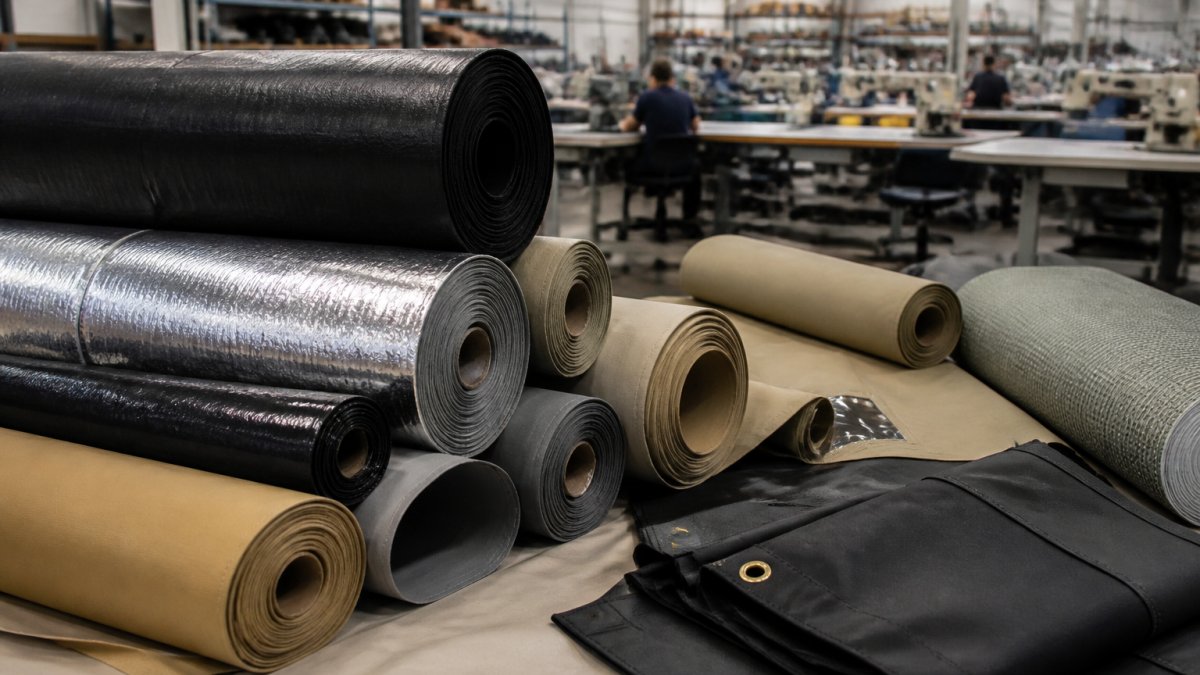
Indoor dry environments need basic protection. Canvas or cotton blends work. They're affordable and easy to sew. They resist dust and light abrasion.
Humid or wet environments need different materials. Moisture penetrates basic fabrics. Mildew grows. Seams rot. Heavy-duty coated fabrics block moisture. PVC-coated materials are common. They're waterproof.
Outdoor equipment faces UV exposure. Standard fabrics fade and degrade. UV-resistant materials cost more. They last significantly longer in sunlight.
Consider the equipment's tolerance for moisture. Some machinery handles minor moisture. Others fail immediately if water reaches electronics.
Ventilation matters too. Some equipment generates heat. A completely sealed cover traps heat. This can damage components or void warranties.
Durability and Operating Environment
Heavy-duty environments demand tough materials. Cordura is a standard choice. It resists abrasion. It handles repeated flexing. It lasts through years of use.
Aramid-blend materials like Kevlar and Nomex add fire resistance. These matter in certain industrial settings. They cost more but provide critical safety features.
Stretch fabrics accommodate equipment that moves slightly during operation. They flex without tearing. They're useful for covers that need to move with the machinery.
Consider the working temperature. Most industrial textiles handle standard ranges. Extreme heat or cold requires specialty materials. These are specialized and costly.
Seam strength matters as much as fabric strength. Heavy-duty environments need reinforced seams. Box-X stitching and bar-tack reinforcement prevent seam failure at stress points.
Think about maintenance. Some materials are washable. Others are not.
Designing Custom CNC Machine Covers
CNC machines are precise. Their covers must be equally precise. Sloppy design causes problems.
Fit, Clearance, and Operator Access
CNC covers need tight fit without binding. The cover should not touch the machine during operation. It should not shift or flap.
Plan the design around the operator's workflow. Where does material load? Where is the tool changer? Where do operators reach during operation?
Many CNC covers use a clamshell design. The cover splits into upper and lower sections. The upper section lifts or slides away. The lower section stays in place.
Others use a wrap-around design with multiple access panels. Panels open independently. Zippers or magnetic closures hold them in place.
Test fit is critical. A prototype allows you to verify clearances before committing to production. Walk through the operator's actual tasks. Does the cover interfere? Do panels open fully?
Clamshell and Encapsulation Design Options
Clamshell designs are popular for good reason. They're intuitive. Operators understand them. They provide full access when needed.
The upper section pivots or slides. It's hinged or tracked. Latches or straps hold it closed during operation. When access is needed, the operator opens it.
Encapsulation designs wrap completely around the equipment. They're more protective. They seal out more dust and moisture. Access comes through dedicated panels or zippers.
Encapsulation works best when access is infrequent. If operators need frequent access, clamshell is better. They're faster to open and close.
Hybrid designs combine both approaches. A base encapsulation with removable upper sections. This provides good protection with reasonable access.
Consider the equipment's thermal output. Encapsulation traps heat. Some equipment can't tolerate this. Ventilation openings or breathable materials become necessary.
Industrial Cover Attachment Methods
How the cover stays in place matters. Poor attachment means the cover shifts, bunches, or falls off.
Zippers, Snaps, and Opening Panels
Zippers are reliable. They open and close smoothly. They stay closed during operation. Heavy-duty zippers handle industrial use. They're durable and secure.
Zippers require careful placement. They must align properly. Misalignment causes jamming. The seams around zippers need reinforcement.
Snaps are simpler. They're fast to open and close. They don't jam. They're less secure than zippers. Wind or vibration can pop them open.
Magnetic closures are increasingly popular. They're simple. They're quiet. They don't wear out like zippers.
Velcro works for temporary closures. It's fast and easy. It's not secure for permanent attachment. Use it for panels that operators open and close frequently.
Consider what operators will do. If they'll open and close the cover daily, zippers might wear out. Snaps or magnetic closures might be better.
Mounting and Installation Considerations
How does the cover attach to the equipment? This affects both function and durability.
Bolt-down mounting is solid. Holes in the cover align with existing holes on the equipment. Bolts secure it permanently.
Clamp-on mounting uses clamps or straps. It's flexible. The cover can be removed without tools.
Magnetic mounting uses strong magnets embedded in the cover. The cover sticks to the metal equipment body.
Bracket mounting attaches the cover to custom brackets. This works when the equipment has no natural attachment points.
Plan mounting during design. Mark mounting points on your sketch. Verify these points don't interfere with operator access or equipment function.
Test the mounting method. Can operators install and remove the cover easily? Does it stay secure during operation? Does it shift under vibration?
From Design Specification to Production
Design on paper is one thing. Production is another. The gap between them causes problems.
Creating a Design Specification Worksheet
A specification worksheet is your production blueprint. It documents every detail. Manufacturers use it to build your cover correctly.
The worksheet includes:
Equipment name and model
Overall dimensions (length, width, height)
Clearances required
Material type and weight
Color or finish
Attachment method
Access points and panel locations
Seam reinforcement locations
Special features (ventilation, labels, etc.)
Include a sketch or technical drawing. Show dimensions clearly. Mark access points. Show attachment locations.
Add reference photos if possible. Photos of the actual equipment help manufacturers understand what they're covering.
List any standards or compliance requirements. Some equipment operates in regulated environments. The cover might need to meet specific standards.
Document the expected volume. Are you making one cover? One hundred covers? This affects how manufacturers approach the job.
Prototype Review and Validation
Prototyping is worth the investment. A prototype catches design flaws before full production.
The prototype should be made from the same material as the production version. Different materials behave differently. A prototype in canvas won't tell you how a PVC-coated cover will perform.
Test the prototype on your actual equipment. Walk through every task an operator performs. Open and close every access panel. Check every seam. Verify clearances.
Look for these issues:
Does the cover touch the equipment during operation?
Do access panels open fully?
Do zippers or snaps work smoothly?
Are seams strong at stress points?
Is ventilation adequate?
Does the cover shift or bunch?
Document problems and fixes. Make changes to the design. These changes go into the final specification.
A good prototype process takes time. It's worth it. Production covers made from a validated design rarely need rework.
Quality, Compliance, and Lifecycle Considerations
A cover that lasts five years is better than one that fails in one. Design for durability.
Seam quality determines longevity. Industrial covers need reinforced seams.
Material quality matters. Heavy-weight fabrics last longer than light-weight. Coated materials resist wear better than uncoated.
Consider maintenance. A cover that requires frequent washing needs washable materials.
Some equipment operates in regulated environments. Medical, pharmaceutical, or food-processing equipment might need covers that meet specific standards.
Plan for replacement. Even the best cover eventually wears out. Design so replacement is straightforward.
Document care instructions. Include them with the cover.
Custom industrial equipment covers protect your machinery. They reduce downtime. They extend equipment life.
The design process is straightforward. Measure carefully. Choose materials that match your environment. Design for your operators' workflow.
When you're ready to move from design to manufacturing, Sewing Contractor Solutions can help. We provide Industrial Sewing Manufacturing and Cut-and-Sew Production for custom industrial equipment covers in heavy-duty materials. Contact us to discuss your project and explore how domestic manufacturing can support your production needs.
Frequently Asked Questions
What information is needed to design a custom industrial equipment cover?
Start with precise equipment dimensions, including length, width, and height at all critical points. Document the location of controls, buttons, emergency stops, cables, and access panels. Note the operating environment: temperature range, moisture exposure, dust levels, and chemical contact. Specify whether the cover needs removable sections, ventilation openings, or viewing windows. Include attachment preferences and any existing samples or reference covers. This information forms the foundation for accurate design and manufacturing specifications.
How do you measure industrial equipment for a fitted cover?
Measure the equipment with the machine in its normal operating position. Use a steel tape measure for horizontal and vertical dimensions, and measure at multiple points if surfaces are uneven. Document the exact locations of protrusions, handles, and control panels. Account for clearance above and around the equipment, typically 1 to 3 inches depending on ventilation and access needs. Photograph the equipment from multiple angles with dimensions labeled. Create a simple sketch or CAD drawing showing all measurement points. This precision prevents costly design revisions during manufacturing.
What materials work best for industrial equipment covers?
Material choice depends on operating environment and protection needs. Canvas or heavy-duty cotton works for dry indoor storage. Vinyl-coated fabrics or PVC provide moisture and dust protection for humid or outdoor environments. Aramid materials like Nomex resist heat and flame in high-temperature applications. Cordura offers abrasion resistance for high-traffic areas. Consider weight, ease of handling, and maintenance requirements. For medical or food-processing equipment, choose materials that meet industry standards and allow easy cleaning. Discuss environmental exposure and regulatory requirements with your manufacturing partner to select the right material.
How should a custom industrial equipment cover accommodate controls and service access?
Design zippers or velcro-secured panels over control areas so operators can access buttons and displays without removing the entire cover. Use reinforced openings for cables and hoses to prevent tearing. Include removable or fold-back sections for routine maintenance access. For emergency stops or critical controls, create clearly marked, easy-to-locate panels. Ensure access panels don't compromise the cover's protective function when closed. Test the prototype with your equipment operators to confirm that access is intuitive and doesn't create safety hazards. This design step prevents frustration and ensures the cover actually gets used.
Discuss Your Production Project
Comments