
How to Diversify Supplier Base for Textiles

Table of Contents
Why Diversifying Your Textile Supplier Base Matters
Assess Your Current Sourcing Risks and Dependencies
Understanding Cut and Sew Manufacturing Lead Times
Build a Textile Supplier Vetting Checklist
Benefits of Domestic Textile Manufacturing for Supply Chain Resilience
Implement a Multi-Tier Sourcing Strategy
Manage the Transition and Monitor Performance
Frequently Asked Questions
Last Updated: September 26, 2026
Why Diversifying Your Textile Supplier Base Matters
Supply chain disruptions have become routine, not rare. When your textile production depends on a single supplier or region, one tariff, shipping delay, or production issue can halt your entire operation. That's where how to diversify supplier base for textiles becomes critical to your survival.
Diversifying your textile supplier base reduces risk. It gives you flexibility when lead times spike or costs shift. It protects you from geopolitical shocks, tariff changes, and the unpredictable nature of global manufacturing. Companies that rely on multiple suppliers and sourcing hubs weather disruptions that devastate single-source competitors.
At Sewing Contractor Solutions, we work with established brands and manufacturers. What they discover is that a resilient supply chain isn't about chasing the lowest cost, it's about building redundancy, visibility, and control.
The goal of this guide is straightforward: show you exactly how to assess your current risks, identify new suppliers, and build a multi-tier sourcing strategy that actually works in practice. You'll learn what to evaluate, what questions to ask, and how to transition without disrupting active production.
Assess Your Current Sourcing Risks and Dependencies
Before you add new suppliers, you need to understand what you're protecting against. Most companies skip this step. They assume their current setup is fine until something breaks.
Start by mapping your sourcing base. List every supplier you use. Note their location, what they produce, lead times, and how much of your volume they handle. If one supplier represents more than 30% of your production, you have concentration risk. If all your suppliers are in the same region, you have geographic risk.
Ask yourself these questions:
What happens if your primary supplier has a production shutdown?
How long would it take to shift that volume elsewhere?
Are your suppliers dependent on a single port, logistics hub, or transportation route?
Have tariffs or trade agreements changed recently for their region?
What's the actual lead time from order to delivery, including buffer time?
Document your answers. This becomes your risk baseline. You're not looking for perfection, you're identifying the specific vulnerabilities that matter most to your business.
Geopolitical risk and tariff exposure are real. Trade policy shifts overnight. A supplier in a region suddenly facing new duties becomes expensive or impractical. Nearshoring and onshoring aren't just buzzwords, they're practical responses to this reality. Domestic suppliers offer stability that offshore production can't match, especially when lead times matter.
Pro Tip Map your supply chain on a spreadsheet. Include supplier name, location, product type, lead time, volume percentage, and any known risks. Update it quarterly. This single document becomes your decision-making tool.
Understanding Cut and Sew Manufacturing Lead Times
Lead time is the invisible cost of your supply chain. If a supplier quotes 12 weeks but you need product in 8 weeks, that supplier doesn't exist for you, no matter how cheap they are.
Cut and sew manufacturing lead times vary widely based on complexity, order size, and production capacity. A simple sewn product with standard materials might take 8-10 weeks from overseas. A complex product with custom materials, embroidery, or special finishes can take 14-18 weeks or longer.
Here's what affects lead time:
Order size: Small runs (5,000-10,000 units) often have longer lead times than large ones. Factories prioritize big orders.
Complexity: Standard seams and basic materials move faster. Custom specifications, embroidery, appliqués, and specialty fabrics add weeks.
Quality control: Rigorous inspection and testing add time but prevent costly failures downstream.
Shipping: Ocean freight from Asia typically adds 4-6 weeks. Domestic production ships in days.
Domestic manufacturers like Sewing Contractor Solutions handle smaller production runs efficiently. Runs of 5,000-10,000 units are standard. That flexibility changes everything when you need to respond to market demand or manage inventory risk.
The real math: if your overseas supplier adds 16 weeks to your timeline and a domestic partner delivers in 6-8 weeks, that's not just speed, that's competitive advantage. You can react to customer demand instead of guessing months in advance.
Key Takeaway Lead time isn't just a number on a quote. It determines how fast you can respond to market changes and how much inventory you need to carry. Shorter lead times from domestic suppliers reduce working capital and inventory risk.
Build a Textile Supplier Vetting Checklist
Not every supplier can handle your specifications. A vetting process separates reliable partners from risky bets.

Start with these evaluation criteria:
Production Capability
Can they handle your order size? Ask for their typical run sizes and minimum orders.
Do they have experience with your product type? A pillow manufacturer isn't the same as an apparel producer.
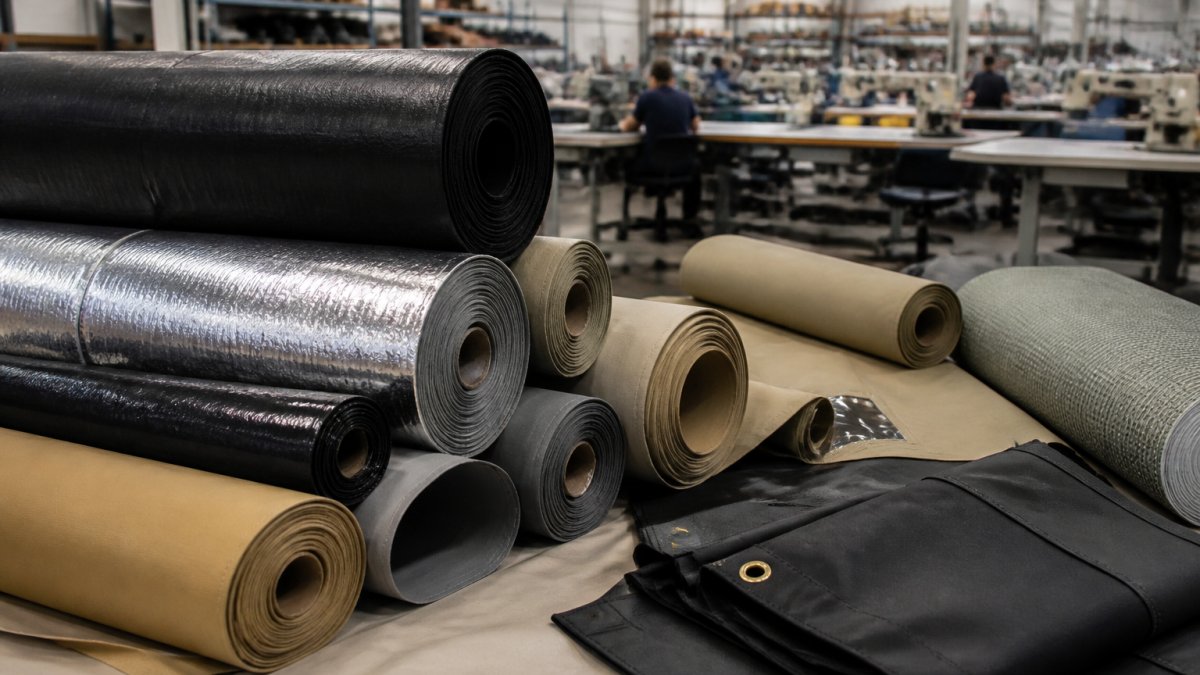
Can they work with your materials? Some suppliers specialize in lightweight fabrics. Others handle heavy-duty webbing and industrial materials.
What's their current capacity? If they're at 90% use, your rush order becomes their problem, not their priority.
Quality Standards
Ask for samples. Not quotes, actual samples of work similar to what you need.
Do they have quality certifications? ISO 9001 matters. So do industry-specific certifications if you're in medical, automotive, or other regulated sectors.
What's their defect rate? A good supplier knows this number and tracks it.
How do they handle rework and returns? A supplier that fights you on quality issues isn't a partner.
Operational Stability
How long have they been in business? Newer suppliers are riskier.
Who owns the company? Understand their financial stability and long-term commitment.
Do they have backup equipment? If their main production line fails, can they shift to another?
What's their staff turnover? High turnover signals instability and quality issues.
Communication and Transparency
Do they respond to inquiries quickly? If they're slow before you're a customer, they'll be slower after.
Can you speak directly to production leadership? Avoid suppliers that only communicate through sales reps.
Do they provide regular updates on orders in progress? Visibility matters.
Will they share references? Contact at least two current customers in your industry.
Create a simple scoring system. Rate each supplier on these factors. A supplier that scores high on capability but low on communication is still risky. You need both.
Benefits of Domestic Textile Manufacturing for Supply Chain Resilience
Bringing production back to the United States changes your supply chain dynamics. The cost difference isn't always what you think it is.
Operational Continuity is the first benefit. Domestic suppliers operate in the same time zone. Production issues get solved in hours, not days. Quality problems are caught before shipment, not after they reach your warehouse.
Faster Lead Times reduce your working capital. You carry less inventory because you can reorder faster. That frees up cash for other parts of your business.
Reduced Logistics Complexity means fewer handoffs, fewer delays, fewer lost shipments. Domestic shipping is predictable. Ocean freight is not.
Supply Chain Visibility improves dramatically. You can visit your supplier. You can see production in real time. You understand exactly what's happening with your product.
Tariff Exposure Disappears when production is domestic. You're not exposed to trade policy shifts or sudden duty increases. Your costs are more predictable.
Flexibility for Small Runs matters more than most companies realize.
Implement a Multi-Tier Sourcing Strategy
A resilient supply chain uses multiple suppliers across different tiers. This isn't redundancy for its own sake, it's strategic risk management.
Here's how to implement this:
Define your minimum viable capacity. What's the smallest amount of production you need from each tier to keep them operational and familiar with your product?
Rotate volume strategically. Don't just give all volume to Tier 1. Shift some work to Tier 2 and Tier 3 regularly. This keeps them sharp and prevents you from becoming too dependent on any single partner.
Maintain technical documentation. Every supplier needs complete specs, materials lists, quality standards, and production notes. When you need to shift volume, your new supplier doesn't start from scratch.
Test contingency plans. Once a year, place a significant order with your Tier 3 supplier. See how they perform. Identify gaps. This isn't theoretical, it's practice for when you actually need them.
Monitor performance metrics. Track lead time, defect rate, communication responsiveness, and on-time delivery for each supplier. Quarterly reviews keep everyone honest.
Watch Out Avoid creating suppliers that only exist on paper. If you haven't placed an order with a Tier 3 supplier in 18 months, they've forgotten your specs and may have moved on to other customers. Keep contingency suppliers active.
Manage the Transition and Monitor Performance
Switching suppliers mid-production is risky. Do it wrong and you disrupt delivery schedules, quality standards, or both. Do it right and you strengthen your supply chain.
Track your metrics. After six months with a new supplier, review:
On-time delivery rate
Defect rate
Average lead time
Communication responsiveness
Cost per unit
Any quality issues
Frequently Asked Questions
What are the main risks of relying on a single textile supplier?
Single-source suppliers create vulnerability to production disruptions, geopolitical events, tariff exposure, and capacity constraints. If your supplier faces labor shortages, equipment failure, or logistics delays, your entire production stops. Diversifying your supplier base spreads risk across multiple manufacturers, ensuring operational continuity even when one supplier faces challenges. This is especially critical for industries with tight delivery windows or seasonal demand spikes.
How do cut and sew manufacturing lead times compare between domestic and overseas suppliers?
Overseas lead times often range 8-12 weeks including ocean freight, customs clearance, and inland transport. Domestic suppliers can often complete orders in 3-5 weeks. Beyond speed, domestic suppliers offer more flexibility for rush orders and easier communication with production teams, making them valuable as secondary or tier-2 suppliers in a diversified network.
What should be included in a textile supplier vetting checklist?
Your textile supplier vetting checklist should cover production capacity and equipment capabilities, quality certifications (ISO 9001, compliance standards relevant to your industry), financial stability and payment terms, lead time consistency, minimum order quantities, materials handling experience, communication responsiveness, and references from similar customers. Also evaluate their ability to scale production, handle customization requests, and manage inventory. Request samples, conduct facility tours when possible, and verify compliance with labor and environmental standards.
How can I balance cost savings with supply chain resilience when diversifying suppliers?
Diversification doesn't require paying premium prices everywhere. Use a tiered approach: maintain one or two primary suppliers for volume orders where cost efficiency matters most, add secondary domestic suppliers for critical or rush orders where speed justifies higher per-unit costs, and identify niche manufacturers for specialty materials or small-batch runs. Calculate total cost of ownership including lead time, quality, shipping, and risk mitigation, not just unit price.
Request a Manufacturing Quote
Comments