
Local Manufacturing Strategy: A 7-Step How-To Guide

Table of Contents
Step 1: Define What a Local Manufacturing Strategy Must Deliver
Set Business Vision and Measurable Objectives
Step 2: Assess In-House vs. Outsourced Production Capacity
Step 3: Map Domestic Contract Manufacturing Benefits to Your Operation
Step 4: Plan for Cut-and-Sew Production Scalability Before You Commit
Step 5: Build Supply Chain Replenishment Strategies That Hold Up
Localize the Supply Chain to Remove Single Points of Failure
Build a Disruption Playbook, Not Just a Reorder Rule
Step 6: Apply Smart Technologies and Lean Manufacturing to the Floor
What to Look For, and What It Actually Does
Measure the Floor, Don't Just Describe It
The Workforce Is the Constraint Most Strategies Ignore
Step 7: Vet a Local Manufacturing Partner and Run the First Production Cycle
Conclusion: Turning a Local Manufacturing Strategy Into Recurring Production
Frequently Asked Questions
Last Updated: October 7, 2026
Step 1: Define What a Local Manufacturing Strategy Must Deliver
A local manufacturing strategy is a written plan that matches your product's demand pattern to domestic production capacity, lead times, and quality requirements. It answers one question: what must domestic production deliver that your current supply chain cannot?
At Sewing Contractor Solutions, we see this step skipped constantly. Teams jump straight to sourcing quotes. Then they discover the real problem was never price. It was replenishment speed, quality consistency, or inventory control.
So start with the numbers that matter.
Set Business Vision and Measurable Objectives
Write down what "working" looks like before you contact anyone. Vague goals produce vague partnerships.
Lead time target: current overseas lead time versus the lead time you need
Replenishment cadence: monthly, quarterly, or demand-triggered
Quality standard: defect rate you can accept, measured per production run
Good objectives are specific. "Cut lead time from 90 days to 30" beats "improve speed."
Pro Tip Tie every objective to a cost you already track. If late shipments cost you expedited freight, that number is your baseline. It makes the domestic business case far easier to defend internally.
Step 2: Assess In-House vs. Outsourced Production Capacity
In-house production makes sense when volume is steady, the process is core to your brand, and you can staff and maintain the equipment. Outsourcing wins when demand fluctuates, capital is tight, or the work needs specialized machinery you don't own.
Run this comparison honestly:
Factor | In-House | Outsourced Contract Manufacturing |
Capital investment | Equipment, space, maintenance | None |
Ramp speed | Slow, hiring and setup | Fast, capacity already running |
Flexibility | Limited by your floor | Scales with partner capacity |
Quality control | Fully under your roof | Depends on partner systems |
Best for | Stable, high-volume, core products | Variable demand, specialty builds |
Most established brands land in the middle. They keep a core process in-house and move overflow, specialty builds, or fiber-filled products to a contract partner.
That is not a compromise. It is capacity planning.
Step 3: Map Domestic Contract Manufacturing Benefits to Your Operation
Domestic contract manufacturing benefits are concrete: shorter lead times, direct communication, faster problem-solving, and lower inventory carrying costs. The trick is mapping each benefit to a line item you already track.
X-PRO LLC
Lead time: less safety stock tied up in transit
Communication: same time zone, same language, same-day answers
Flexibility: change order quantities without renegotiating a container
One caution. Domestic production is not automatically cheaper per unit. Labor rates differ, and that shows up in the quote. The savings usually appear in freight, tariffs, inventory carrying cost, and markdowns avoided by faster response.
Watch Out Do not build the business case on unit price alone. Teams that do often abandon reshoring in month three, right when the lead-time savings start compounding.
Step 4: Plan for Cut-and-Sew Production Scalability Before You Commit
Cut-and-sew production scalability depends on three things: pattern and marker efficiency, sewing line balance, and material availability. Get these right early and volume increases become routine.
Ask any potential partner how they handle:
Single-needle, double-needle, serger, box-X, and bar-tack operations on your build
Cutting capacity for your fabric widths and material types
Assembly sequence and work-in-progress flow
Here is the part most buyers miss. Scalability is not just machine count. It is the learning curve on your specific product.
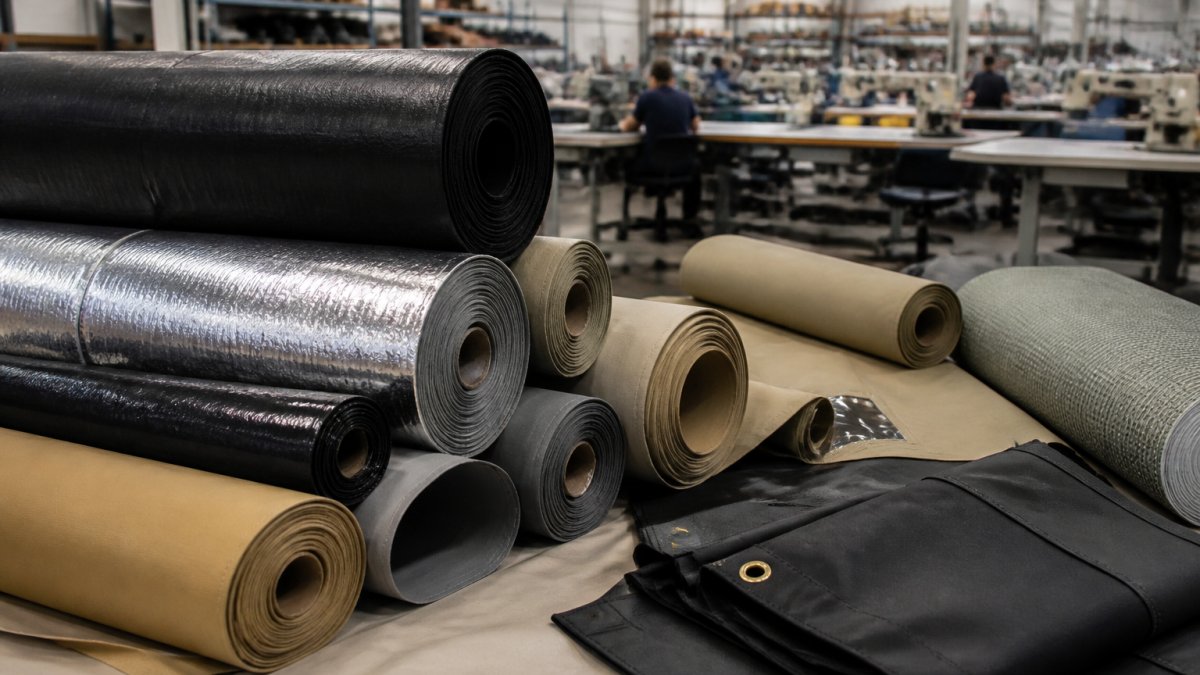
If your product uses heavy PVC, Cordura, aramid materials, or stretch fabrics, confirm the partner has run those before.
Step 5: Build Supply Chain Replenishment Strategies That Hold Up
Supply chain replenishment strategies should match your demand signal, not your calendar. There are three workable models:
Calendar-based: fixed reorder intervals, simple to plan, but blind to demand swings
Consumption-based: reorder when inventory hits a set level (a min/max or reorder point)
Demand-triggered: reorder against actual sales or usage data, often tied to a rolling forecast
Pick based on how predictable your demand is. Then agree on the rules with your partner in writing, reorder point, review cadence, lead time assumption, and who owns expediting when a signal fires late.
The goal is a rhythm. A domestic partner that ships every few weeks lets you hold less inventory and react to real demand. That is the core advantage of local production.
Localize the Supply Chain to Remove Single Points of Failure
Most replenishment plans fail not because the reorder math is wrong, but because one input has no second source. Before you commit to a cadence, map every material and component back to its origin and ask three questions:
Where is the single point of failure? A specialty zipper, a coated fabric, a foam grade, a thread spec, if only one mill or importer supplies it, your domestic line stops when that source stops.
What is the true lead time on each input? Fabric and trim often carry longer lead times than the sewing operation itself. A partner who can sew in two weeks still cannot ship if the shell fabric is eight weeks out.
Which inputs can be dual-sourced domestically? Domestic mills, cutters, and trim suppliers shorten the tail of the supply chain and give you a fallback when an import lane is disrupted.
A practical pattern is to hold strategic inventory on the long-lead, single-source inputs and run just-in-time on the inputs you can reorder quickly. That splits your working capital where it actually buys resilience.
Build a Disruption Playbook, Not Just a Reorder Rule
Post-pandemic resilience gets mentioned in nearly every strategy guide, but few translate it into action. A workable playbook covers:
Demand surge: which styles can be pulled forward, and how much capacity your partner can absorb before quality slips
Material shortage: approved substitutions already tested for stitch behavior and hand feel, so you are not qualifying a new fabric during a crisis
Capacity loss: a documented overflow path to a second qualified partner, with the same patterns, markers, and quality checkpoints
The point is not to predict the disruption. It is to pre-decide the response so you are not negotiating terms in the middle of one.
Watch Out A replenishment plan with a single-source input is not a plan, it is a bet. Dual-source the long-lead materials before you promise a cadence you cannot hold.
Key Takeaway Match the reorder model to your demand pattern, then localize the inputs that would stop the line if they disappeared. Responsiveness you can trust beats a cadence that looks aggressive on paper.
Step 6: Apply Smart Technologies and Lean Manufacturing to the Floor
Smart technologies and lean manufacturing are not buzzwords here. They are how a partner keeps cost, quality, and throughput predictable as volume grows. The difference between a shop that scales and one that stalls usually shows up in three places: how work is tracked, how changeovers are managed, and how the workforce is trained.
What to Look For, and What It Actually Does
Digital work instructions and production tracking, replaces tribal knowledge with a version-controlled spec, so a style sewn in March matches the same style sewn in September
Bar-coded cut tickets or bundle tracking, ties every bundle back to a cut lot, operator, and machine, which is what makes defect tracing possible instead of guesswork
Documented quality control checkpoints per operation, catches defects at the station that made them, not at final inspection when rework is expensive
Standard work for each sewing station, defines the sequence, stitch type, and seam allowance so output does not depend on which operator is at the machine
Lean manufacturing shows up as less work-in-progress, shorter changeover between styles, and fewer defects caught late. None of that requires a flashy system. It requires discipline.
Measure the Floor, Don't Just Describe It
Ask a potential partner what they track on a daily or weekly basis. Serious operations can speak to a handful of metrics without digging:
First-pass yield, the share of units that pass inspection without rework
Work-in-progress turns, how fast material moves from cutting to packing
Changeover time, how long it takes to switch from one style to the next
On-time delivery, measured against the promise, not the original request
If the answer is a capability list instead of numbers, that tells you something. A partner who measures the floor can improve it; one who only describes it cannot.
The Workforce Is the Constraint Most Strategies Ignore
Technology and lean tools only perform as well as the people running them. The skills gap in sewn-goods production is real: experienced operators who can run a double-needle or box-X station, set tension on difficult materials, and hold tolerance on heavy-duty builds are not interchangeable with general labor.
A partner worth scaling with treats training as a system, not an onboarding form:
Cross-training matrices so more than one operator can run each critical station
Documented training on your specific build, stitch type, seam allowance, material handling, before volume ramps
Retention practices that keep the operators who learned your product, because turnover resets the learning curve
Here is the part most buyers miss. Scalability is not just machine count. It is the learning curve on your specific product, and that curve lives in the people.
If your product uses heavy PVC, Cordura, aramid materials, or stretch fabrics, confirm the partner has run those before and has operators trained on them. Material behavior changes everything about stitch tension and handling.
Pro Tip Ask to see how a production run is tracked from cutting to packing, and ask who is trained on each station. The answer tells you more than any capability list.
Step 7: Vet a Local Manufacturing Partner and Run the First Production Cycle
Vetting a partner comes down to four checks: capability fit, quality systems, communication, and a successful first run.

Use this checklist before you commit:
Can they run your specific materials and stitch types?
Do they have documented quality control at each operation?
Who is your direct contact, and how fast do they respond?
Will they run a production-ready sample before full volume?
Then run a first production cycle. Start with a real order, not a prototype exercise. Measure lead time, defect rate, and how they handled problems.
Sewing Contractor Solutions works with established companies that have a production-ready sample or existing design ready for commercial manufacturing.
Conclusion: Turning a Local Manufacturing Strategy Into Recurring Production
The hard part is not choosing a partner. It is building a production rhythm that holds up order after order.
That is where Sewing Contractor Solutions fits. We offer scalable bulk manufacturing, faster turnaround than overseas production, and efficient shipping across the U.S. from our central Texas location.
Request a manufacturing quote from Sewing Contractor Solutions and turn your strategy into recurring domestic production.
Frequently Asked Questions
What are the primary benefits of shifting to a local manufacturing strategy?
The main gains are shorter lead times, lower inventory exposure, and direct access to the people running your production. When your supplier is domestic, you can visit the floor, resolve a spec question in a phone call, and replenish in weeks instead of months. Many buyers also reduce dependence on large overseas minimum orders, which frees working capital. U.S. manufacturing is not automatically cheaper than overseas production, so weigh freight, tariffs, and carrying costs alongside unit price.
How does domestic production improve supply chain agility?
Agility comes from distance and communication. A domestic partner can absorb a demand spike without a six-week ocean transit window, and changes to labels, packaging, or material specs move through the same time zone. For sewn products, that means faster replenishment on recurring SKUs and the ability to run overflow production when your own line is at capacity. Pair this with clear KPIs on lead time and on-time delivery so agility is measured, not assumed.
What factors should established businesses consider when reshoring production?
Start with whether you have a production-ready sample or an established design, since that is what a contract manufacturer needs to quote accurately. Then evaluate material sourcing, tooling and setup, quality control documentation, and the learning curve on your first run. Ask how the partner handles heavy-duty materials such as webbing, PVC, or aramid fabrics if your product uses them. Finally, confirm the partner's capacity for recurring volume rather than a single order.
What role does contract manufacturing play in a local production strategy?
Contract manufacturing lets you add domestic capacity without buying machines, hiring sewers, or leasing floor space. A cut-and-sew partner can run your recurring production, handle overflow when you land a large retail order, and manage assembly, packaging, and fulfillment alongside sewing. That structure keeps your capital focused on design, brand, and sales while a specialist handles throughput, quality control, and material sourcing. It also gives you a second production path if an overseas supplier slips.
Discuss Your Production Project
Comments