
5 Best Materials for Heavy Duty Industrial Covers

Table of Contents
What Makes a Material Suitable for Heavy Duty Industrial Covers
Polyethylene: Moisture Barrier and Weather Resistance
Vinyl-Coated Polyester: Durability and Chemical Resistance
Industrial Fabric Durability Standards and Performance Ratings
Canvas and Woven Synthetics: Load-Bearing Strength
Custom Sewn Safety Equipment Worth the Investment
Selecting the Right Material for Your Application
Frequently Asked Questions
Last Updated: September 25, 2026
What Makes a Material Suitable for Heavy Duty Industrial Covers
Heavy duty industrial covers protect equipment, materials, and workspaces from environmental damage, chemical exposure, and physical wear. The right material determines whether your cover lasts months or years.
The best industrial covers balance tensile strength, weatherproofing, chemical compatibility, and practical installation. They must resist tearing, shed water and UV exposure, withstand oils and solvents, and remain easy to maintain and replace.
Most procurement teams pick material based on upfront cost, then discover it fails in their specific application. A cover that works for outdoor storage might fail in a chemical plant; general-use material might not handle your operation's abrasion demands.
The material you choose should match three things: your environmental exposure, your physical demands, and your operational lifespan. Get those three aligned, and the cover performs. Miss on any one, and you're replacing it sooner than you should.
Polyethylene: Moisture Barrier and Weather Resistance
Polyethylene delivers exceptional moisture barrier properties at an affordable price point. It sheds water, resists UV degradation when stabilized, and doesn't absorb moisture, making it ideal for outdoor storage and general weather protection.
Higher density polyethylene (HDPE) offers better puncture resistance and durability than standard polyethylene. It resists mild chemicals and provides reliable protection against rain, snow, and humidity. Many operations use polyethylene for temporary or seasonal covers because replacement costs stay low.
Polyethylene tears more easily than heavier materials when sharp objects contact it and degrades faster under intense sunlight without UV stabilization. Avoid it for applications involving frequent handling, rough surfaces, or prolonged harsh UV exposure.

Polyethylene works best for stationary equipment needing lightweight, water-resistant coverage, outdoor HVAC units, electrical boxes, and stored machinery. Its flexibility simplifies installation and low cost enables easy replacement.
Vinyl-Coated Polyester: Durability and Chemical Resistance
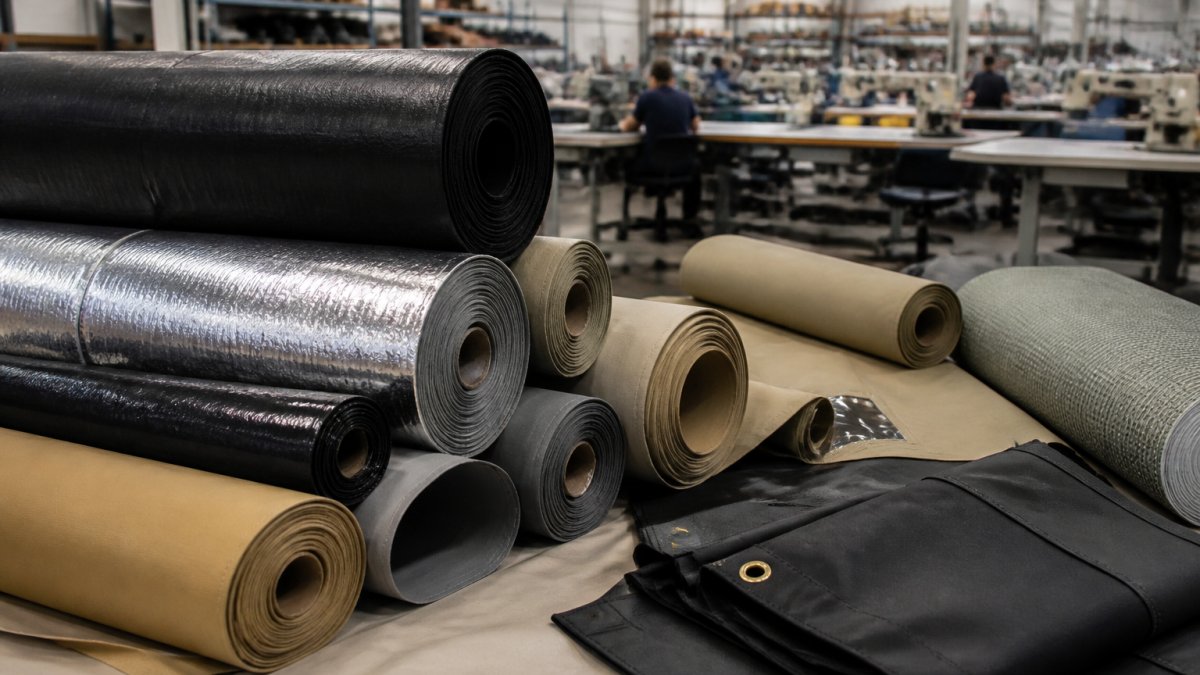
Vinyl-coated polyester combines woven polyester's load-bearing strength with vinyl coating's chemical resistance and weatherproofing, handling both physical abuse and chemical exposure better than single-material alternatives.
The polyester base provides tear strength and abrasion resistance; the vinyl coating protects against moisture, UV rays, and industrial chemicals. Heavy-duty vinyl-coated polyester (18-20 oz/sq yd) offers significant durability compared to lighter materials.
It resists corrosion, petroleum products, and solvents while maintaining cold-temperature flexibility for covers that flex or fold regularly. Reinforced edges prevent unraveling and extend lifespan.
The trade-off is higher cost and weight, which complicates large-scale installation. Periodic cleaning maintains the vinyl coating. Despite this, vinyl-coated polyester delivers superior performance in chemical-exposure and high-stress industrial environments.
Industrial Fabric Durability Standards and Performance Ratings
Industrial fabrics used for heavy duty covers must meet specific durability standards. Understanding these ratings helps you match material performance to operational demands and avoid premature failure.
Tensile Strength and Tear Resistance
Tensile strength measures force resistance before tearing, tested in machine and cross directions. Industrial covers typically require 200-300 pli minimum. However, high tensile strength with low tear strength fails quickly once punctured, critical for covers near sharp equipment edges.
Tear strength (ASTM D1117) should exceed 25 pounds in both directions. Abrasion resistance (ASTM D4157) measures cycles before visible wear. High-traffic covers dragged across concrete require ratings above 500 cycles for 2-3 year integrity.
UV Stability and Weathering
UV resistance determines outdoor lifespan. Stabilized materials (carbon black, HALS, UV absorbers) slow photodegradation; unstabilized fabrics degrade within 6-12 months. Stabilized fabrics last 3-5 years. ASTM G154 testing: materials rated 500+ hours xenon arc exposure perform well for 3+ years outdoors.
Moisture Barrier and Water Resistance
Water resistance (ASTM D583) measures hydrostatic pressure before penetration. General outdoor covers need 20-30 IWC minimum; wet environments require 50+ IWC. Lower ratings allow moisture wicking through seams, defeating protection.
Load Capacity and Sagging
Load capacity indicates how much weight a cover can support without sagging or tearing. This matters for covers spanning large areas or those exposed to snow, rain accumulation, or debris. ASTM D6775 (static load test) measures how much distributed weight a fabric can support before permanent deformation occurs. Industrial covers should support at least 5-10 pounds per square foot without visible sagging. Covers in snow-prone regions need higher ratings; heavy snow can accumulate 20+ pounds per square foot, requiring materials rated for 15+ pounds per square foot minimum.
Flame Retardancy and Fire Safety
Fire retardancy is critical in industrial environments but often overlooked in material selection. NFPA 701 (Standard Methods of Fire Tests for Flame Propagation of Textiles and Films) measures how quickly a material ignites and spreads flame. Materials meeting NFPA 701 Class A requirements are suitable for indoor industrial use. For chemical plants, refineries, or facilities handling flammable materials, covers should meet ASTM D6413 (vertical flame test) standards, which measure char length and after-flame time. Materials with char lengths under 6 inches and after-flame times under 2 seconds provide adequate fire safety for high-risk environments. Many standard polyethylene and vinyl-coated polyester covers do not meet these requirements without flame-retardant additives, creating a hidden compliance risk.
Canvas and Woven Synthetics: Load-Bearing Strength
Canvas and woven synthetic fabrics provide exceptional load-bearing capacity and tear resistance. These materials excel when covers need to support weight or resist physical abuse.
Traditional canvas offers high tensile strength and excellent durability. It handles rough handling better than polyethylene or lighter synthetics. Canvas absorbs moisture, which means it requires treatment or a waterproof backing to function as a weather-resistant cover. Untreated canvas works well for applications where moisture exposure is minimal or where the cover is temporary.
Modern woven synthetics, typically polyester or polypropylene blends, deliver similar load-bearing strength without moisture absorption. These materials resist mildew and rot, which makes them more practical for long-term outdoor use. Woven synthetics maintain flexibility even in cold temperatures, unlike some rigid materials.
The strength of woven materials comes from their construction. The interlocking fibers create a dense matrix that resists tearing and distributes stress across the fabric. This load-bearing capacity makes woven synthetics ideal for covers that must span large areas without sagging or covers that might accumulate weight from rain, dust, or debris.
Installation labor for canvas and woven synthetics is straightforward because they're forgiving materials.
Custom Sewn Safety Equipment Worth the Investment
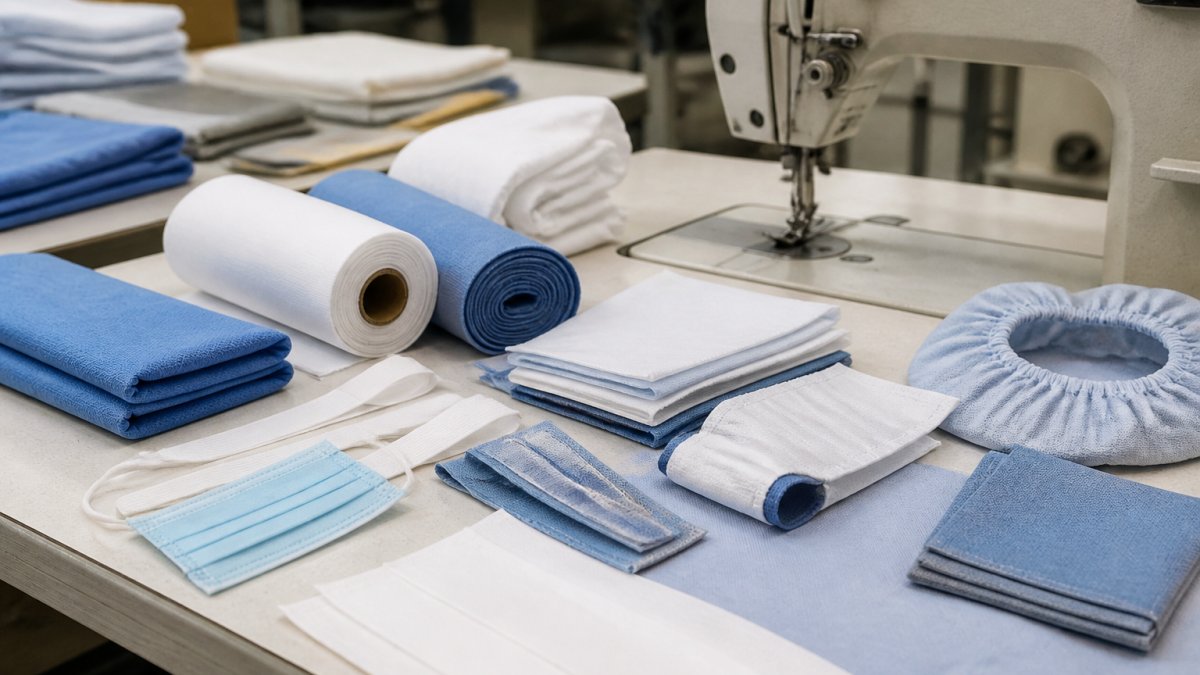
Custom sewn covers designed specifically for your equipment can outperform generic off-the-shelf alternatives, but only when the application justifies the investment. Understanding when custom fabrication makes financial and operational sense prevents overspending on unnecessary customization.
When Custom Covers Deliver ROI
Quality Indicators for Custom Fabrication
When evaluating custom cover providers, assess these technical specifications:
Seam construction: Industrial-grade covers use lockstitch or chainstitch patterns with heavy-duty thread (minimum 40-weight polyester or nylon). Seams should be double-stitched in high-stress areas with stitch density of 8-10 stitches per inch. Poor seams fail first, regardless of material quality.
Edge finishing: Reinforced hems, bound edges, or welded seams prevent unraveling. Covers exposed to abrasion require sealed or bound edges; untreated cut edges degrade within months.
Grommet and attachment points: Heavy-duty grommets (brass or stainless steel, minimum 0.5-inch diameter) should be spaced no more than 24 inches apart for large covers. Reinforced webbing around attachment points distributes load and prevents tearing around fasteners.
Material specification: Reputable fabricators provide material certifications (tensile strength, tear strength, UV rating, fire rating) from the fabric supplier. If they can't provide ASTM test data, the material is likely commodity-grade.
Access design: Custom covers should include reinforced access panels, zippered openings, or removable sections positioned for your actual maintenance workflow. Generic covers force you to work around their design.
Customization vs. Oversizing Stock Covers
Specification and Lead Time Considerations
Selecting the Right Material for Your Application
Match your material choice to three specific factors: environmental exposure, physical demands, and maintenance tolerance.
Material | Best For | Primary Strength | Key Limitation |
Polyethylene | Weather protection, outdoor storage | Low cost, moisture barrier | Limited abrasion resistance |
Vinyl-Coated Polyester | Chemical exposure, heavy use | Chemical resistance, durability | Higher cost, heavier weight |
Woven Synthetics | Load-bearing, frequent handling | Tear strength, flexibility | Requires proper fastening |
Custom Sewn Covers | Mission-critical equipment | Precision fit, optimized design | Higher initial investment |
Frequently Asked Questions
What is the most durable material for heavy duty industrial covers?
Vinyl-coated polyester and reinforced canvas rank highest for durability in heavy duty industrial covers. Vinyl-coated polyester excels in chemical resistance and moisture protection with tensile strength ratings suitable for load-bearing applications. Canvas offers superior tear strength and abrasion resistance. The best choice depends on your specific environment: choose vinyl-coated polyester for chemical exposure or wet conditions, and canvas for mechanical wear and UV-stabilized outdoor use. Both materials meet industrial-grade standards when properly manufactured and installed.
How do industrial fabric durability standards affect material selection?
Industrial fabric durability standards establish minimum performance requirements for tensile strength, tear resistance, and environmental stress cracking. Materials rated for heavy-duty applications typically meet ASTM standards for abrasion resistance and UV protection. When evaluating industrial covers, verify that fabrics have undergone testing for the specific stressors in your environment, moisture barriers for wet conditions, chemical compatibility for industrial processes, and fire retardancy ratings for safety-critical applications. Proper testing ensures your cover will maintain its protective shielding throughout its operational lifespan.
Is custom sewn safety equipment worth the investment?
Custom sewn safety equipment worth the investment when it matches your exact operational requirements and reduces downtime from equipment damage or environmental exposure. Off-the-shelf covers often leave gaps, fail to account for custom equipment dimensions, or use materials incompatible with your chemical environment. Custom fabrication allows you to specify reinforced edges, exact sizing, attachment methods, and material composition. The upfront investment pays back through extended equipment lifespan, reduced maintenance cycles, and elimination of costly equipment failures, especially in industrial settings where downtime directly impacts production revenue.
What factors affect the lifespan of industrial protective covers?
Material selection, installation quality, maintenance cycle, and environmental exposure all significantly impact cover lifespan. UV-stabilized synthetic fabrics last longer in outdoor settings than untreated materials. Proper installation labor ensures reinforced edges stay intact and moisture barriers function correctly. Regular maintenance, cleaning debris, checking for tears, and addressing wear spots, extends durability. Environmental factors like chemical exposure, temperature cycling, and abrasion from equipment movement accelerate degradation. High-quality, properly maintained industrial covers typically last 3-7 years, while poorly installed or incompatible materials may fail in 12-24 months.
Selecting the right material for heavy duty industrial covers requires balancing cost, durability, and application-specific demands. The material that works for one operation might fail in another. Custom sewn covers from Sewing Contractor Solutions eliminate this guesswork by matching material selection and construction to your actual environment and workflow. Request a manufacturing quote to discuss your cover requirements with our experienced team.
Request a Manufacturing Quote
Comments