
Consistent Quality for Automotive Interiors: A Manufacturing Guide

Table of Contents
Why Consistent Quality Matters in Automotive Interiors
Material Selection and Performance Standards
Leather and Synthetic Materials
Fabric and Textile Options
Plastic and Polymer Components
Automotive Interior Quality Control Checklist
Incoming Material Inspection
In-Process Quality Monitoring
Final Product Testing
Automotive Contract Sewing Requirements and Standards
Domestic Manufacturing Benefits for Automotive Supply Chains
Supplier Qualification and Ongoing Performance Management
Root-Cause Analysis and Defect Prevention
Frequently Asked Questions
Last Updated: October 15, 2026
Why Consistent Quality Matters in Automotive Interiors
Automotive interiors face relentless demands. Drivers touch, sit on, and lean against interior materials thousands of times per year. Sunlight fades surfaces. Temperature swings crack plastics. Spills stain fabrics.
Consistent quality for automotive interiors isn't a luxury. It's the foundation that separates vehicles customers keep for five years from ones they trade in after two.
The challenge isn't making a good interior once. It's making the same quality every single time, across every production run, every trim level, and every factory. That consistency demands a repeatable process.
This guide walks through how to build that process. We'll cover material selection, quality control checkpoints, and the supplier management practices that keep defects out of your vehicles.
Material Selection and Performance Standards
Material choice shapes everything that follows. You can't control what you haven't specified. Vague descriptions like "soft leather" or "durable fabric" lead to variation. One supplier interprets "soft" differently than another. One batch of fabric performs differently than the last.
Automotive interiors demand materials that perform consistently across temperature, light, and use. The materials you choose must be measurable, testable, and repeatable.
Leather and Synthetic Materials
Leather brings prestige and comfort to automotive interiors. But leather isn't leather, the term covers everything from full-grain hides with visible character to heavily corrected surfaces that feel uniform but lack depth.
For consistent quality, specify exactly what you need. Full-grain leather shows natural variation; corrected leather looks uniform but may wear differently. Synthetic leather (polyurethane or PVC-based) offers predictability.
Leather durability depends on finish and thickness. A 1.2mm finish coat protects against scuffing. Below that, scratches appear quickly. Above 1.4mm, the leather stiffens and creases differently. Specify the exact coating thickness.
Synthetic materials offer advantages for consistency. The manufacturing process is controlled. Batch variation is minimal. Colorfastness is predictable.
The trade-off: synthetic materials don't age the way leather does. They don't develop patina. Some customers perceive them as less premium, even when the tactile experience is identical.
Fabric and Textile Options
Fabric seats see the most contact and wear. Fabric must resist abrasion, staining, and color fading. The fiber content determines performance.
Polyester blends (polyester with cotton or rayon) are standard. They're affordable and durable. But polyester varies.
Specify the exact fiber blend, weight (measured in ounces per square yard), and weave type. A 12-ounce polyester-cotton blend feels and wears differently than a 14-ounce blend. Both are "durable," but consistency requires the exact number.
Aramid fibers like Nomex and Kevlar appear in high-performance or heavy-duty applications. These materials resist heat, chemicals, and abrasion. They're expensive. They're also consistent. The fiber properties are engineered, not variable like natural fibers.
Stain resistance requires a treatment, not just the right fiber. A polyester fabric treated with a fluorocarbon finish resists water-based stains. Untreated polyester doesn't. The finish washes out over time.
Plastic and Polymer Components
Plastic trim pieces, dashboard panels, and door handles make up a huge portion of modern automotive interiors. Plastic consistency is about melt flow rate, color matching, and dimensional stability.
Melt flow rate (MFR) measures how easily plastic flows during injection molding. A polypropylene with MFR of 8 flows differently than one with MFR of 12.
Color matching is harder than it sounds. Two batches of black polypropylene can look different under different lighting. Specify color using a standard like Pantone or a physical reference sample. Require suppliers to measure color using a spectrophotometer, not the human eye.
Dimensional stability matters for fit. A door panel that shrinks 0.5% after molding creates gaps when assembled. Specify acceptable shrinkage. Test samples from new suppliers to confirm they meet it. Temperature cycling (freezing and heating) reveals whether a plastic will warp over time.
Automotive Interior Quality Control Checklist
Quality control isn't one step. It's a series of checkpoints, each designed to catch different problems. The checklist below is a practical framework. Adapt it to your specific materials and products.

Incoming Material Inspection
Materials arrive at your supplier's facility before production starts. This is the first checkpoint.
Test incoming leather and synthetic materials for:
Color consistency (use a spectrophotometer or standard reference)
Thickness (measure with a gauge; accept or reject based on tolerance)
Tensile strength (pull test to ensure it won't tear easily)
Colorfastness (expose samples to light for 40 hours; check for fading)
Test incoming fabrics for:
Weight (ounces per square yard; compare to specification)
Thread count (weave density; affects durability)
Shrinkage (wash and measure; confirm it stays within tolerance)
Pilling resistance (rub the surface; count visible pills)
Test incoming plastics and resins for:
Melt flow rate (MFR test; confirm resin batch is within range)
Color (spectrophotometer reading; compare to standard)
Moisture content (moisture causes defects during molding)
Document every test. Keep records. When a defect appears in finished goods, incoming material data often points to the root cause.
In-Process Quality Monitoring
During production, regular checks catch problems before they become finished goods.
For sewn products, check:
Seam strength (pull test on random samples every hour)
Seam straightness (measure deviation from a straight line)
Thread tension (loose threads unravel; tight threads pucker)
Stitch length (count stitches per inch; confirm consistency)
For molded or assembled components, check:
Dimensional accuracy (use calipers or gauges; confirm parts fit together)
Surface finish (run your hand across the surface; feel for rough spots)
Color consistency (compare each part to a standard under the same lighting)
Assembly alignment (check that components sit flush and square)
Frequency matters. Don't wait until 1,000 parts are made to check the first one. Check every 50-100 parts, or at least once per shift. Catch drift early.
Common mistakes in in-process checks:
Inspecting only the first and last parts of a run (middle parts go unchecked)
Using different lighting or standards between shifts (consistency suffers)
Failing to document results (you can't prove quality later)
Final Product Testing
Before goods ship, run a final round of tests on finished products.
For sewn components:
Seam tear strength (pull test; confirm seams don't fail under stress)
Colorfastness (wash samples; confirm color doesn't bleed)
Dimensional accuracy (measure key dimensions; confirm they match spec)
For molded parts:
Impact resistance (drop test or impact testing machine; confirm it doesn't crack)
Dimensional accuracy (measure critical dimensions)
Surface defects (visual inspection under standard lighting)
For assembled products:
Fit and finish (confirm all components align and function)
Durability (flex, bend, or stress test the product; confirm it doesn't fail)
Test a sample, not every piece. A sample size of 30-50 units per batch is standard. Statistical sampling catches systemic problems while keeping testing costs reasonable.
Automotive Contract Sewing Requirements and Standards
When you outsource automotive interior sewing to a contract manufacturer, you're handing over control of a critical process. The right partner understands automotive requirements and can execute them consistently.
Look for a manufacturer that:
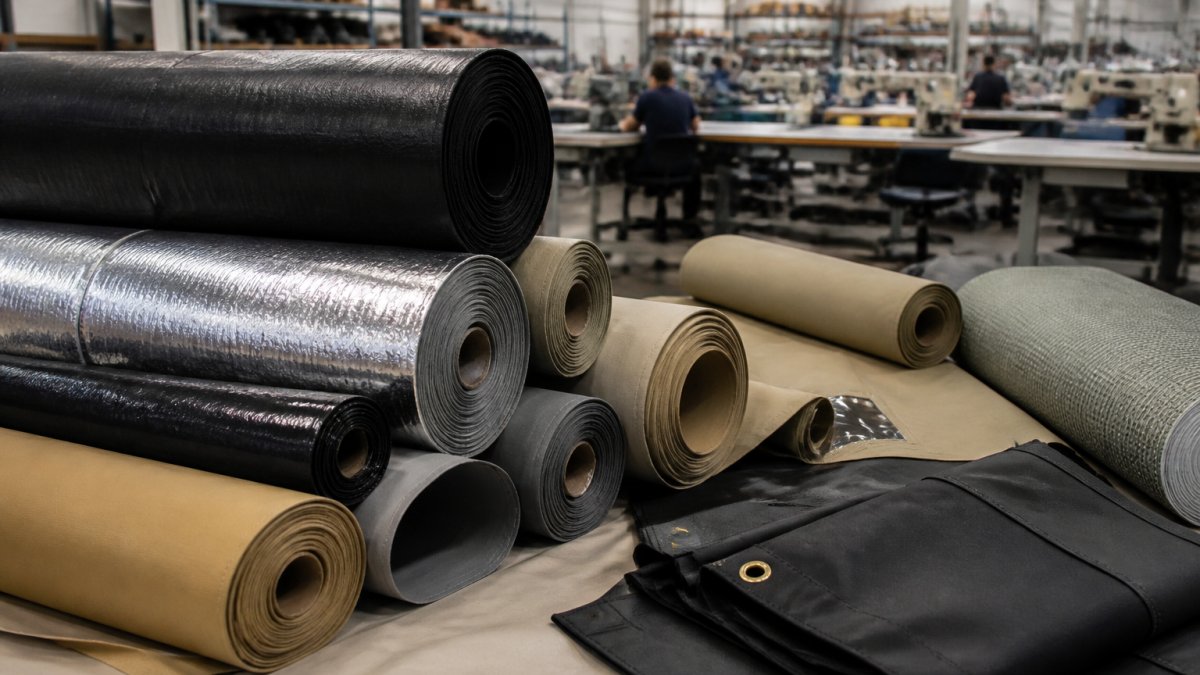
Has experience with automotive-grade materials (heavy fabrics, synthetics, leather, and specialty textiles)
Maintains documented quality procedures and test results
Can handle the specific sewing techniques your product requires (single-needle, double-needle, serger, box-X, or bar-tack stitching)
Communicates directly with you about production progress and any issues that arise
Works with you to solve problems, not around you
Sewing Contractor Solutions works with automotive suppliers on cut-and-sew and sewn component manufacturing. We understand that automotive interiors aren't forgiving. A seam that holds under testing but looks crooked damages the perceived quality of the entire vehicle. We maintain in-process quality checks and work with customers to establish material standards that stick across production runs.
The contract should specify:
Exact material specifications (fiber content, weight, finish, colorfastness)
Acceptable defect rates (zero is unrealistic; define what "acceptable" means)
Testing frequency and methods
Communication protocol (how and when you're notified of issues)
Corrective action process (what happens when defects are found)
Don't assume the manufacturer knows what "good" looks like. Show them. Provide reference samples. Require them to match those samples, not just hit a generic standard.
Domestic Manufacturing Benefits for Automotive Supply Chains
Reshoring or nearshoring automotive interior production to a domestic manufacturer changes the economics of consistency.
Faster communication. When a quality issue arises, you talk directly to the production team, not through a translator across nine time zones.
Production flexibility. Overseas manufacturers often require large minimum orders and long lead times. Domestic manufacturers can adjust run sizes based on demand.
Faster replenishment. Inventory sitting in a warehouse costs money. Domestic production means shorter lead times and less inventory on hand. Just-in-time supply becomes practical.
Reduced dependence on large overseas minimums. Overseas manufacturers often require 10,000-unit minimums to justify setup costs.
Quality control. You can visit the facility, inspect work in progress, and make adjustments on the fly.
The trade-off is honest: domestic labor costs more than overseas labor. But faster turnaround, lower inventory costs, and fewer quality issues can often offset that difference.
Supplier Qualification and Ongoing Performance Management
A supplier's first batch doesn't predict their fiftieth. Qualification is the process of confirming a supplier can meet your standards consistently over time.
Qualify suppliers by:
Requesting samples made to your exact specification
Testing those samples against your standards
Observing their production process (if possible)
Checking references from other customers in your industry
Confirming they have documented quality procedures
Once qualified, don't disappear. Monitor performance over time.
Track:
On-time delivery (do shipments arrive when promised?)
Defect rate (what percentage of units fail inspection?)
Responsiveness (how quickly do they address issues?)
Consistency (do defect rates stay stable, or drift over time?)
Monthly performance reviews catch drift before it becomes a crisis. A supplier whose defect rate creeps from 1% to 3% needs attention. A supplier whose on-time delivery drops from 98% to 85% needs a conversation.
Document everything. When you need to switch suppliers or defend a quality claim, records prove what happened and when.
Root-Cause Analysis and Defect Prevention
Defects happen. The question is whether you learn from them.
When a defect appears, don't just reject the part. Investigate why it happened.
Common root causes in automotive interior manufacturing:
Material variation (incoming material didn't meet spec)
Machine drift (sewing tension or molding temperature changed)
Operator error (wrong stitch length, wrong assembly sequence)
Design flaw (the design creates a stress point that fails)
Inadequate testing (the defect wasn't caught because testing was insufficient)
Trace each defect back to its source. Then fix it. If material variation caused the problem, tighten incoming inspection. If machine drift caused it, calibrate more frequently. If the design is flawed, redesign.
Keep a defect log. Over time, patterns emerge. If 60% of defects are seam failures, focus quality efforts on seam strength. If 40% are color mismatches, focus on color control.
Prevention is cheaper than correction. A process that stops defects before they happen costs less than finding and fixing them after.
Consistent quality for automotive interiors starts with measurement. Specify what you need. Test that suppliers deliver it. Monitor performance over time. When problems arise, understand why and fix the root cause.
Sewing Contractor Solutions brings manufacturing expertise to automotive supply chains. If you're looking to scale automotive interior production or need a domestic manufacturing partner you can trust, request a manufacturing quote to discuss your specific requirements.
Frequently Asked Questions
What are the key factors that affect consistent quality for automotive interiors?
Consistent quality depends on material selection, supplier reliability, production process controls, and testing protocols. Incoming material inspection, in-process monitoring of stitch quality and seam strength, and final durability testing all play critical roles. Communication between design, sourcing, and manufacturing teams ensures specifications are met across every production run.
How do domestic manufacturing benefits improve automotive supply chain consistency?
U.S.-based production reduces lead times, enabling faster material changes and design adjustments. Direct communication with production leadership allows real-time problem-solving and inventory control without dependence on large overseas minimum orders. Domestic manufacturers can also support just-in-time supply and rapid replenishment, reducing delays caused by international shipping and tariffs.
What should an automotive interior quality control checklist include?
A comprehensive checklist should cover incoming material testing for colorfastness and abrasion resistance, in-process inspection of seam strength and stitch consistency, dimensional stability checks, and final durability testing for wear resistance and surface finish. Documentation of each step creates a repeatable process and helps identify root causes when defects occur.
How do you vet a contract sewing manufacturer for automotive production?
Evaluate their experience with automotive materials such as leather, synthetics, and heavy-duty fabrics. Request samples of their work, verify their quality control processes, and confirm they can meet your specific sewing requirements, whether single-needle, double-needle, serger, or box-X stitching. Ask about their incoming material controls and how they handle defect prevention and supplier relationships.
Discuss Your Production Project
Comments