
Is Domestic Manufacturing Increasing? 2026 Data

Table of Contents
Is Domestic Manufacturing Increasing? The Short Answer
U.S. Manufacturing Growth: Output and Shipments
Factory Activity and Purchasing Managers' Index
Manufacturing Jobs in the United States: Employment Trends
Reshoring Manufacturing: Why Companies Are Returning Production
Domestic Textile Manufacturing and Supply-Chain Resilience
What Growth Means for Your Production Strategy
Frequently Asked Questions
Last Updated: October 13, 2026
Is Domestic Manufacturing Increasing? The Short Answer
Domestic manufacturing is growing in specific sectors, but the picture is more nuanced than headlines suggest. Output has increased in recent years, driven by reshoring efforts, supply-chain concerns, and targeted investments. However, employment gains remain modest, and the growth concentrates in particular industries rather than across the board. Understanding which metrics are actually rising, and which aren't, matters if you're evaluating whether to bring production back to the United States or scale existing domestic capacity.
At Sewing Contractor Solutions, we work with companies making exactly this decision. When clients ask whether domestic manufacturing increasing is real, we point them toward the data: output trends, employment numbers, and investment patterns paint a complex picture that doesn't fit a simple "yes" or "no."
U.S. Manufacturing Growth: Output and Shipments
Manufacturing output has rebounded and expanded over the past few years. Real manufacturing output, adjusted for inflation, has grown, reflecting increased production volume across many sectors. Nominal shipments, which measure the dollar value of goods produced, have also risen as companies ramp up domestic capacity and as inflation affects pricing.

The growth isn't uniform. Some industries, semiconductors, medical devices, and specialized textiles, have seen stronger expansion than others. Sectors tied to consumer goods, industrial components, and heavy-duty applications show varied momentum depending on demand and supply-chain pressures. This uneven growth is important: if you manufacture in a sector experiencing real expansion, reshoring or scaling domestic production makes sense. If your sector is flat or declining, the broader manufacturing growth story won't apply to your situation.
Output growth also reflects a shift in how companies approach supply chains. Concerns about overseas dependencies, tariffs, and lead times have pushed some manufacturers to evaluate domestic alternatives. That shift doesn't guarantee lower costs, it often means trading lower labor expenses for faster communication, shorter lead times, and greater production flexibility. For established products ready to move into commercial manufacturing, these trade-offs can favor domestic production.
Factory Activity and Purchasing Managers' Index
Factory activity, measured through the Purchasing Managers' Index and related surveys, provides a real-time read on manufacturing momentum. When the PMI rises above 50, it signals expansion; below 50 indicates contraction. Recent readings have fluctuated, reflecting both periods of solid activity and periods of caution. This volatility matters more than any single month's number: it tells you whether factory orders are strengthening, weakening, or stalling.
New orders, a leading indicator of future production, have shown variability. Strong new orders suggest manufacturers expect demand to hold or grow. Weak orders signal caution. For companies considering whether to commit to domestic production capacity, monitoring order trends in your specific sector matters far more than the overall index. A rising PMI in semiconductors doesn't predict demand for textile components or sewn products.
Capacity use, how intensively factories are running, has remained relatively stable. Factories aren't running flat-out, which means many have room to absorb additional production without major capital investment. This is favorable for contract manufacturers and companies looking to scale: available capacity means faster turnaround and more flexibility than in a fully constrained environment.
Manufacturing Jobs in the United States: Employment Trends
This is where the "is domestic manufacturing increasing?" question gets genuinely complicated, and where most coverage stops short. The honest answer is that output and employment have decoupled, and the reason is not that factories are disappearing, it is that the relationship between production volume and headcount has changed structurally.
Start with the definitions, because they explain most of the confusion. The Bureau of Labor Statistics reports manufacturing employment from two separate surveys: the Current Employment Statistics (CES) establishment survey, which counts payroll jobs at manufacturing establishments, and the Current Population Survey (CPS), which counts employed persons who report manufacturing as their industry. The two can diverge because of multiple jobholding, self-employment, and classification differences. Separately, the Census Bureau's Annual Survey of Manufactures and Economic Census track establishments, employees, payroll, and value added, but on a lag of one to two years.
Productivity is the mechanism behind the decoupling. Output per hour in manufacturing has risen over the long run as automation, CNC and automated cutting, programmable sewing and welding, robotics, and digital process control have replaced or augmented manual steps. A factory that once ran three shifts of operators on a manual line may now run two shifts with automated material handling and produce more units. The result is that real output can grow while payroll employment is flat or slightly down. This is not a sign of decline, it is the same pattern seen in U.S. agriculture over the twentieth century, where output rose dramatically as employment fell.
The composition of manufacturing employment has also shifted. Job losses have concentrated in labor-intensive, high-volume, low-mix categories, apparel assembly, basic furniture, simple consumer goods, where overseas labor cost advantages were largest. Job gains, where they occur, cluster in advanced manufacturing: semiconductors and electronics, aerospace, medical devices, pharmaceuticals, batteries, and specialized industrial products. These categories tend to require higher skill levels, more capital per worker, and more technical training. The practical implication for buyers is that the domestic labor pool available for a given product is not uniform, a program requiring skilled cut-and-sew operators, pattern makers, and quality technicians competes for a different labor market than a program requiring basic assembly.
Factory construction and announced investment deserve a separate caution. Construction spending on manufacturing facilities has risen sharply in recent years, driven by large announced projects in semiconductors, electric vehicles, and batteries. But construction spending is not production. A completed building must be equipped, staffed, qualified, and ramped before it produces salable output. Announced investment figures also include multi-year, multi-phase commitments that may be revised, delayed, or cancelled. The gap between "announced," "under construction," "completed," "staffed," and "at rated capacity" can span several years, and each stage has a different effect on the labor market and on available contract capacity.
For a buyer evaluating a domestic manufacturing partner, the employment picture has three practical consequences. First, high productivity supports competitive pricing and consistent quality, a domestic partner running modern equipment can sometimes match or beat overseas total landed cost once freight, duty, inventory carrying cost, and quality rework are included, though not always on unit price alone. Third, labor availability is a real constraint in specific skill categories, experienced industrial sewing operators, cutters, and quality inspectors are not instantly replaceable, and a partner's bench depth in those roles is a legitimate diligence question.
Key Takeaway When you hear "manufacturing employment is flat," translate it: output per worker is up, the mix has shifted toward advanced manufacturing, and the labor constraint that matters is skill-specific, not headcount-generic. Ask a prospective partner how they staff and cross-train skilled operators before you assume capacity is unlimited.
For companies with established products and recurring production needs, the right question is not whether national manufacturing employment is rising or falling. It is whether the specific partner you are evaluating has the skilled labor, equipment, and process discipline to run your program consistently, and whether their capacity model can absorb your growth without degrading lead times or quality.
Reshoring Manufacturing: Why Companies Are Returning Production
Reshoring, moving production from overseas back to the United States, has accelerated, though it remains a small share of total U.S. manufacturing. Companies reshoring cite several drivers: supply-chain reliability, shorter lead times, quality control, tariffs and trade uncertainty, and the ability to respond quickly to market changes.
For textile and sewn-product manufacturers, reshoring offers specific advantages. Communication with production partners becomes direct rather than spanning time zones and language barriers. Inventory management improves when replenishment cycles shrink from months to weeks. Quality issues can be addressed in real time rather than through lengthy overseas negotiations. These benefits can justify production costs that exceed overseas alternatives. U.S. Reshoring Manufacturing strategies are particularly effective for companies with established products ready to transition into domestic Industrial Sewing Manufacturing or Cut-and-Sew Production partnerships.
Reshoring also enables just-in-time supply strategies. Instead of building large safety stock to buffer long lead times, companies can order smaller batches more frequently. This reduces inventory carrying costs and working capital requirements, often offsetting higher per-unit manufacturing costs. For established brands with stable, recurring production needs, this economics shift makes domestic manufacturing increasingly viable.
Domestic Textile Manufacturing and Supply-Chain Resilience
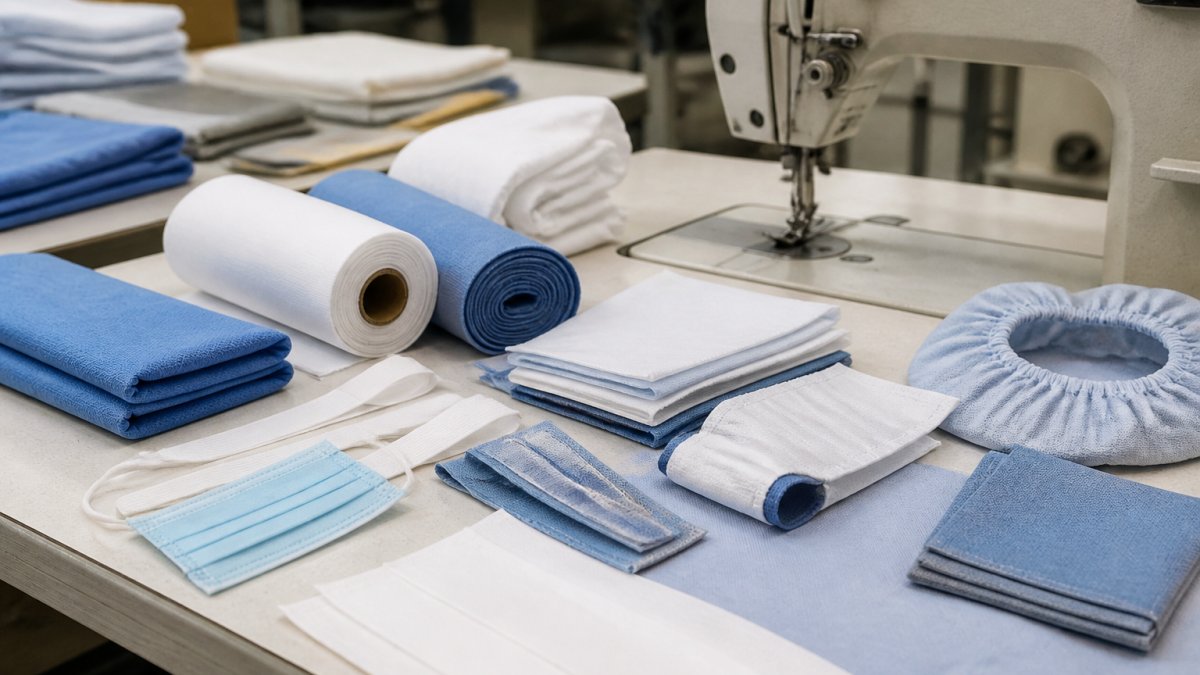
The textile and sewn-product sector has seen renewed interest in domestic capacity. Companies manufacturing pillows, cushions, industrial textiles, medical components, and specialty fabrics have expanded U.S. operations or shifted portions of their supply chains back to domestic partners. This reflects both demand for resilience and the specific advantages domestic production offers in these categories.
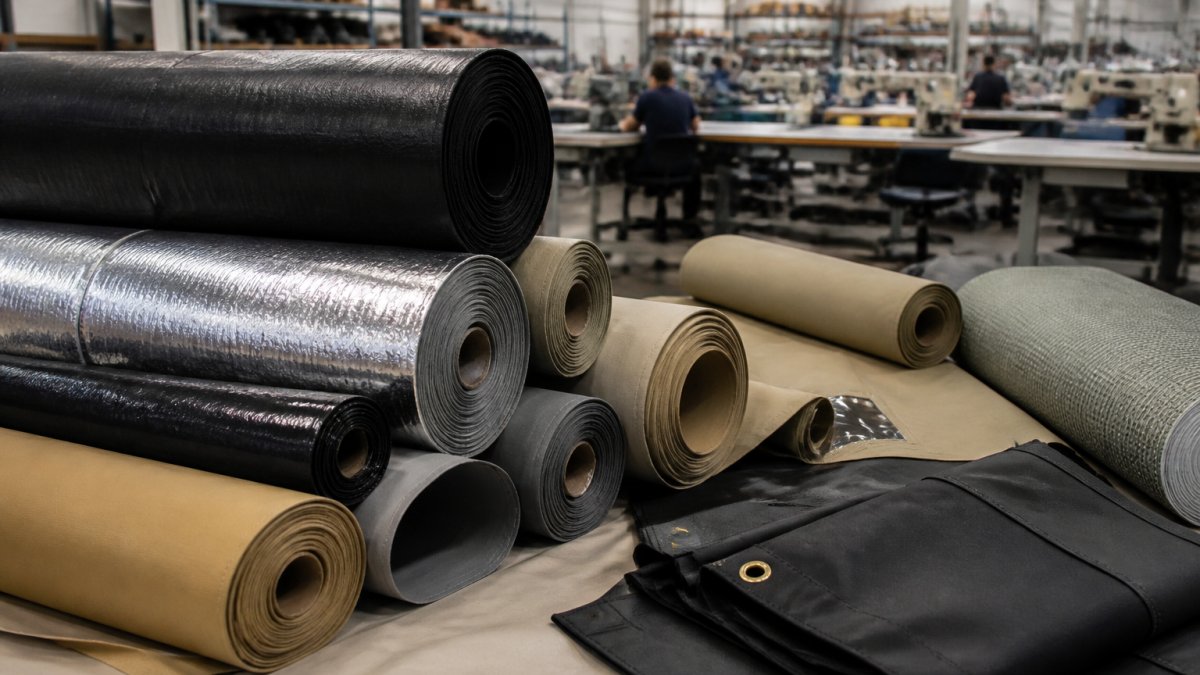
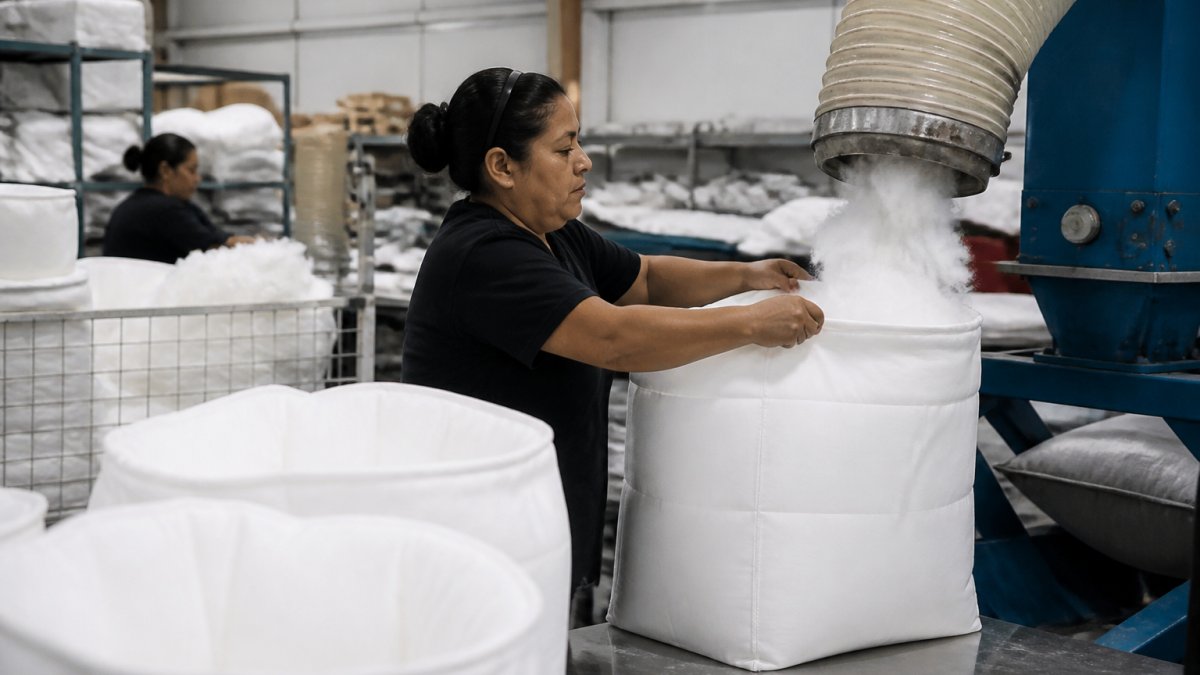
Domestic textile manufacturing increasing is particularly pronounced in heavy-duty and specialty applications, materials like Cordura, aramid fabrics such as Kevlar and Nomex, and technical textiles where quality control and customization matter. These products often command higher margins, making the domestic cost structure more sustainable than in commodity textile segments. Pillow, Cushion & Blow-Fill Manufacturing and Sewn Component Manufacturing have both expanded as companies prioritize domestic sourcing for these specialized categories.
Supply-chain resilience has become a strategic priority. Companies no longer view manufacturing location as a simple cost optimization problem. Geopolitical uncertainty, pandemic disruptions, and tariff volatility have shifted the calculation. A reliable domestic partner offering consistent quality and fast turnaround can be worth a premium over an overseas supplier with longer lead times and less flexibility.
What Growth Means for Your Production Strategy
If domestic manufacturing increasing is real in your sector, the implications for your sourcing strategy are clear: evaluate whether your current overseas partnerships still make sense. Long lead times, large minimum orders, and communication friction may no longer be acceptable trade-offs for lower unit costs. A domestic contract manufacturer offering scalable production, faster replenishment, and direct communication may deliver better total economics.
This doesn't mean overseas production is obsolete. For commodity products with stable, high-volume demand, overseas manufacturing may still offer cost advantages that justify longer lead times. But for established products requiring customization, fast turnaround, or responsive inventory management, domestic production can be competitive.
Sewing Contractor Solutions works with companies making this transition. We evaluate existing samples and production-ready designs, then scale them into commercial manufacturing. Whether you're considering Overflow & Scalable Production, full reshoring, or domestic sourcing for the first time, the key is matching your production requirements, complexity, volume, material needs, and timeline to a partner with the right capabilities and commitment to recurring, scalable relationships.
The evidence shows domestic manufacturing increasing is real in specific sectors and applications, but uneven across the broader economy. Output has grown, supply chains are shifting, and investment is expanding. Employment gains remain modest, which reflects productivity rather than decline. For companies with established products, production-ready samples, and recurring manufacturing needs, domestic capacity offers tangible advantages: faster communication, shorter lead times, production flexibility, and inventory control. The decision to move production domestically or to scale existing domestic partnerships should rest on your specific sector, product complexity, and supply-chain priorities, not on broad economic trends alone. Request a manufacturing quote from Sewing Contractor Solutions to explore how domestic production of your sewn products, cut-and-sew components, or fiber-filled items can improve your supply-chain resilience and responsiveness.
Frequently Asked Questions
Is domestic manufacturing increasing compared to five years ago?
Yes. Factory output and shipments have expanded since the post-pandemic recovery, driven by reshoring efforts, supply-chain concerns, and capital investment in domestic production capacity. However, growth is uneven across sectors. Textile and sewn-product manufacturing has seen particular interest from companies moving production closer to home to reduce lead times and improve inventory control.
Are manufacturing jobs in the United States growing?
Factory employment has stabilized and grown modestly in recent years, though gains vary by region and subsector. Automation and productivity improvements mean output growth does not always translate to proportional job increases. Companies investing in domestic production often prioritize production efficiency, which can limit headcount growth even as output rises.
Why are companies reshoring manufacturing to the United States?
Reshoring manufacturing offers faster replenishment, reduced dependence on large overseas minimum orders, better communication with production teams, and greater control over supply-chain timing. For sewn products and textiles, domestic sourcing also allows companies to respond quickly to demand changes and maintain just-in-time inventory without waiting for international shipments.
Does domestic manufacturing growth mean lower costs for my company?
Not necessarily. Domestic production costs depend on order volume, product complexity, material sourcing, and setup requirements. While reshoring eliminates long lead times and reduces overseas shipping delays, labor costs in the U.S. differ from overseas production. The real advantage is flexibility, faster turnaround, and supply-chain reliability rather than guaranteed price savings.
Discuss Your Production Project
Comments