
Industrial Sewing Service: A Complete Guide for Manufacturers

Table of Contents
What Industrial Sewing Service Means for Your Manufacturing
Types of Industrial Sewing Services and What Each Delivers
Contract Sewing and OEM Manufacturing
Cut-and-Sew Services and Assembly
Specialty Applications: Medical, Military, and Aerospace
Industrial Cut and Sew Services: Capabilities and Materials
Custom Sewn Safety Equipment and Compliance Standards
Benefits of Domestic Contract Sewing for Supply Chain Resilience
Contract Sewing vs. In-House Manufacturing: Cost and Capacity Analysis
How to Select and Partner with a Contract Sewing Manufacturer
Frequently Asked Questions
Last Updated: September 27, 2026
What Industrial Sewing Service Means for Your Manufacturing
An industrial sewing service produces sewn goods at scale using heavy-duty equipment and specialized techniques. Unlike consumer sewing, industrial production handles high volumes, technical tolerances, and materials ranging from medical-grade textiles to aerospace-grade webbing. A contract sewing manufacturer handles thousands of units monthly with consistency that regulatory standards demand.
Domestic industrial sewing services offer a middle ground between the long lead times of overseas manufacturing and the capacity constraints of in-house production. Sewing Contractor Solutions specializes in commercial and industrial sewing that serves manufacturers across medical devices, industrial equipment, consumer products, and heavy-duty applications.
The advantage of partnering with an industrial sewing service is production flexibility, supply chain resilience, and the ability to iterate quickly without capital investment in machinery and facilities.
Types of Industrial Sewing Services and What Each Delivers
Industrial sewing encompasses several distinct service models, each suited to different production needs and business models. Understanding the differences prevents misalignment between what you need and what a provider actually offers.
Contract Sewing and OEM Manufacturing
Contract sewing involves providing specifications, materials, and design while the manufacturer produces finished goods at agreed volumes and timelines. OEM (Original Equipment Manufacturer) production typically involves longer production runs and ongoing relationships where the manufacturer becomes your de facto production facility.
Contract sewing can be project-based or episodic, while OEM relationships are recurring and embed the manufacturer in your supply chain. Both require maintaining seam integrity across thousands of units, managing material sourcing, and delivering consistent stitch patterns that meet specification.
Reliable OEM partners invest in your product, understanding your tolerances, material preferences, and compliance requirements. Sewing Contractor Solutions provides direct communication with ownership and production leadership so specifications don't get lost in translation.
Cut-and-Sew Services and Assembly
Cut-and-sew services handle the full pipeline: receiving bulk fabric, cutting pieces according to pattern grading specifications, sewing components together, and delivering finished assemblies. This adds fabric management, die cutting, and material waste optimization beyond contract sewing.
Assembly services include attaching hardware, applying labels, performing quality control inspections, and preparing goods for shipping. A heavy-duty webbing strap might need reinforced bar tacking at stress points, heat-sealed edges, and attachment of metal D-rings or buckles.
These services appeal to brands that want to outsource the entire manufacturing footprint with one partner controlling all variables, simplifying production scalability.
Specialty Applications: Medical, Military, and Aerospace
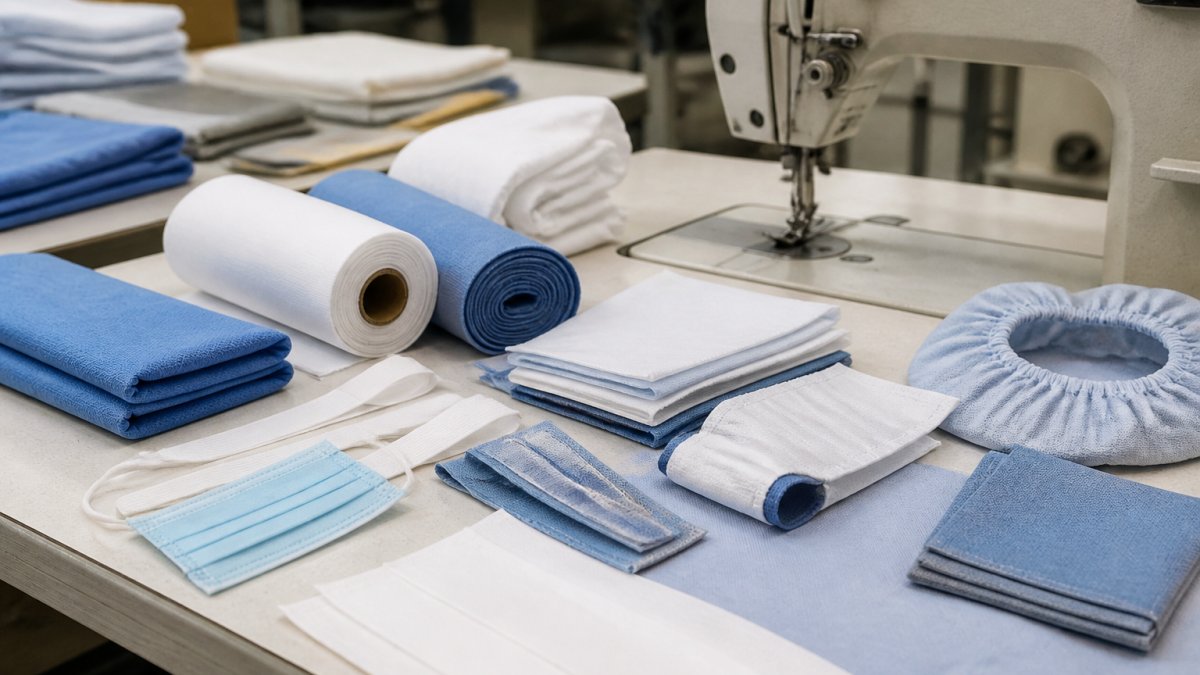
Medical device manufacturing requires biocompatible material handling (the FDA). Military and aerospace applications involve technical textiles, high-performance materials, and government contracting specifications.
These sectors require documented processes, material certifications, and quality assurance proving goods meet specification. Military applications demand MIL-SPEC compliance. Aerospace products face thermal, mechanical, and durability requirements consumer applications don't.
Industrial sewing services serving these markets invest in quality control systems and compliance documentation, maintaining relationships with certified material suppliers.
Industrial Cut and Sew Services: Capabilities and Materials

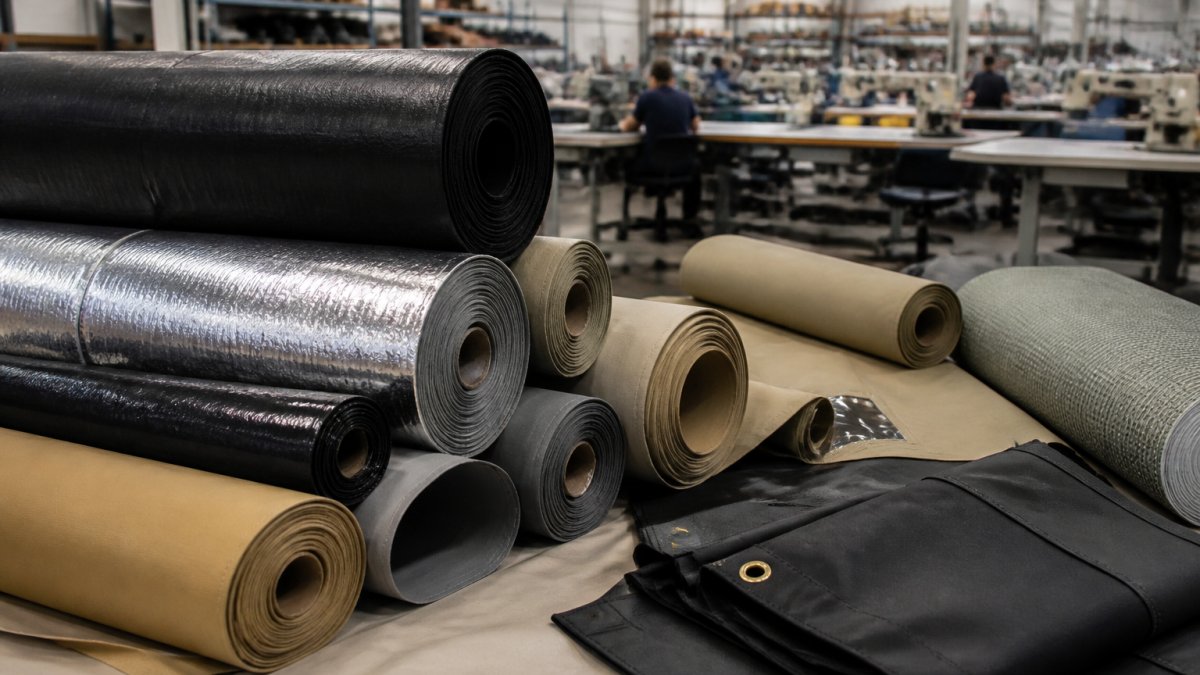
Heavy-duty stitching requires industrial lockstitch machines that handle thread tension, needle gauge selection, and stitch patterns beyond consumer equipment. Canvas, denim, and technical textiles require different needle sizes, thread specifications, and machine settings. Webbing demands precision because seam failure in high-stress applications creates liability.
An industrial sewing provider maintains relationships with textile suppliers and can source materials meeting your compliance requirements. They understand how materials behave on sewing equipment.
Specialty materials like laminated fabrics, coated textiles, and composites present unique sewing challenges. Some materials melt under needle heat; others require specific thread types. A capable industrial sewing service has equipment and expertise to handle this diversity.
Custom Sewn Safety Equipment and Compliance Standards
Custom sewn safety equipment requires documentation proving goods meet applicable standards.
Industrial sewing services maintain quality assurance protocols documenting compliance through documented inspection procedures that prove materials were certified and processes controlled.
Custom sewn safety equipment often requires modifications like custom attachment points or specialized hardware integration. Contract sewing relationships prove valuable when manufacturers understand your application and can produce small batches of custom configurations without retooling costs.
Benefits of Domestic Contract Sewing for Supply Chain Resilience
Reshoring sewn-product manufacturing to the United States offers supply chain advantages that offset higher labor costs. Lead times compress dramatically. Where overseas manufacturing involves 8-12 week lead times plus international shipping delays, domestic production typically delivers in 2-4 weeks. For businesses responding to market demand or managing inventory risk, this speed matters.
Shipping logistics simplify. Moving goods from Dallas, Texas across the continental United States costs a fraction of international freight, and delivery timelines are predictable. You avoid customs delays, tariff volatility, and the complications of managing inventory across time zones and regulatory jurisdictions.
Quality control becomes direct. Rather than inspecting finished goods that have already shipped across the ocean, you can visit the facility, review production in progress, and address issues before goods leave the warehouse. Sewing Contractor Solutions operates on direct communication with ownership and production leadership, not through intermediaries or sales layers that slow problem-solving.
Supply chain resilience gained traction after global disruptions highlighted the risk of depending on single overseas sources. Companies building redundancy into their supply chain increasingly partner with domestic manufacturers. This doesn't mean eliminating overseas production entirely, it means having a reliable domestic alternative that can absorb volume spikes or serve as a backup if primary suppliers face disruption.
Compliance documentation flows faster. If your regulatory environment requires production audits, domestic providers operate under the same regulatory framework you do. They understand FDA requirements, OSHA standards, and government contracting compliance because those standards govern their own operations.
Contract Sewing vs. In-House Manufacturing: Cost and Capacity Analysis
The decision between outsourcing to a contract sewing manufacturer and building in-house production capacity involves multiple variables. Neither approach is universally correct, the right choice depends on your volume, product complexity, and strategic priorities.
In-house production makes sense when volume justifies capital investment. Heavy-duty sewing equipment, cutting tables, quality assurance systems, and facility space require significant upfront spending. If you're producing 500,000 units annually, the per-unit cost of owning equipment becomes competitive. At 50,000 units annually, that same equipment sits idle much of the time, and per-unit costs skyrocket.
Contract manufacturing transfers fixed costs to variable costs. You pay for production capacity only when you use it. Volume spikes don't require capital investment, your partner scales production temporarily. Seasonal demand becomes manageable because you're not maintaining idle equipment during slow periods.
Labor represents the largest cost component in both models. Domestic manufacturing carries higher labor expenses than overseas alternatives, but this cost difference narrows when you factor in lead time reduction, shipping logistics, and working capital tied up in inventory. A product that takes 12 weeks to arrive from overseas requires holding more inventory to maintain service levels. A product that arrives in 3 weeks requires less safety stock. The working capital savings can offset higher unit costs.
Quality consistency favors contract partners with established systems. A dedicated sewing facility operates the same processes repeatedly, achieving efficiency and consistency that in-house production struggles to match when sewing is one of many manufacturing functions.
Capacity constraints often drive outsourcing decisions. If you're growing faster than you can expand in-house capacity, a contract sewing partner absorbs growth without requiring facility expansion, equipment purchases, or hiring. Sewing Contractor Solutions handles this through flexible production runs, whether you need 5,000 units or 50,000, the service scales to your needs.
Factor | In-House Production | Contract Sewing Service |
Capital Investment | High upfront | Low/none |
Fixed Costs | High (equipment, facility, staff) | Low (variable per unit) |
Lead Time | Controlled internally | Depends on partner capacity |
Volume Flexibility | Limited by equipment | Scales easily |
Quality Control | Direct oversight | Partner-dependent |
Compliance Documentation | Your responsibility | Partner-assisted |
Scaling Speed | Slow (equipment purchase) | Fast (partner capacity) |
How to Select and Partner with a Contract Sewing Manufacturer
Selecting the right industrial sewing service partner requires evaluating capabilities, capacity, and cultural fit. A poor choice locks you into a relationship that's difficult to exit mid-production.
Start by clarifying your requirements in writing. Document material specifications, stitch patterns, quality standards, volume expectations, and lead time requirements. This becomes your baseline for evaluating providers. A common mistake is assuming all industrial sewing services are interchangeable, they're not. Some specialize in lightweight fabrics. Others focus on heavy-duty materials. Some have medical-grade certifications. Others don't.
Request references from companies in your industry or with similar product complexity. Ask specifically about their experience with your material types, their quality control processes, and their responsiveness when issues arise. A provider's willingness to discuss failures and how they resolved them tells you more than their success stories.
Evaluate capacity and lead times directly. Ask what their current use is, what lead times they're quoting, and whether they have capacity for growth. A provider running at 95% capacity can't absorb your volume increase without delays. A provider with 40% use might be struggling financially or might be newly established.
Assess their quality systems.
Frequently Asked Questions
What does industrial sewing service actually include?
Industrial sewing service encompasses contract manufacturing of sewn products at scale, everything from cutting fabric and materials to stitching, assembly, and finishing. Services include OEM manufacturing for established products. Providers handle compliance with manufacturing tolerances required by your industry.
How does domestic contract sewing reduce lead times compared to overseas manufacturing?
Domestic contract sewing eliminates long ocean shipping delays, reduces time spent in customs and tariff processing, and enables direct communication with production leadership. A partner based in the U.S. can typically turn around orders faster and adjust production schedules with shorter notice. This proximity also reduces supply chain disruption risk, if issues arise mid-production, you can address them immediately rather than waiting weeks for feedback from overseas manufacturers.
What quality standards should I expect from an industrial sewing contractor?
Look for contractors certified to relevant compliance standards in your industry. Providers should conduct quality assurance testing. Ask about how they document defect rates and corrective actions.
Can a domestic sewing contractor handle small production runs economically?
Yes, though pricing depends on quantity, setup complexity, and delivery timeline. Many domestic contractors accept runs of 5,000-10,000 units and can optimize setup costs across your order. Domestic production eliminates minimum order quantities often imposed by overseas factories. Request a manufacturing quote specifying your exact run size and production frequency, contractors can advise whether your volume qualifies for favorable pricing and lead times.
Request a Manufacturing Quote
Comments